
Look Back: Tunnels, continued
Trending
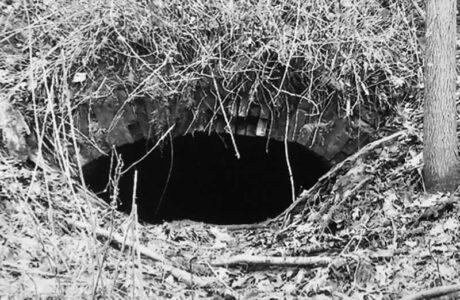
In the previous Look Back, the existence of local, "so called" tunnels were shared. The last "tunnel" mentioned was at the Meldahl house in Washington Bottoms. Just across the Ohio River and a half mile or so upstream is the "Curtis" house. Built circa 1798 near the mouth of the Little Hocking River, it is one of the oldest residences in Washington County. This home is the source of not one, but two tunnels. Located just a stone's throw from the Ohio River, these tunnels were reportedly part of the "Underground Railroad." According to Linda Roush, who with her husband Herb, a historian and writer, (both now deceased), once owned and lived in the house, one of the tunnels went from the basement of their house to the basement of a neighboring house. The other tunnel on the Curtis property was accessed through the floor of a detached building. This building, according to Mrs. Roush, was the first post office in Washington County. Later, that building was used as a wash house. The second tunnel apparently went in the direction of the river. Mrs. Roush reminded me that these "tunnels" were quite small; persons didn't walk through them, they crawled!
EXPERT ENGINEERING FEAT – The Tunnel Under White City Finished!
Thus read the headline of the Dec. 7, 1898, edition of the Parkersburg Daily State Journal.
Parkersburg does have an authentic, stand-up, walk-through tunnel! The building boom of the 1880s and 90s created much building activity in Parkersburg; and the city continued growing, especially to the north and east. Part of the area east of Quincy Hill, between Thirteenth and Seventh Streets, was known as White City. At that time, sanitary sewers ran directly to the rivers. Pumping stations were not commonly used, so the sewer mains in the White City area would have to gravity feed to the Little Kanawha River. Preventing this, however, was a hill known as Hutchinson's Grove.
Then-city engineer J.V. Dunbar and his assistant, J.M. Jackson, designed a 600-foot tunnel (the length of two football fields) that would run from near Seventh Street to a point near Charles Street. Completion of the tunnel would enable development in the area north of "the Grove." The engineering skills of Dunbar allowed the contractor, S.E. Irvin to complete what the newspaper touted as being the "largest and most difficult engineering feat ever accomplished for the city."
Their project, completed in just three months, required crews to work twenty-four hours a day. It also required digging two shafts from the tunnel to the surface of the hill. These shafts not only supplied fresh air to the workers but also allowed a means by which excavated material could be removed. Work on the reportedly seven-foot-high tunnel began from both ends. Surely Dunbar and Jackson grew quite anxious as the two ends neared meeting! Reports say that the two diggings met perfectly.
Clarence Cox, Parkersburg Utility Board Manager (in 2005), was aware of the tunnel, although he refers to it more as a shaft than a tunnel. He said that just as is done in mines, timbers were used to shore up the sides and top. Although the 16" clay pipe has been relined and the tunnel has experienced a couple of minor cave-ins, Cox is happy to report that "Dunbar's tunnel" is still serving its intended purpose.
***
This item, by Bob Enoch, appeared in the July-August-September 2006 issue of History & Preservation, newsletter of the Wood County Historical and Preservation Society.
***
Bob Enoch is president of the Wood County Historical and Preservation Society. If you have comments or questions about Look Back items, please contact him at: roberteenoch@gmail.com, or by mail at WCHPS, PO Box 565, Parkersburg, WV 26102.