
Look Back: Cemeteries hold Mid-Ohio Valley’s past
Trending
(EDITOR'S NOTE: The following is a reproduction of historic newspaper excerpts, and as such contains descriptions of people that are understood to be outdated and would not be used today.)
***
Some years ago, the Wood County Commissioners resolved that the month of May be designated as "Remember a Rural Cemetery Month." With that as a goal, Look Back will attempt to offer interesting items about our early burying grounds during the month of May.
***
Old Cemeteries Provide Insights to the Area's Past
By Betty Stout, Sentinel Correspondent.
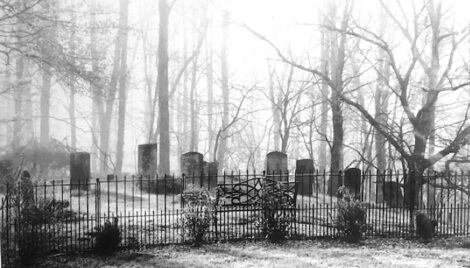
Cemeteries, particularly early ones, are often an interesting source of information relating to the early settlement or to subsequent events in the development of a community.
The graveyards of Parkersburg and Wood County are no exception to this, since many of the names inscribed on the stones or in the records of these early burial places can be directly linked with the city's 200-year history.
The oldest and possibly the least known of these pioneer burying grounds, was in all probability located near the blockhouse erected by Captain James Neal on the south bank of the [Little] Kanawha River in 1783.
While there is no present day evidence to substantiate this, the late John A. House, a local historian and genealogist, whose records are now in the possession of his grandsons, John Ludwick of Parkersburg and Willard Phillips of Vienna, made brief mention of this in his writings.
In the mid-1930s, in his journal titled "Early Burial Places in Jackson, Roane, Wirt and Wood Counties," House wrote:
"The first graveyard of the colony (Parkersburg) was on the south bank of the Little Kanawha River just below the blockhouse at Neal's Station.
"A reliable witness told me that in making excavations for the pier of the East Street Bridge, the workmen unearthed human bones and a cedar post. [Capt. James Neal's first wife died in 1796. She may have been buried at that site near the bridge.] Taking into consideration the Indian wars and raids at that time (Neal's son had been killed by the Indians in 1792), it seems logical that the settlers would have buried their dead within sight of the fort
"Possibly the Neal graveyard was not used long after the Indian wars closed [1795] and the country became more settled."
House also noted in his writings that "Jim Smith (no other identification) once told me that while working with a group of men grading or laying a sewer they found bones in Juliana Street, somewhere below the [old] post office and above Third Street."
It was surmised, but with no certainty, that these could have been Indian bones, as many Indian relics had been found when excavations had been done for buildings in this section of town.
The West Augusta Historical and Genealogical Society's 1976 publication of "Tombstone Readings -- Volume One -- Cemeteries in Wood County" lists 151 known burial places, with several of the earliest ones to be found within the city limits of Parkersburg.
The Dils cemetery located on East 7th Street near the Worthington Creek bridge is thought to be one of the oldest local burial places in existence today.
Although the very early tombstones which had been located at the south-west corner of the cemetery have long since fallen victim to the ravages of time and the elements, as recently as 50 or 60 years ago the little graveyard had readable markers dating back to the 1820s and 30s, with a few dated even earlier.
To be continued …
***
Bob Enoch is president of the Wood County Historical and Preservation Society. If you have comments or questions about Look Back items, please contact him at: roberteenoch@gmail.com, or by mail at WCHPS, PO Box 565, Parkersburg, WV 26102.