State Auditor McCuskey meets Parkersburg, Vienna mayors to discuss SB 552
-
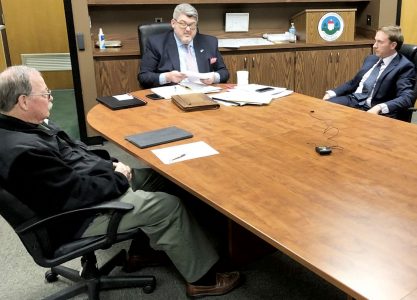
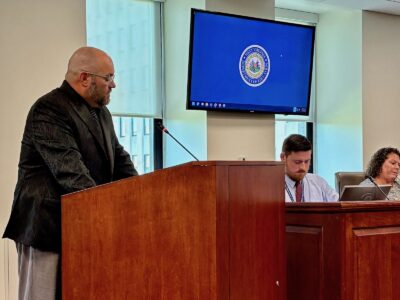
- Vienna Mayor Randy Rapp, Parkersburg Mayor Tom Joyce and State Auditor John B. McCuskey met Wednesday to discuss the Community Resurrection and Economic Development Act (Senate Bill 552). The bill, which was recently introduced in the West Virginia Legislature, deals with tearing down dilapidated houses while encouraging investment in communities. (Photo by Brett Dunlap)
-
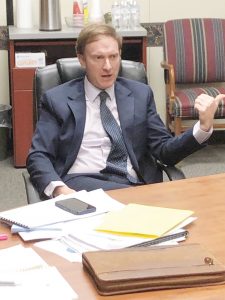
- State Auditor John B. McCuskey came to Parkersburg to discuss the Community Resurrection and Economic Development Act. (Photo by Brett Dunlap)
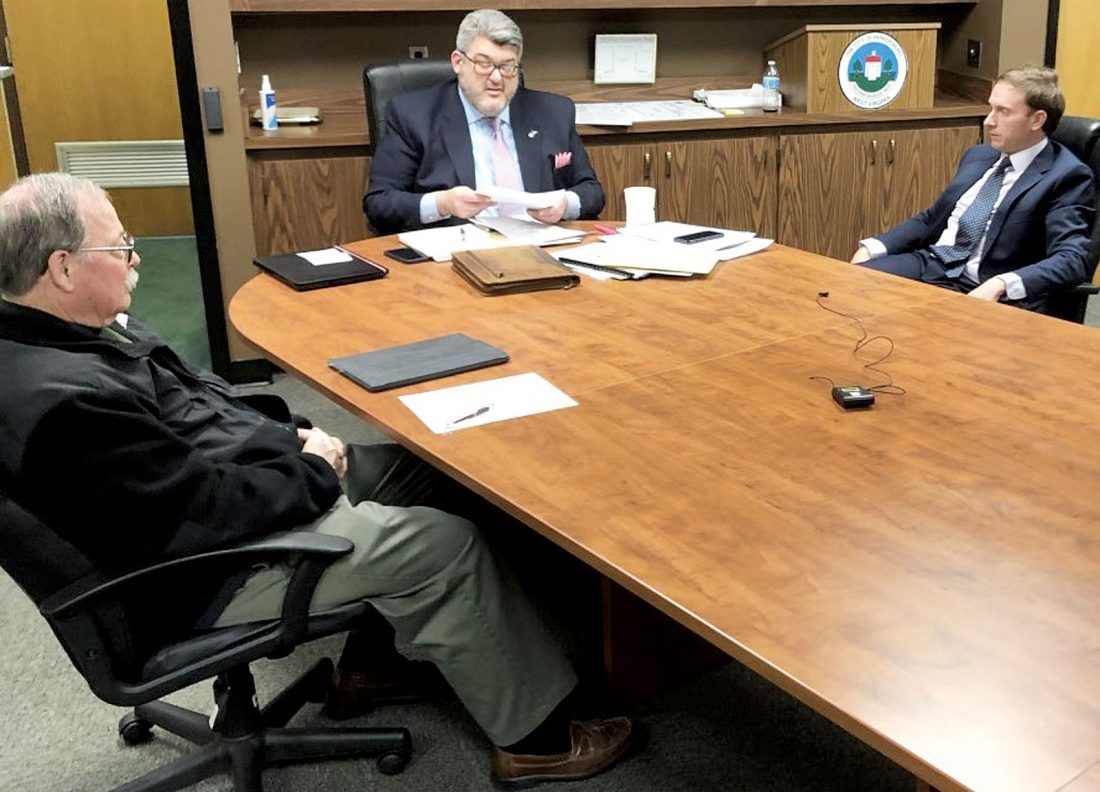
Vienna Mayor Randy Rapp, Parkersburg Mayor Tom Joyce and State Auditor John B. McCuskey met Wednesday to discuss the Community Resurrection and Economic Development Act (Senate Bill 552). The bill, which was recently introduced in the West Virginia Legislature, deals with tearing down dilapidated houses while encouraging investment in communities. (Photo by Brett Dunlap)
PARKERSBURG — A bill has been submitted to the West Virginia Legislature that would deal with dilapidated and neglected buildings while also encouraging people to live and invest in their communities.
State Auditor John B. McCuskey met Wednesday with Parkersburg Mayor Tom Joyce and Vienna Mayor Randy Rapp to discuss the bill which was recently submitted to the West Virginia Legislature, on behalf of Governor Jim Justice at McCuskey’s request.
The Community Resurrection and Economic Development Act (Senate Bill 552) will revolutionize the way the Land Bank is operated in West Virginia and will set aside $30 million to help cities and counties demolish buildings that cannot be saved, McCuskey said.
“Everywhere I go (in the state) there is a stock of dilapidated homes that are making a lot of formerly very nice neighborhoods a difficult place to attract people to live,” he said. “The problem is big enough that cities can’t financially take care of them all.”
McCuskey said he has met with 50 mayors about this and he is seeing similar stories and concerns.
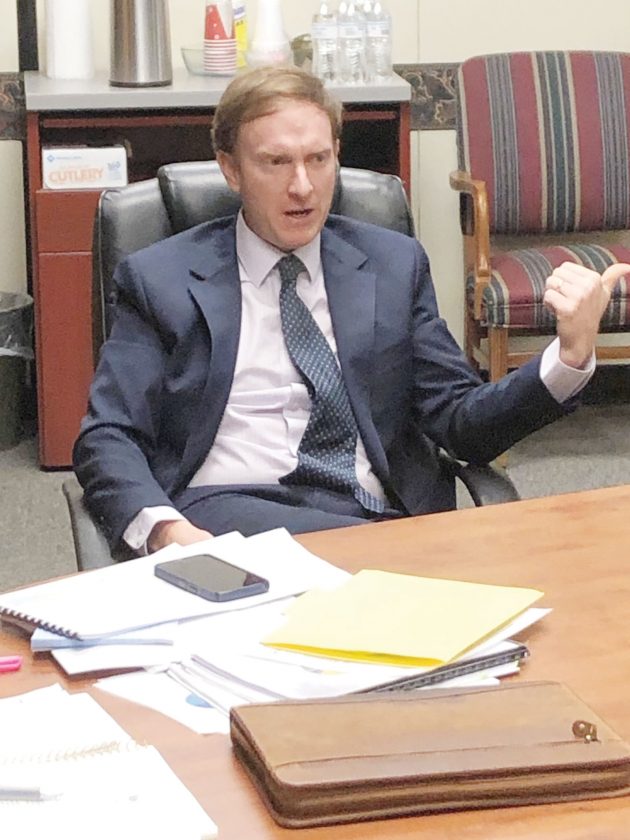
State Auditor John B. McCuskey came to Parkersburg to discuss the Community Resurrection and Economic Development Act. (Photo by Brett Dunlap)
Joyce said the city of Parkersburg has spent $1.7 million over the five years he has been mayor to tear down 143 dilapidated homes. Many of the concerns locally are in the east end of town, just off of downtown. The area covers from Seventh to 13th streets.
Joyce estimated around 90 percent of them are within a 14-block area and some have been set on fire by vagrants who were seeking shelter and making fires to try and stay warm.
Rapp said they are seeing fewer dilapidated properties. McCuskey pointed out that Vienna is more affluent and would have fewer of these properties.
Both Rapp and Joyce estimated it cost around $10,000 to tear down a dilapidated house.
McCuskey said the way tax sales are structured where potential buyers have to contact the heirs which could be a lot of people. Many people who are looking to buy these properties are out-of-state speculators.
If the bill passes, McCuskey said the neighbors, cities and counties get first crack at buying these properties followed by nonprofit corporations and charitable groups.
The $30 million fund will be used to tear down the structures so the ones who could buy these properties are basically buying the ground that can be sold to someone who might build something on the land. It would remove the liability of a dilapidated house from the property.
“We can tell the cities that you buy this you are basically buying an empty lot,” McCuskey said. “We can get the properties off of our books, get the houses torn down and get them onto your books so you can do stuff with them.”
It is estimated the fund can cover around 10,000 houses being torn down. He also believes more can be torn down at once and at a lower cost when a number of structures are included in a regional contract.
McCuskey said one dilapidated house turns into others as no one wants to live near such a property.
If an area has a number of dilapidated houses grouped together, they could be torn down and those involved in economic development may know of a business who would be willing to come in and build something on that site.
Joyce said even if a dilapidated house is torn down and the lot sits empty for awhile, it will be better than having the structure there with the potential of being broken into, people using it as a shelter and possibly burned down.
In 2020, there were 34 such structures in Parkersburg that caught on fire caused by people being in there where they shouldn’t be, Joyce said.
The bill also addresses properties that can be saved and incentivizes ownership and repurposing of abandoned lands.
The Auditor’s Office is also partnering with the WV Housing Development fund to identify select properties to entice teachers, doctors, and other essential workers to certain areas in the state, and to help people who have successfully completed drug recovery rebuild their lives.
McCuskey said houses that are in good shape or that can be fixed can be made available to people at special rates, if they are fulfilling a need in the community. Some rural communities may need nurses and making such homes available could bring people with those skill sets to a particular area, he said.
Both Joyce and Rapp said such an incentive could be an added benefit in recruiting police officers to come to the area.
Other highlights of the bill include creating a statewide uniform process for collection and enforcement of property taxes; changing the methodology for calculating interest and penalties for redeemed taxes; and reducing the lengthy existing time periods for redeeming delinquent taxes and returning abandoned property back to the books before it becomes uninhabitable, according to a release from McCuskey’s office.
The bill has been sent to the Senate’s Finance Committee.
Brett Dunlap can be reached at bdunlap@newsandsentinel.com
Local News
Marietta City Council to consider money for sewer line fix
Par Mar Stores awards nearly $300,000 for student scholarships
Coplin Health Systems awarded $1.5 million in grant funding for new Parkersburg site
PARKERSBURG - Coplin Health Systems was awarded about $1.5 million in Senate appropriations for the construction of ...
Hardesty: West Virginia public school systems must embrace school choice
W.Va. Board of Education receives updates on Tyler County intervention, athletics transfer rule