
Buckeye Environmental Network calls for ODNR action on Washington County injection wells after brine migration concerns
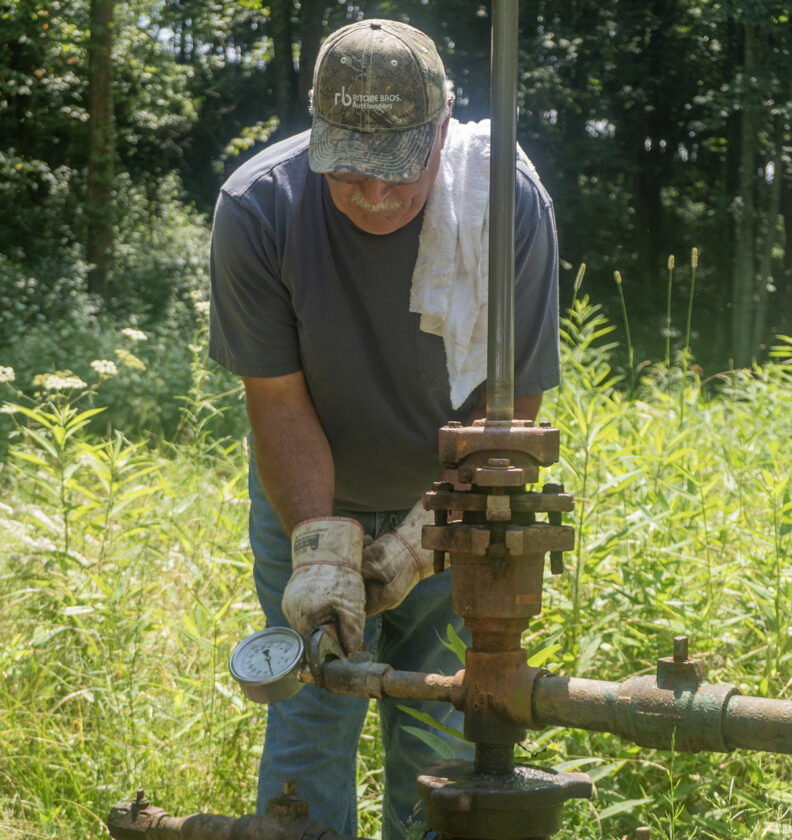
Bob Wilson checks the pressure on his well, the Curry #3 to show the pressure sitting outside the recommended range in July. (File photo.)
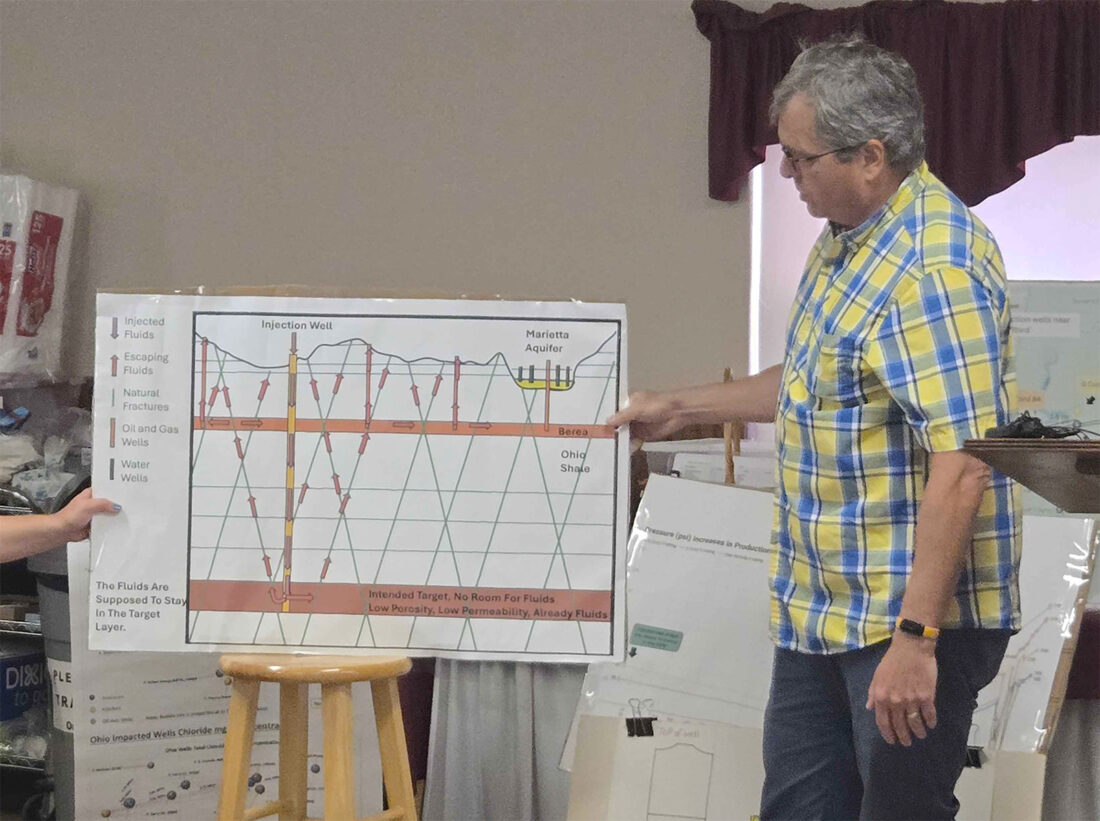
David Jeffery, a geologist and professor at Marietta College, shares his opinion regarding the potential for brine migration during a press conference Tuesday afternoon at the Tunnel United Methodist Church. (Photo by Gwen Sour)
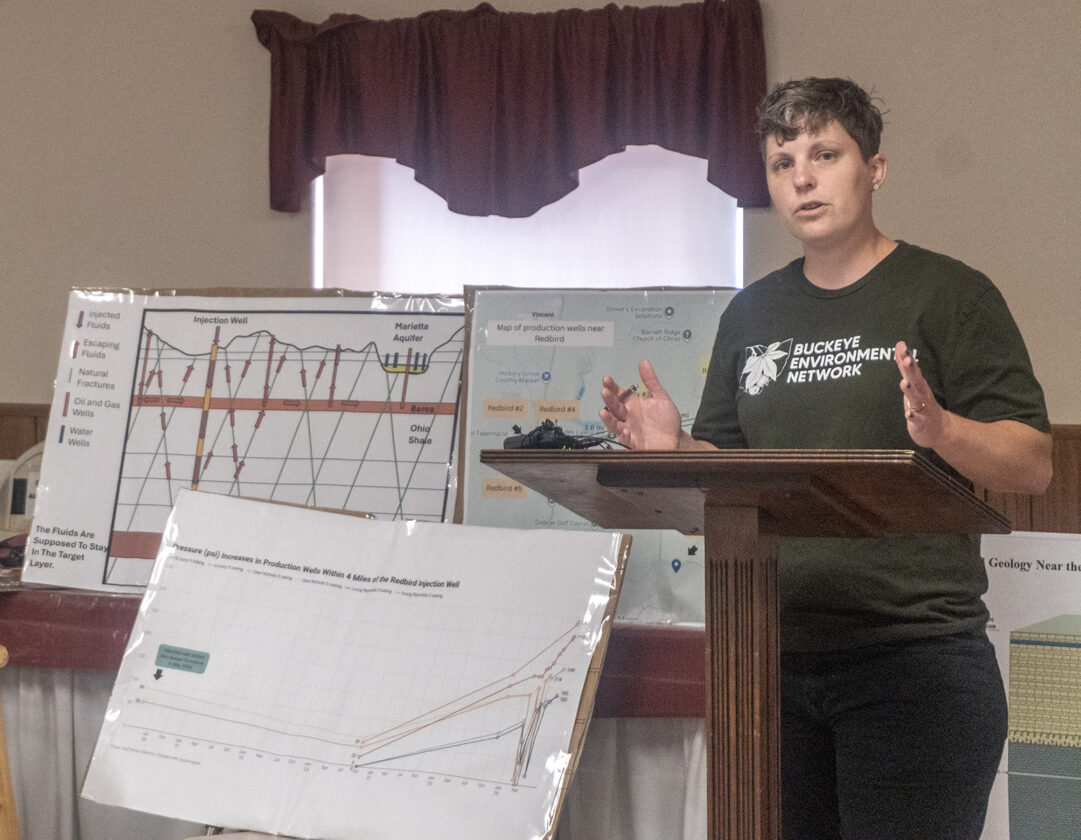
Buckeye Environmental Network Appalachian Organizer Bev Reed calls on the Ohio Department of Natural Resources to investigate brine migration in Washington County during a press conference at the Tunnel United Methodist Church Tuesday afternoon. (Photo by Gwen Sour)
Bob Wilson checks the pressure on his well, the Curry #3 to show the pressure sitting outside the recommended range in July. (File photo.)
David Jeffery, a geologist and professor at Marietta College, shares his opinion regarding the potential for brine migration during a press conference Tuesday afternoon at the Tunnel United Methodist Church. (Photo by Gwen Sour)
Buckeye Environmental Network Appalachian Organizer Bev Reed calls on the Ohio Department of Natural Resources to investigate brine migration in Washington County during a press conference at the Tunnel United Methodist Church Tuesday afternoon. (Photo by Gwen Sour)
Trending
MARIETTA -- Buckeye Environmental Network called on state officials to suspend injection operations in part of Washington County and conduct a broader investigation into brine migration during a press conference focused on the Redbird #4 Class II injection well and nearby conventional oil and gas wells.
The group released a report claiming pressure readings have continued to rise in several production wells near Redbird #4, years after the Ohio Department of Natural Resources concluded wastewater injected into the Ohio Shale Formation from Redbird #4 had migrated into several production wells in the adjacent Berea Formation.
In a 2020 Washington County Produced Water Investigation, ODNR said three owners of production wells reported increased salt water, or brine, during extraction from 28 production wells in late 2019. The agency said it contracted with Resource Services International to analyze data and determine whether brine was traveling from Redbird #4 to the production wells.
ODNR concluded wastewater injected into the Ohio Shale Formation from Redbird #4 was the source of brine that appeared in several production wells drilled into the adjacent Berea Formation. The agency also said naturally occurring fissures between the Ohio Shale and Berea Sandstone formations allowed wastewater to migrate between formations and into production wells.
ODNR’s report said the owner of Redbird #4 voluntarily completed modifications May 22, 2020, to seal off the Ohio Shale formation, and Redbird #4 had not injected since November 2019 because of an unrelated pump problem.
The agency said at the time it was unlikely wastewater would migrate farther, including into underground sources of drinking water, due to the composition of rock layers and other factors. ODNR also said it had received no reports of adverse effects to human health or safety associated with the wells at issue and no reports of groundwater contamination in the geographical area.
Buckeye Environmental Network says the state's findings show injected brine can migrate outside its intended disposal zone, while the group claims continued pressure increases in nearby wells show the problem has not been resolved.
According to the group's report, Redbird #4, about 3.5 miles northwest of Belpre, began operating in 2018. The report claims conventional well owners noticed changes about a year later, including wells that had been producing for decades becoming flooded with fluid. The group says 28 production wells went down within weeks, and it argues ODNR was slow to respond to the initial complaints.
During the press conference, Buckeye Environmental Network Appalachian Organizer Bev Reed said the group was focusing on "the oil and gas production well owners and their lived experiences dealing with these increasing problems in their wells."
Reed claimed ODNR initially downplayed concerns from producers and said the agency only investigated after the well owners sought help from a state representative.
ODNR's 2020 report said the division collected samples from two other Class II saltwater injection operations injecting into the Ohio Shale within a 10-mile radius of Redbird #4, added conditions to newly permitted Class II saltwater injection wells after Aug. 11, 2020, contracted to plug an idle and orphan well near Redbird #4 and compiled a list of 11 nearby wells for review. ODNR also said it would prohibit new Class II saltwater injection well permits into the Ohio Shale formation within a 10-mile radius of Redbird #4 until further studies were completed.
Bob Wilson said he owns about 171 gas wells in Washington County and claimed roughly 50 "don't make anything but disposal water."
Wilson said his problems began in 2019, when he began losing wells which filled with water, which he claimed was corroborated by ODNR following a review. Wilson claimed he lost two wells in the past five to six weeks.
David Jeffery, a geologist and Marietta College professor, said that rising pressure in production wells is evidence of an unnatural change underground.
"This does not happen in your normal oil and gas well," Jeffery said. "Oil and gas wells basically lose pressure over time, so there's something unnatural going on."
Jeffery claimed fluids are likely moving through fractures from higher-pressure injection zones into lower-pressure producing formations. He said some fractures in the area may be permitting fluids to travel upward.
"Fluids in the subsurface flow in the direction of low pressure," Jeffery said. "They're putting tremendous amounts of pressure into this area."
Jeffery said the intended purpose of injection wells is for fluids to remain in the formation where they are placed. He said he believes that is not happening in this case.
"The goal is to have all of the fluids remain down here and not go anywhere else," Jeffery said. "They're toxic. They're radioactive. We do not want them anywhere near the surface."
He said the situation should prompt immediate regulatory action.
"The government should be immediately shutting this down now," Jeffery said.
State Rep. Tristan Rader, D-Lakewood, also attended the press conference. Rader said he became involved after hearing from well owners and called the situation a potential emergency. He and state Rep. Sean Brennan, D-Parma, are primary sponsors of House Bill 439, which would prohibit the surface application of brine from oil and gas wells on roads, according to the Ohio Legislature.
Due to an earlier deadline, ODNR was not immediately available for comment.
Key terms:
* Injection well, Class I: An underground injection well used for certain types of waste disposal, including industrial, municipal, hazardous or radioactive waste, depending on the permit and well type. Ohio rules include hazardous waste and radioactive waste disposal wells within the Class I category.
* Injection well, Class II: A well used for fluids connected to oil and gas production. In Ohio, Class II disposal wells are used to inject brine and other oil- and gas-related waste underground.
* Conventional well: An oil or gas production well that is not a modern horizontal shale well. These wells are often vertical and may have been drilled decades ago into traditional oil and gas formations.
* Injection brine/wastewater: Salty liquid waste that comes from oil and gas drilling, production, well stimulation or plugging. It can be disposed of through permitted injection wells.
* Horizontal wells: Oil or gas wells drilled down and then sideways through shale formations, including the Utica, Marcellus or Point Pleasant formations. They are commonly associated with modern shale development.
* Orphan wells: Oil or gas wells that were not properly plugged or cleaned up and no responsible owner is available, known or financially able to handle the work.
Definitions were derived from Ohio Revised Code 1509.01, Ohio Administrative Code Rule 3745-34-04, and ODNR.