Legislature details judicial impeachment process
Amendment setting deadline fails
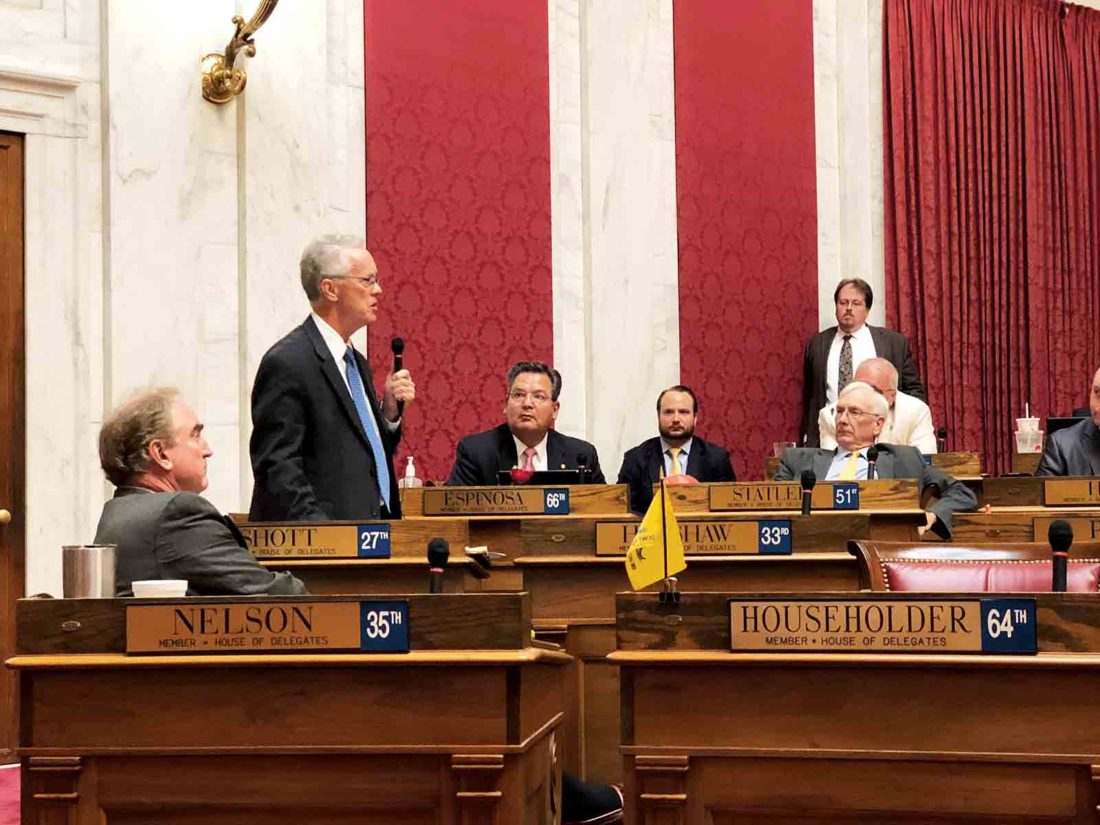
Delegate John Shott, R-Mercer, speaks against an amendment to limit the House Judiciary Committee’s impeachment deliberations to July 23. (Photo by Steven Allen Adams)
CHARLESTON — Both chambers of the West Virginia Legislature voted Tuesday for a resolution detailing how impeachment proceedings against justices of the state Supreme Court of Appeals will move forward.
Now the ball is in the hands of the House Judiciary Committee to decide what articles of impeachment to bring and against whom.
While the Senate voted by voice vote, the House of Delegates voted 89-0 in favor of House Resolution 201, which lays out in detail how the impeachment process will be conducted. But that was after over an hour of debate on an amendment by House Democrats to put a deadline on the impeachment process.
HR 201 empowers the House “to investigate … any allegations or charges related to the maladministration, corruption, incompetency, gross immorality, or high crimes or misdemeanors committed by any Justice of the West Virginia Supreme Court of Appeals.” It gives the House Judiciary Committee the authority to examine witnesses and documents, subpoena power, and hire additional staff.
An amendment to HR 201 would have required a July 23 deadline for the House Judiciary Committee to complete its impeachment work and submit its findings to the full House. Delegate Isaac Sponaugle, D-Pendleton, was the lead sponsor of the amendment.
“What we’re doing, in essence, is putting a time period on here so we decide whether or not as a full body to proceed in an impeachment against one or multiple Supreme Court justices,” Sponaugle said.
According to Sponaugle, the Legislature would need to have impeachment proceedings completed by Aug. 13 for voters to select one or more new justices on the November ballot. After that date, the governor could appoint justices to fill vacancies until the next regular election.
“My request of July 23 provides the House 27 days — almost a full month — to do its discovery, come back to this body, and present us with any charges,” Sponaugle said. “The issue on this amendment is, frankly, should the voters of the state of West Virginia have a right to vote on who their justices are going to be on this court, or should the governor have the appointment power for two years.”
Several Republican lawmakers balked at the amendment, including Delegate John Shott of Mercer County, the chair of the House Judiciary Committee and the person who will be leading the impeachment investigation.
“The number of days that are allowed to submit a final — keep that word in mind — final recommendation is very insufficient when you look at the reality of the situation.” Shott said.
Shott pointed out many lawmakers on the House Judiciary Committee have jobs, and with the impeachment process happening in the middle of summer, he said juggling the schedules of committee members and witnesses could make it hard to complete their work by the proposed deadline.
“We basically have 16 days to evaluate not one justice of the Supreme Court’s conduct, but all five,” Shott said.
House Minority Leader Tim Miley, D-Harrison, said it shouldn’t take much time to come up with articles of impeachment. He said the Legislative Auditor’s reports on Supreme Court spending, released between April and June, already lays out much of the groundwork for the committee.
The reports revealed that Justices Allen Loughry and Menis Ketchum misused state vehicles and filed improper travel reimbursement. Loughry also was singled out for taking home an antique desk from the Supreme Court and using state resources to transport it.
“An investigation was conducted on behalf of this body — he’s called the legislative auditor,” Miley said. “He works for us and the Senate. They did conduct an investigation and one of the justices, Justice Loughry, was given the opportunity to respond and he chose not to.”
“Anything in that report would support a particular vote by the Judiciary Committee or recommendation, and a vote by this House,” Miley said.
After an hour of debate on the amendment, it failed 57-32 mostly along party lines.
Also of concern were conflicts of interest when voting for the resolution. House Speaker Tim Armstead, R-Kanawha, already recused himself from presiding over the special session, turning the gavel over to House Speaker Pro Tempore John Overington.
Armstead has previously stated he is considering running for the Supreme Court in the near future.
Armstead, taking his desk on the House floor, inquired as to whether he was allowed to vote on the resolution. Several lawmakers who are attorneys and others running for state Senate seats also asked if they were required to vote. A ruling by the chair said they would be required to vote.
The catalyst for Tuesday’s special session on impeachment was 22 federal charges brought against Loughry last week by Mike Stuart, U.S. Attorney for the Southern District of West Virginia. These charges included mail and wire fraud, witness tampering and lying to federal investigators.
The Supreme Court earlier suspended Loughry without pay. The Judicial Investigation Commission filed a complaint alleging he violated the judicial codes of conduct and the Judicial Disciplinary Counsel sought his immediate suspension and termination of his license.
Local News
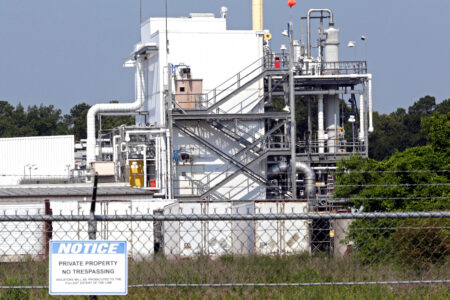
US says chemical maker Chemours to pay $450M to settle ‘forever chemicals’ case
Hardesty: Public school systems heading toward financial ‘rocks’ unless Legislature acts
Belpre America 250 Kickoff Celebration rescheduled to July 6
BELPRE - The Belpre America 250 Kickoff Celebration will be rescheduled from Saturday to Monday, July 6 due to ...
Attorney who worked on previous chemical lawsuits gives his take on new agreement
PARKERSBURG – An attorney who represented local residents in litigation over chemicals that ended up in the local ...

Friends of Mountwood Park Adventure Camp registration open