
Parkersburg City Council, Wood County Circuit Court to consider petition issue
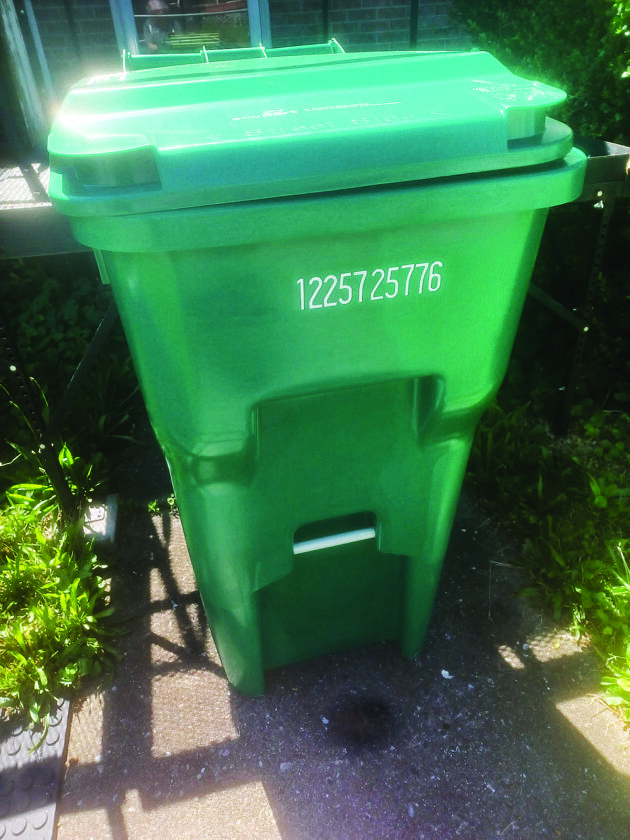
One of the new 96-gallon trash carts being distributed by Waste Management is shown in Parkersburg Friday. (Photo by Jeffrey Saulton)
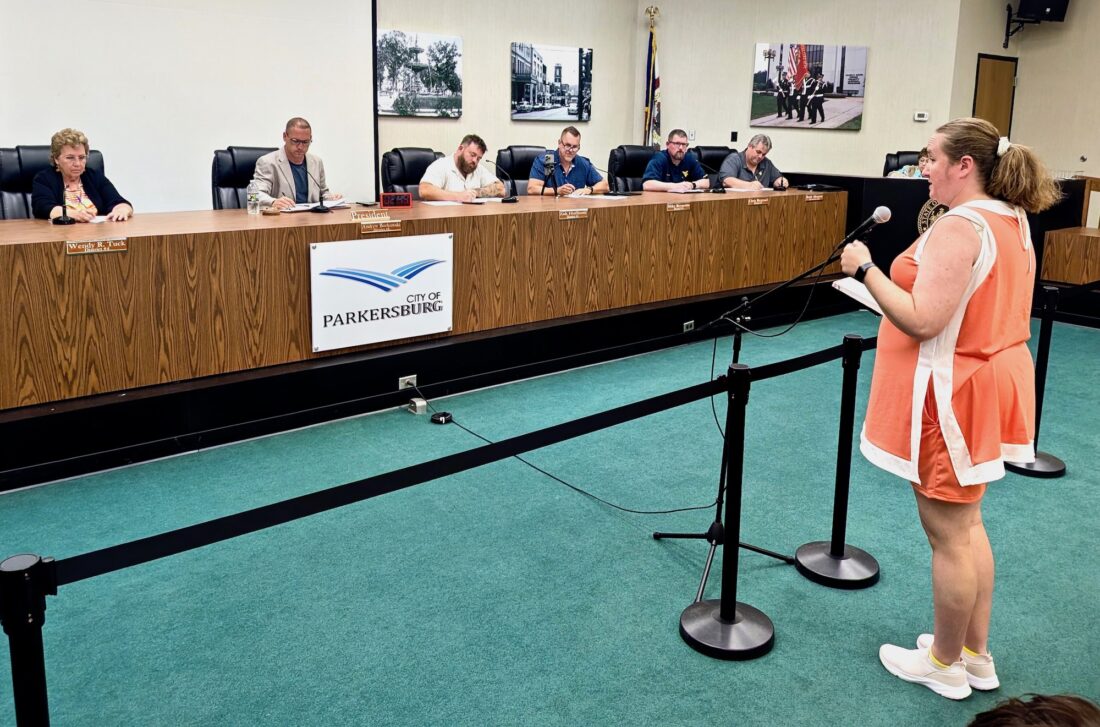
Parkersburg resident Julia Monroe, right, speaks about the sanitation situation during a May City Council meeting. (File photo)

Edward Escandon, left, a member of the committee collecting petitions for a referendum on Parkersburg’s ordinance approving a sanitation contract with Waste Management, speaks to a motorist while collecting signatures in April at Parkersburg City Park. (File photo)
One of the new 96-gallon trash carts being distributed by Waste Management is shown in Parkersburg Friday. (Photo by Jeffrey Saulton)
Parkersburg resident Julia Monroe, right, speaks about the sanitation situation during a May City Council meeting. (File photo)
Edward Escandon, left, a member of the committee collecting petitions for a referendum on Parkersburg’s ordinance approving a sanitation contract with Waste Management, speaks to a motorist while collecting signatures in April at Parkersburg City Park. (File photo)
Trending
PARKERSBURG - Parkersburg City Council is scheduled to vote Tuesday on whether a referendum petition to repeal the city's proposed contract for trash service is sufficient, as the committee behind the effort seeks a judge's ruling on the matter.
Council will also officially receive details on the emergency agreements under which Waste Management began assisting the city with trash pickup this month and would provide sanitation service on a month-to-month basis beginning July 1.
The meeting is scheduled for 7:30 p.m. Tuesday in council chambers on the second floor of the Municipal Building. It will be preceded by a Finance Committee meeting at 6:45 p.m. in the Meeks Conference Room adjacent to council chambers and followed by an Urban Renewal Authority meeting.
Mayor Tom Joyce said Friday there are no municipal sanitation personnel remaining in the department. There were just two left earlier this spring.
"Throughout this entire process, no personnel were terminated or laid off due to the as-yet-unsigned multi-year or interim month-to-month contract with Waste Management," Joyce said, noting some took other positions with the city and one retired. "Effective July 1, the sanitation fund has no appropriation for salaries, benefits or overtime."
Council voted 6-3 in January to approve a five-year, nearly $15 million contract for Waste Management to take over sanitation services, with officials citing manpower and retention issues in the Sanitation Department. Residents opposed to the move - arguing the contracted service would cost more and the city should increase pay for sanitation employees - began circulating petitions for a referendum on the ordinance.
After petitioners turned in their initial paperwork, the Wood County Clerk's Office, which maintains voter records, determined they were 672 signatures short of the 2,763 - equal to 15% of the registered voters in the 2024 general election - required for certification. After a court decision forced the city and county to release the reasons why the disqualified signatures were declared invalid, the petitioners submitted nearly 2,000 additional signatures, 1,000 of which were determined to be valid.
But City Clerk Connie Shaffer declared the petition invalid, citing a memo issued by City Attorney Blaine Myers in March stating the ordinance in question was not subject to referendum because it involves the allocation of funds.
Appealing to council and court
The petitioners appealed the decision to council, as allowed under the charter. But their attorney, ACLU of West Virginia Legal Director Aubrey Sparks, filed a motion June 7 asking Wood County Circuit Court Judge J.D. Beane to issue an order that the court, not city officials, must determine whether the ordinance is subject to the referendum power in the municipal charter.
"These procedural questions have real bearing to the experience of community members organizing around an issue they believe to be important to their lives, and their City," Sparks says in the motion.
The charter, Sparks argues, only references things like the number of signatures and time frame for filing petitions when describing the city clerk's responsibility in determining the sufficiency of a petition. City officials erred in concluding the determination was theirs to make, rather than a court's, the motion says.
"Prior holdings of the West Virginia Supreme Court of Appeals establish that the question of whether an issue is subject to referendum is properly determined by pre-election judicial review, not the certification process," it says. Noting a referendum effort getting this far appears to have no precedent in the city's history, the motion seeks "clarification from this Court concerning the proper procedures with respect to this referendum petition and any similar circumstances that should arise in the future."
Although the petitioners object to the city determining whether the ordinance is subject to the referendum, they appealed to council because there is only a two-day period in which to do so, meaning the clock could run out before the court rules, the motion says.
If the court rules in their favor, the plaintiffs asked to be allowed to amend the initial complaint so they can seek a writ of mandamus requiring the city to certify the petition as sufficient. If the court rules against them, the motion says, the plaintiffs seek language in the order clarifying whether the city can enter into the contract prior to the court ruling on whether the referendum power applies to the ordinance.
If council were to certify the petition as sufficient or the court compelled the city to do so, the next step would be for council to vote on whether to repeal the ordinance, Myers said. That would happen at a subsequent meeting, not on Tuesday, he said.
If council agreed the petition was sufficient but did not vote to repeal the ordinance, it would go before the voters in a future election. But Myers said there is likely to be more legal wrangling before that.
"Any decision by the Circuit Court would likely be appealed to the state Supreme Court," he said, adding he believes that goes for the city and the plaintiffs.
Edward Escandon, a member of the petition committee, said he believes the ruling will go in their favor, but if not, they would be willing to appeal if the ACLU of West Virginia continues to represent them.
"It's about people being able to access the democratic machinery by the (means) in the city charter," he said.
With further appeals and judicial review in mind, Myers said he did not anticipate the contract going into effect, even if council votes the petition is insufficient.
"Waste Management has declined to sign the long-term contract due to the legal issues," he said. "That long-term contract is not going to be signed by both parties until all of the legal issues are resolved."
There have, however, been two emergency waste collection agreements executed between the city and Waste Management.
Agreements in place
According to a memo to council members from Finance Director Eric Jiles, the city entered a "Municipal Waste Collection Agreement, effective June 10, 2026, in which Waste Management will provide immediate solid waste collection assistance to the City." The memo cites a public health emergency "resulting from the city's diminished capacity to collect and dispose of refuse."
When city officials began seeking requests for sanitation and recycling contracts last year, there were double-digit vacancies among the Sanitation Department's budgeted 27 employees. The number of sanitation workers is now zero, with employees from other Public Works Department being paid time-and-a-half and temporary workers utilized to cover the duties.
The memo from Jiles says the agreement that began June 10 "enables Waste Management to immediately aid the city for the current route shortage and missed pickups until the interim agreement is in effect." The interim agreement will "enable diverted City Public Works employees to return to their regular work duties and restore such essential services," it says.
Under the immediate collection agreement, Waste Management provides one collection truck and qualified personnel "to perform on-demand residential waste collection services within the City." The city agreed to pay the company $250 per hour for the services, from the time the truck the contractor's hauling facility until it returns.
Under the interim agreement, Waste Management will furnish residents with a 96-gallon cart for trash. Those have been and continue to be distributed.
The city will pay Waste Management $19.65 per residential unit per month. The amount in the proposed long-term contract was $17.65 over the first two years, $18.89 in the third year, $20.21 in the fourth and $21.62 in the fifth.
Joyce said when announcing the interim contract that the sanitation fee for residents would remain $21 a month. That includes a $1.50 surcharge to support a subscription-based recycling service under contract with Rumpke. People pay an additional $3.50 to participate in that program, which is also the subject of a citizen lawsuit.
Council will not vote on authorizing the agreements, only to receive and file them as they were executed under municipal code allowing for emergency purchases, Joyce said.
"The primary goal of (the) administration and myself personally has remained consistent, which was for Parkersburg residents to have their waste removed in a timely and efficient manner," Joyce said. "I am confident Waste Management will do just that."
In other business
The Finance Committee in their meeting will consider an appropriation to revise the fiscal year 2027 opioid settlement fund budget to provide $15,000 to the River City Runners Club for their Kid's Running Series, described as providing youth prevention and diversion. It was inadvertently omitted when the budget was adopted, according to the resolution, but is eligible for the opioid money after previously coming out of the general fund.
The resolution's inclusion on the council agenda is pending the approval of the Finance Committee.
Council will convene as the Urban Renewal Authority after the regular meeting. That agenda includes offers of $2,000 from David and Rose Poelot to purchase 1317 Lynn St. and $500 from Tanya Eddy to purchase 1706 Spring St. Both propose to use the properties as yard extensions.
Evan Bevins can be reached at ebevins@newsandsentinel.com.