
America 250th fete slated at Battle of Buffington Island observance
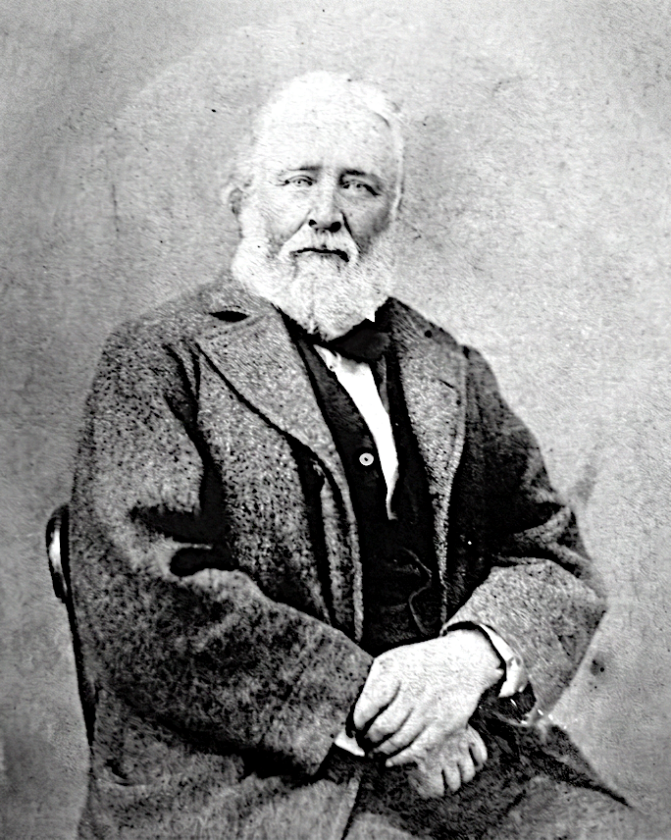
William Rufus Putnam Jr.
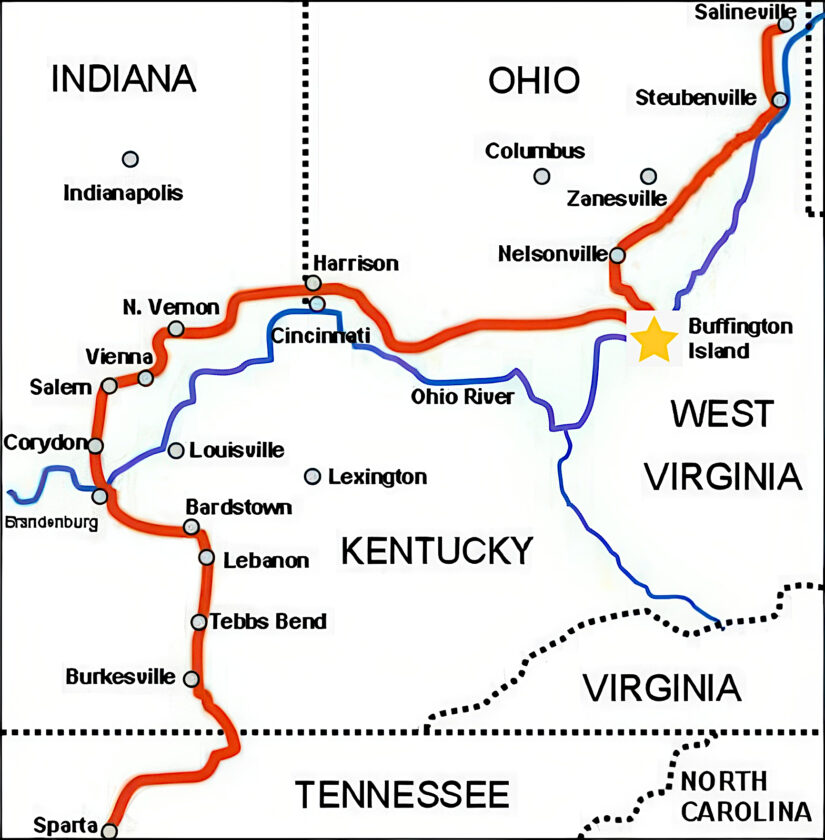
Morgan’s Raid across Kentucky, Indiana and Ohio, the longest of the Civil War.
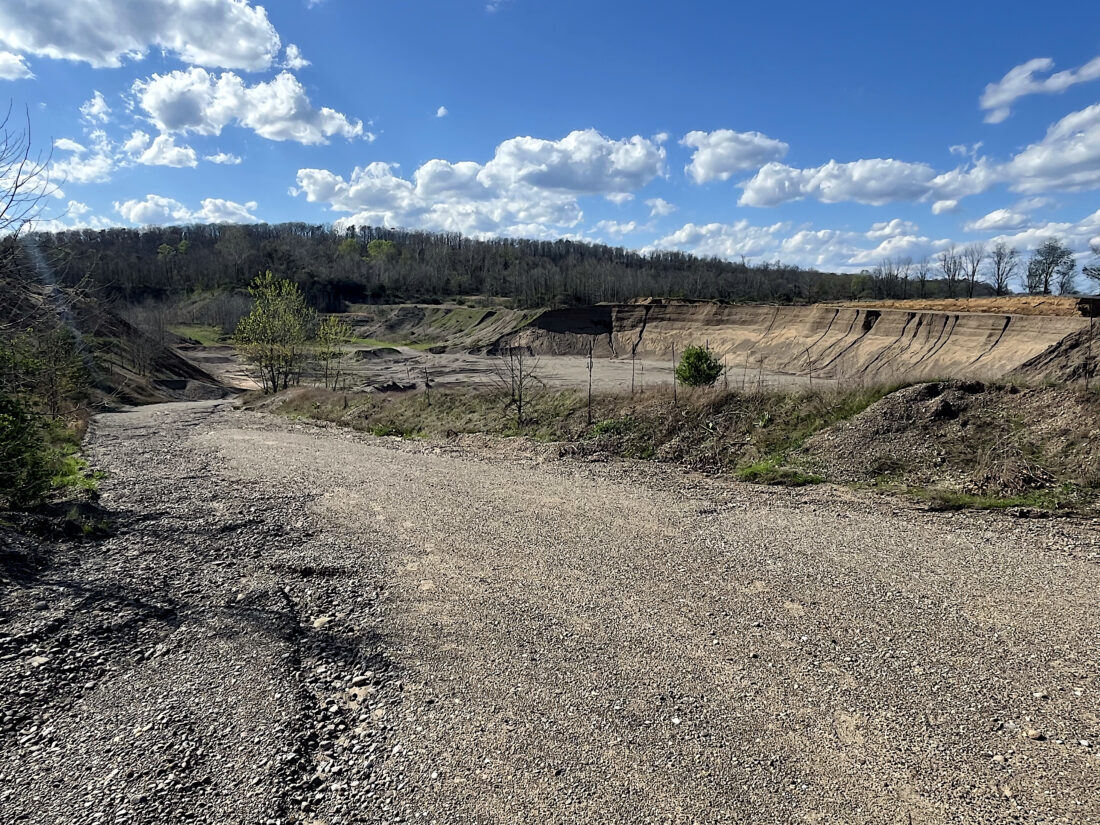
About half of the Buffington Island battlefield is permanently lost due to open pit sand and gravel mining.
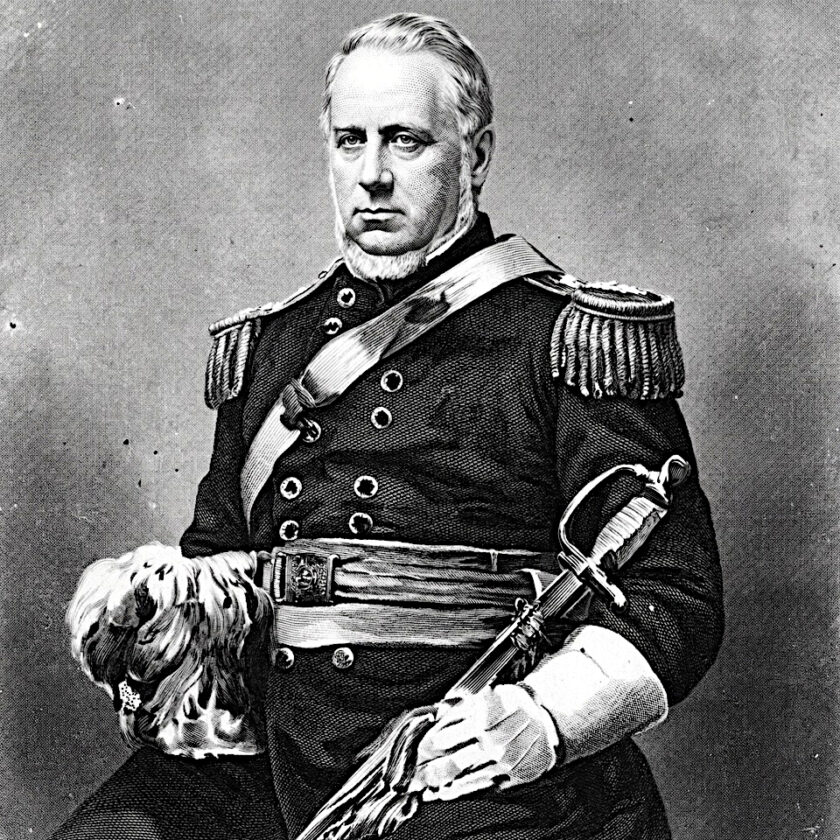
Capt. David L. Wood
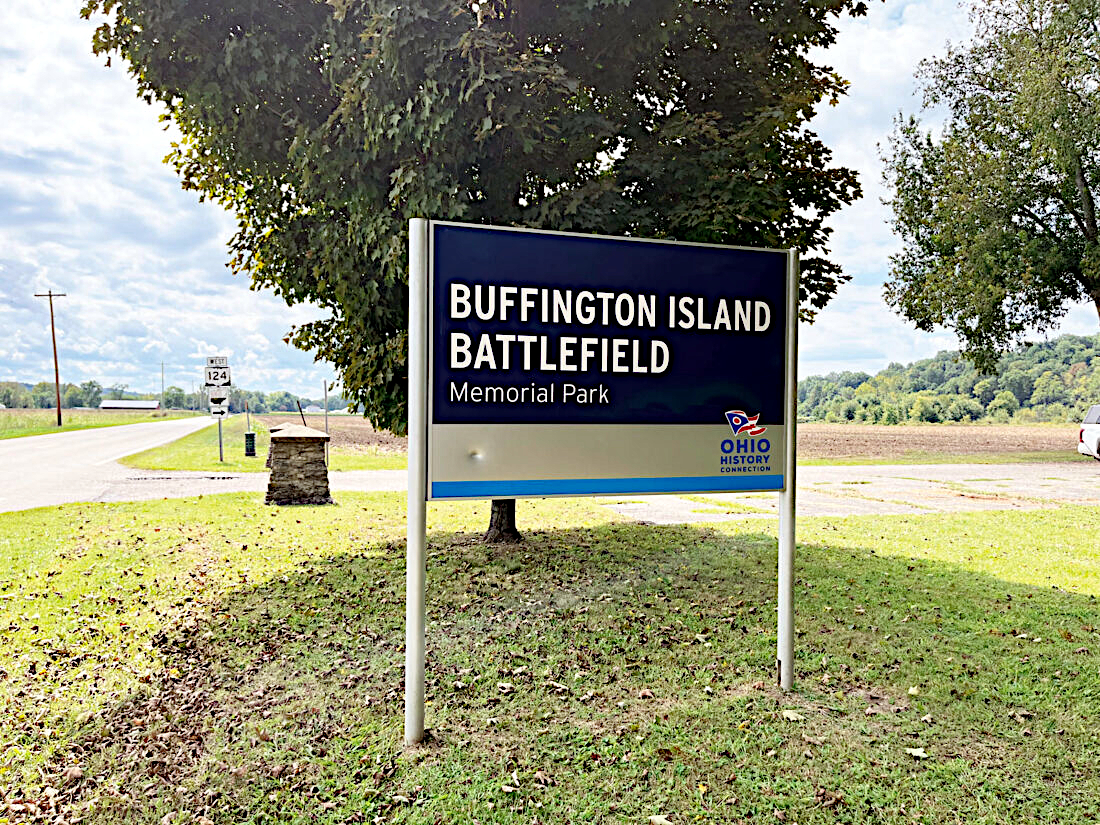
Buffington Island State Memorial park is on State Route 124 in Portland.
William Rufus Putnam Jr.
Morgan’s Raid across Kentucky, Indiana and Ohio, the longest of the Civil War.
About half of the Buffington Island battlefield is permanently lost due to open pit sand and gravel mining.
Capt. David L. Wood
Buffington Island State Memorial park is on State Route 124 in Portland.
Trending
PORTLAND, Ohio - The 2026 annual Battle of Buffington Island Memorial Service and Marietta Militia Historical Marker Dedication, an America 250th celebration, will be held at 11 a.m. Saturday at the Buffington Island State Memorial in Portland.
The America 250 celebration is free and open to the public and will include a memorial service, brief presentations, period music performed by the 73rd OVI Regimental Band, an artillery salute and a picnic following the ceremonies.
The celebration is made possible by the generosity of the America 250-Ohio Commission, of Marietta, American Legion Post 64 in Marietta, Mid-Ohio Valley Veterans Outreach, Military Order of the Purple Heart Marietta Chapter 743, VFW Post 5108 in Marietta, the Civil War Round Table Congress, Dan and Lisa Evangelista, the Marietta Community Foundation, Judy Phillips and the Warren Offenberger family.
The Battle of Buffington Island, the largest Civil War battle in Ohio, started on July 19, 1863, when Confederate Brigadier Gen. John H. Morgan and 2,000 cavalrymen attempted to cross the Ohio River into West Virginia at Buffington Island to escape pursuing Union land forces under Gens. Edward H. Hobson and Henry M. Judah and naval gunboats under Lt. Com. Leroy Fitch.
The 1,100-mile raid across Kentucky, Indiana and Ohio, the longest raid of the Civil War, was conceived by Morgan and Gen. Braxton Bragg, commander of the Confederate Army of the Tennessee, to create panic in the North and distract Union resources from the invasion of Eastern Tennessee.
The expedition began on July 2, 1863, when the raiders crossed the Cumberland River from Tennessee into Kentucky. They raced north through Kentucky and feigned distress to hijack two steamboats used to cross the Ohio River into Indiana near Brandenburg, Ky., on July 8-9, 1863. The raiders burned factories, homes, bridges and railroad depots, stole food and grain for their horses and sowed fear and confusion wherever they chose. Fresh horses were stolen all along the route to enable the raiders to outrace their pursuers as well as deny them this vital resource.
Citizens were in widespread panic at the prospect of facing Morgan as he turned east and crossed the Ohio-Indiana border.
Morgan circumvented Cincinnati and nearby Camp Dennison, Ohio’s largest Union Army training camp and supply depot, and continued east through Clermont, Brown, Adams and Pike counties. On July 13, Ohio Gov. David Tod ordered all militias in Southern and Southeast Ohio to report to Col. William Rufus Putnam Jr. at Camp Putnam in Marietta.
Camp Putnam was a Union army training camp located at the present-day Washington County Fairgrounds. Putnam, who commanded the camp, was the grandson of Gen. Rufus Putnam, a founder of Marietta referred to as the “Father of Ohio.”
The following day, July 14, Tod telegraphed Putnam to alert him that Morgan had crossed the Little Miami River and was expected to cross the Ohio River into West Virginia at fords near Marietta. Tod further directed Putnam to prevent Morgan from crossing the river and to contain him west of the Muskingum River.
On July 15, a detachment of 300 men, under the command of Capt. D.L. Wood, 18th US Infantry, moved downriver to Blennerhassett Island where Wood dispatched 100 men to guard the ford there. He continued to Buffington Island, arriving there on July 17.
The men, primarily from Marietta and Athens County, were blacksmiths, carpenters, coopers, shopkeepers, stone cutters, tailors and teamsters with little military training and no combat experience. Wood immediately set his men out as pickets to alert the force if Morgan approached, constructed earthworks or an earthen redoubt, and prepared to defend the ford.
Two brass guns, fired on holidays by the Fort Harmar and Marietta militias, were mounted prominently on the redoubt walls.
When Morgan’s force of more than 1,900 cavalrymen descended from the hills onto the Portland Bottom on the evening of July 18, darkness made it difficult to observe the earthworks. It was nearly impossible to assess the extent of the earthworks, the number of defenders and to determine if they were regular soldiers or militia.
The rebels, engaged in a running gunfight with their pursuers for most of the day, were exhausted and starving. They were caring for their wounded and the Ohio River ford, normally 2-feet deep in July, ran 6-feet with turbulent and unpredictable currents due to heavy rainfall in western Pennsylvania in early July.
Morgan made the fateful decision to camp on the Portland Bottom that night and to wait for daylight to take the redoubt and attempt the dangerous river crossing. Two Kentucky regiments formed a line just 400 yards from the earthworks and were poised to begin the attack at first light. Meanwhile, the 200 men of the Marietta Militia huddled behind the earthworks and were determined to repulse the Confederate assault. Neither Confederate nor Union soldiers slept that night.
While Morgan’s men rested on the banks of the Ohio, all Union land and river-based forces were moving rapidly to Portland. Hobson’s vanguard came from nearby Chester and arrived before midnight while Judah’s column set out on a night-march from Pomeroy. Lt. Cdr. Leroy Fitch and a flotilla of four Union gunboats from Cincinnati arrived at about 2 a.m. July 19 and anchored in the narrow channel between the mainland and Buffington Island.
At 5:30 a.m. on July 19 Morgan's men moved forward but found the earthworks abandoned and were eager to begin the river crossing. Almost immediately, however, they collided with the forward line of Judah’s brigade who were marching up the Portland Road. The dense fog prevented each party from detecting the other. The battle that followed was a decisive Union victory. Morgan’s force sustained heavy losses that included 150 killed and 1,025 captured in nearly three and one-half hours of fighting. Union losses were light. Yet, Morgan somehow escaped with almost half of his men.
By July 18, a force of nearly 12,000 militia had reported to Camp Putnam but there were too few firearms available to arm them. Instead, Col. Putnam sent them out with axes, pitch forks, spades and picks to fell trees across the roadways, burn bridges, and guard the fords west of the Muskingum River to impede Morgan’s path of retreat. Pursued by Union Generals Hobson and Shackelford, Morgan’s retreat route led through 12 Ohio counties before he is captured near Salineville in Columbiana County near the Pennsylvania border on July 26, 1863.
Most importantly, the events at Buffington Island and role of the Marietta Militia were vital in securing Morgan’s capture and ending the longest raid of the Civil War.
Guests in attendance will learn more about Morgan's Raid and the defense of the earthworks by the 200-man Marietta Militia – the first force on the battlefield – and their fate while standing steadfast in the face of Morgan’s nearly 2,000 raiders on the night of July 18, 1863.
The battle is significant because it demonstrated that Kentucky, Indiana and Ohio were vulnerable to Confederate attacks from Tennessee. Two future U.S. presidents, William. Mckinley and Rutherford B. Hayes, were on the battlefield, and Danil McCook, 65, and patriarch of Ohio’s famous “Fighting McCooks" that included two brothers and their 13 sons who served in the Civil War, was mortally wounded in the early moments of the battle.