
Vietnam veteran Bob Goff writes book
Dedicated to friend killed in combat
Trending
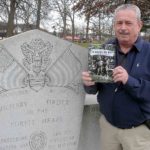
PARKERSBURG -- In 2012, Bob Goff of Parkersburg started writing down his experiences as a sergeant in the U.S. Army during the Vietnam War in the 1960s.
"A cousin asked me, 'why don't you write down your experiences (in Vietnam) so the family knows,'" Goff said.
Goff wanted his relatives to understand how he developed Post Traumatic Stress Disorder, or PTSD, and what he learned in Vietnam, including how to stay alive.
When Goff started to write his thoughts, "the floodgates opened," he said. He recalled events, landmarks and even little details from his time in Vietnam from April 1967 to April 1968.
"The more I wrote, more would come back," Goff said. "I just wrote down my life."
His family urged him to publish these writings in a book.
These early writings evolved into Goff's book, "An Unending War - A Memoir of Vietnam," which he had published this year.
The book is dedicated to Sgt. James Ralph Snyder, Goff's friend, mentor and fellow sergeant in the Fourth Battalion, Ninth Infantry Regiment, 25th Infantry Division.
Goff and Snyder served together for three months before Snyder was killed by a booby trap, a Chinese Claymore mine, while on a mine sweep on June 27, 1967, around Tay Ninh, Vietnam. A native of Pennsylvania, Snyder was 27 years old when he died.
Goff carried the burden of Snyder's death for 50 years.
Goff was scheduled to be on that patrol, along with platoon leader Lt. Lewis B. Gaiser, who also was killed in the explosion.
But Goff was given an opportunity to fly to another location to call home, a rare occurrence. Snyder insisted he would go in Goff's place on the patrol.
Goff, a former Parkersburg city councilman, has struggled with thoughts of, "why him and not me."
"Jim had taught me how to stay alive," Goff said.
Goff said he gained "some closure" to his guilt over Snyder's death during a meeting with Snyder's sister, Cindy Dunbar of Roanoke, Va., at the Vietnam Veterans Memorial wall in Washington, D.C., last June.
Dunbar told Goff not to blame himself for Snyder's death. She didn't blame him. "It was Jim's time to go," Dunbar told Goff.
This emotional meeting between Goff and Dunbar -- 50 years after Snyder's death -- gave Goff a "wonderful ending" for his book.
Dunbar was the first person to receive the book from Goff.
She said she learned a lot about her brother Jim from reading the book, Goff said.
Goff and Dunbar are now friends.
In his book, Goff provides personal accounts of ambushes, booby traps and battles that involved his unit.
"God had a presence on the battlefield or I wouldn't be here," he said. It was a fight to stay alive during the war, Goff said.
He describes the nightmares of firefights punctuated by the cries of the wounded.
Goff also describes the struggles of dealing with PTSD. He has gained a new understanding of PTSD.
He has done some second-guessing but has no regrets about serving in the Army. He helped to save soldiers in Vietnam, said Goff, who received a Bronze Star, Purple Heart and the Combat Infantryman's Badge.
He retired as the director of the Wage and Hour Section in the West Virginia Department of Labor.
"If there's a message here, I want it to be one of raising awareness of how war affects our soldiers and trying to understand the PTSD and the horrors they experienced," Goff writes in the book.
"To my brothers, welcome home," Goff writes.
Any money earned from his book will be given to charity, Goff said.