
West Virginia lawmakers briefed on new S.A.F.E. child welfare case system
Trending
CHARLESTON - Child welfare officials in West Virginia are slowly rolling out a new system for evaluating cases in the hopes of keeping more families together while focusing resources on at-risk children.
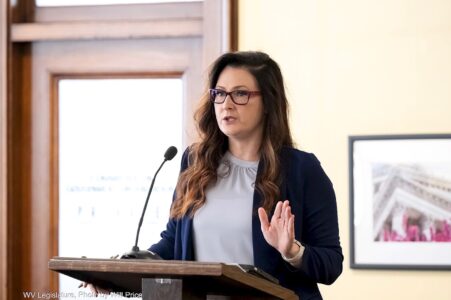
Kendra Boley Rogers, deputy commissioner for the state Bureau for Social Services, gave a report Tuesday morning to members of the House Health and Human Resources Committee regarding the transition to the Safety Assessment and Family Evaluation (S.A.F.E.) model.
The bureau is switching from using a Structured Decision Making tool provided by Wisconsin-based Evident Change, which assesses risk, safety and need of at-risk children being investigated by CPS workers over the course of individual cases.
Unlike previous tools that only aided initial intake, the S.A.F.E. comprehensive practice model tracks child welfare cases from the first assessment through to a permanent living situation. The initiative prioritizes keeping families together by identifying the root causes of neglect, such as addiction or mental health issues, rather than just reacting to isolated incidents.
"When the (child welfare) referrals are called in, it’s to assist with that decision-making process,” Rogers said. "It starts at the intake assessment, and it goes on through the permanency of the child, whether that’s adoption or reunification or whatever that looks like. It’s really focused on ensuring child safety, assessing parent protective capacities, and what that family dynamic looks like.
"It also assists in understanding," she continued. "What’s the causation for the symptoms? So, child abuse and neglect, typically, is a symptom of something that’s a little bit deeper rooted within the family. ... Whether it’s mental health, whether it’s substance use disorder, whatever’s going on, we can come in and actually provide services to meet the needs of the family so that we can help correct those issues so children can remain safely in the home or return to the home if they do have to be removed."
The intake assessment portion of the S.A.F.E. program went live statewide on March 1. Further rollout is occurring in staggered phases across pilot counties, such as Raleigh, Braxton, Webster, Clay and Gilmer. Pilot counties are estimated to be approximately one month away from finishing the pilot phase before the model moves to the next group of counties.
According to reporting by West Virginia Watch, the Department of Human Services contracted with Evident Change in July 2024 under former Gov. Jim Justice and was paid $223,000, but the state never implemented the SDM tool. The contract with Evident Change was canceled in March 2025 three months into Gov. Patrick Morrisey’s first year in office.
CPS workers in West Virginia have some of the highest child welfare caseloads in the nation. According to the department's Child Welfare Dashboard, more than 12,000 referrals were received through the centralized intake system as of March, with a 45.5% referral acceptance rate, or 8,218 children, and 10.4% of children with a maltreatment finding, or 851.
As of March, there are 5,880 children in state custody, with 549 children in out-of-state placements (9.3%). Most children are in the care of a certified kinship or relative’s home (2,038), with 1,567 children in therapeutic foster care, 911 children in kinship/relative care and 736 children in group residential care.
Other placements include: 199 children with a transitional living client, 156 children in an agency emergency shelter, 107 children in a psychiatric hospital, 81 children in detention, 31 children in transitional living for vulnerable youth, 24 children in a specialized family care home, 11 children in a medical hospital and eight children in runaway status.
There also remains a need for additional CPS workers. Out of the 944 authorized positions, there are 85 vacancies, or 9%. Del. Adam Burkhammer, R-Lewis, asked if the new S.A.F.E. system would require additional staff or take CPS workers away from cases.
"This is much needed, but do you see any problem?" Burkhammer asked. "We already have (a) majority of our workers already carrying high caseloads. Now we’re wanting to take this initiative on. Do you think we need to add staff to adequately do it at a high quality standard?"
"I can’t really say that at this juncture because we are so very early into the process, but I know that this model specifically is designed to make that decision-making better so that caseloads are more at a standard," Rogers said.
Del. Mike Pushkin, D-Kanawha, asked whether CPS officials were being directed to avoid removing at-risk children from homes in order to artificially reduce the number of children in state custody. CPS has come under scrutiny over the last several years for high-profile cases where children died from child abuse despite CPS interactions.
"I’ve heard, not formally, but from people who work in this field about a directive," Pushkin said. "Is there a directive from the department to reduce the children in care and reduce the numbers?"
"We’re looking at our cases and our families as we’re working through them to make sure that we’re not pulling children out of the home when they should not be removed from their families," Rogers said. "If you want to call that a directive, but that’s our primary goal is to keep families together and to reduce trauma on children.
"Anywhere that we can ensure that we can wrap families with services and keep those children safely in the home, that is our goal," she continued. "Child safety is our goal, but we also have to remain very family oriented because we know that those are the best outcomes for kids if they can remain in the home safely."
"I’d agree, but the key word is ‘safely.’ I’m sure we both agree on that," Pushkin said. "Whatever guardrails we need to put up to make sure that we don’t hear more incidents where the children have slipped through the cracks, and I’m sure we all can agree on that as well."
Steven Allen Adams can be reached at sadams@newsandsentinel.com.