West Virginia Senate passes human smuggling bill, sends it back to the House
-

- West Virginia Sen. Laura Wakim Chapman said Tuesday House Bill 4433 would help discourage human trafficking. (Photo Courtesy/WV Legislative Photography)
-

- West Virginia Sen. Ryan Weld offered a successful amendment Tuesday to a bill creating a new penalty of human smuggling. (Photo Courtesy/WV Legislative Photography)
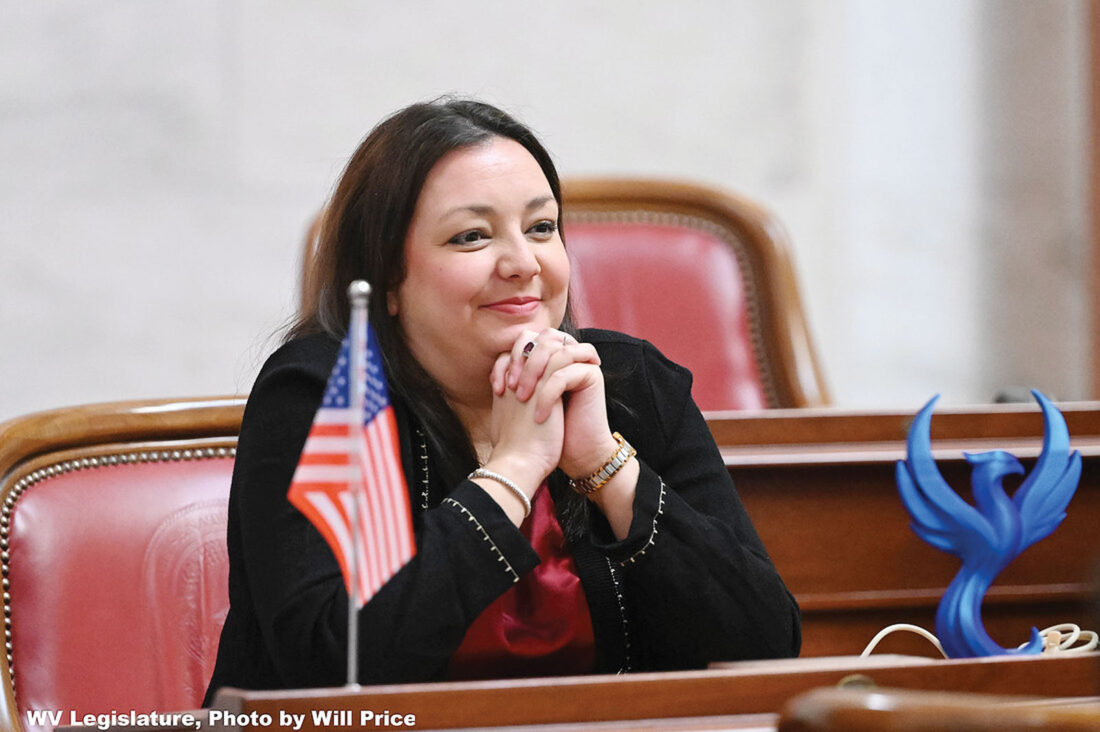
West Virginia Sen. Laura Wakim Chapman said Tuesday House Bill 4433 would help discourage human trafficking. (Photo Courtesy/WV Legislative Photography)
CHARLESTON — The West Virginia Senate amended and passed a House of Delegates bill strengthening human trafficking penalties and adding a new provision aimed at those helping smuggle undocumented immigrants, but the House will need to sign off on the changes.
The Senate approved House Bill 4433, prohibiting human smuggling and trafficking, in a 30-2 vote Tuesday with two absent or not voting. The bill now goes back to the House for that body to concur or reject the amendments.
HB 4433 aims to criminalize human smuggling and increase penalties for human trafficking. The new crime of human smuggling is added and classified as a felony. The bill also increases penalties if the smuggled individual is a minor.
“I urge passage of this legislation as it reaffirms the rule of law in this country and more severely punishes those who treat human life as a commercial commodity,” said Senate Judiciary Committee Chairman Tom Willis, R-Berkeley.
The bill sets more severe penalties for human trafficking offenses involving forced labor, debt bondage, sexual servitude and sexual patronization. It also abolishes parole for offenses involving minors. HB 4433 includes civil forfeiture for assets used in the commission of smuggling and mandatory restitution provisions for victims.
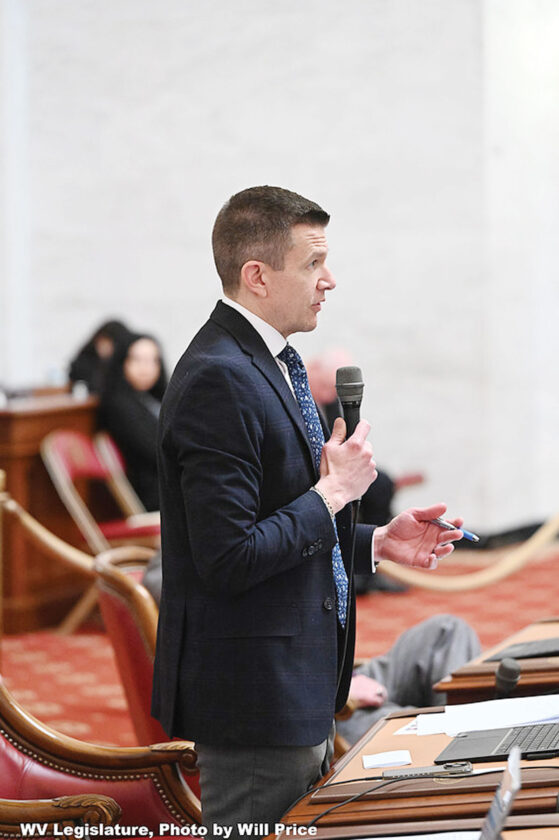
West Virginia Sen. Ryan Weld offered a successful amendment Tuesday to a bill creating a new penalty of human smuggling. (Photo Courtesy/WV Legislative Photography)
It also provides that immediate family members can’t be prosecuted under the smuggling definition for voluntarily transporting one of their family members.
Additionally, individuals acting in the scope of their lawful employment or acting as contractors with a lawful purpose are also exempt. The legislation carves out legal and medical exemptions for professionals providing essential services to individuals regardless of their immigration status.
“We have tried for years to pass this human smuggling statute,” said Sen. Laura Wakim Chapman, R-Ohio. “Human trafficking and human smuggling go hand in hand. … Human trafficking is one of the most underreported crimes. Victims can be anyone, traffickers can be anyone, and the victims don’t always know that they’re victims.”
“Without this bill, the State of West Virginia is beholden to the federal government to catch and prosecute these evil perpetrators,” Chapman continued. “With this bill, now we empower our local law enforcement to stop the evil from happening within our state’s borders. This bill will stop predators and criminal networks. People are not for sale.”
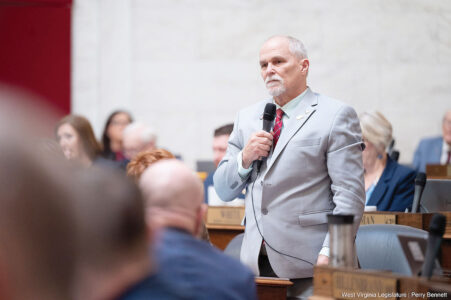
The Senate adopted an amendment offered by Sen. Ryan Weld, R-Brooke, which updated the definition of human smuggling to “knowingly — and willfully — transporting, transferring, receiving, isolating, enticing, or harboring an illegal alien – for the purpose of helping an illegal alien avoid enforcement of state, other state, or U.S. laws.”
“I think it clarifies that an individual must know and must willfully be transporting someone for the purpose of helping that illegal alien to avoid enforcement of the laws of this state,” Weld said.
“We think this tightens the bill and provides a little bit more protection for those that are looking to act the Good Samaritan as opposed to those that are knowingly and willfully trying to evade the law or avoid the law,” Willis said.
Assistant Minority Leader Joey Garcia, D-Marion, offered an unsuccessful amendment that would have provided an exemption for “the provision of transportation, food, medicine, medical treatment, or shelter for a lawful purpose and for the immediate health, safety, or welfare of an illegal alien.”
“The definition of human smuggling is not clear,” Garcia said. “What I want to do is to make the bill more clear and stronger at the same time to protect against the bad guys, but make sure that those people that are trying to help immigrants that are here in our country, that they are not threatened with a felony of three to 10 years.”
Steven Allen Adams can be reached at sadams@newsandsentinel.com
Local News

Wood County real estate transfers

Kelly appointed to vacant West Virginia House of Delegates seat
West Virginia Senate passes human smuggling bill, sends it back to the House

Mid-Ohio Valley Model Railroad Club hosting open house

Rev. Jackson played role in resolving Mid-Ohio Valley labor dispute