
West Virginia legislative session ends with victories on foster care, other bills in limbo
Trending
CHARLESTON -- The West Virginia Legislature's 2020 session came to an end at midnight Saturday with completed legislation to help the foster care system, though other measures were still pending at press time.
More than 293 bills had completed the legislative process by 8:30 p.m. Saturday, with the House of Delegates passing 149 bills and the state Senate passing 143 bills.
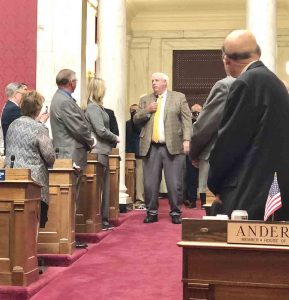
Gov. Jim Justice addressed both the Senate and House on Saturday evening, thanking them for their service to the state the last 60 days.
"Our state is ready to rock and roll, and you guys … have done one whale of a job," Justice said. "I congratulate you from the bottom of my heart and I mean it in every way, shape, form, and fashion."
Crossing the finish line Saturday was House Bill 4092, creating a bill of rights for foster parents and foster children. The bill also increases funding for foster placements.
"We're investing in children who have seen a life most of us can't imagine, and who have grown up without the basic love that most, if not all, receive from their family," said Del. Jeffrey Pack, R-Raleigh, one of the proponents of the bill. "We should all go home to our districts and say if we did not thing else, we did something for the children of West Virginia."
The House concurred with Senate changes to the bill, which changed up the various rights for foster children and placed duties and responsibilities upon foster parents. The Senate version increased funding to the Department of Health and Human Resources for foster child placements from $4.9 million to $16.9 million after previously cutting the funding back.
Justice sent a letter to the Legislature on Friday amending his proposed general revenue budget down from $4.585 billion to $4.574 billion, but increasing certain line items in the budget, including raising the budget for the DHHR social services line item by $17 million to cover the cost of HB 4094, from $209 million to $226 million.
The bill set priorities for the use of the $16.9 million, including increasing efforts to prevent removal of children from their homes, identify relatives or kin to place children with, training kinship parents to be certified foster parents, and expand a three-tiered system to allow DHHR to provide a higher reimbursement for the placement of children with special needs or older children who are typically harder to place by July 1, 2021. DHHR is also required to create a pilot program to increase payment to uncertified kinship parents.
House Finance Committee Minority Chairman Mick Bates, D-Raleigh, asked Pack to continue to work with DHHR to ensure that the $16.9 million is used to increase child placement reimbursement rates.
"This bill gives really broad discretion for implementation on behalf of the department," Bates said. "If we give them the money, they'll spend it as we've directed and in an appropriate way, would that be your intent."
"Absolutely," Pack said. "I would be hopeful they will present their policy in writing on how they intend to do that."
Lawmakers on both sides of the political spectrum praised the compromise between the House and Senate on HB 4092, many calling the bill the best thing to come out of the session this year.
"I am so proud of all the work that's been done on this bill," said Del. Barbara Fleischauer, D-Monongalia. "Money doesn't solve everything, but you can't really raise a family, as the grandparents are trying to do hanging on by their fingernails, on $10 per day … I am thrilled about this bill."
"I am very proud of this House and the work that we've done on this bill," said Del. John Hardy, R-Berkeley, who said he was adopted. "We may be throwing money at this problem, but if we can save one child … they may one day stand in this body as we do and make decisions that affect other people's lives down the road."
Not all delegates agreed with the goal of the bill. Del. Pat McGeehan, R-Hancock, was the lone nay vote. Working as a counselor in an alternative school, McGeehan said money alone cannot solve the foster care system which has ballooned to more than 7,000 children as of last month.
"This is a growing crisis in our state, and it's easy to come up with these plans and virtue signal and say we'll fix this or that," McGeehan said. "Throwing money at the problem will not solve the underlying issue."
Other bills were still in limbo at press time. House Bill 4543 sets a cap for insulin co-pays. The House capped the price at $25, but the Senate passed an amended bill capping it at $100. Lawmakers were still working behind the scenes to find a cap that pleases both bodies.
Another bill to make changes to the state's Medical Cannabis program was moved to the inactive calendar, making its passage unlikely Saturday evening. Senate Bill 752 Medical Cannabis made some changes to the types of medical cannabis allowed for use and changes to the permit process.
House Bill 4497, named for the late Roane County High School football player Alex Miller, passed Saturday night. The bill requires an external defibrillator device at all West Virginia Secondary School Activities Commission events.
Steven Allen Adams can be reached at sadams@newsandsentinel.com