
West Virginia schools show steady improvement in reading, math proficiency post-COVID
Trending
CHARLESTON -- The COVID-19 pandemic and the resulting closing of public schools and remote learning took a toll on West Virginia's students, but data released Wednesday by the Department of Education shows continued improvement back toward pre-COVID proficiency in reading and mathematics.
The West Virginia Board of Education received the 2023 Statewide Summative Assessment results, which looks at proficiency in math, English Language Arts (ELA) and science.
The results consist of combined student performance in three assessments, including the General Summative Assessment for grades three through eight, the SAT School Day Test for high school juniors and the Alternative Summative Assessment for grades three through eight and grade 11. The students tested were enrolled for the entire previous school year or at least 135 days and include 95% participation rate among the grades tested.
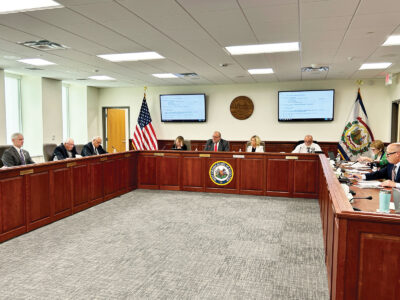
"These results are an important tool that we have at the West Virginia Department of Education and with our counties and our schools to address student learning and to continue improving student achievement," said Vaughn Rhudy, director of assessment in the Division of Accountability, Assessment and Leadership Development.
According to the overall results calculated across all grades, 35% of students tested were proficient in math, up from 33% in 2022 and 28% in 2021. There was no testing in 2020 due to the COVID-19 pandemic, but math proficiency was at 39% in 2019 pre-COVID. ELA proficiency last year was at 44%, up from 42% in 2022 and 40% in 2021, but down from 46% in 2019. Science proficiency was 29% in 2023, up from 28% in 2022 and 27% in 2021 but down from 33% pre-COVID.
"You can see that we did make some improvements," Rhudy said. "They're small improvements in all three of our content areas from 2022. We're not quite back up to the 2019 level yet, but you can see that we're making some progress. So that is good news."
"I am encouraged by some of the things we're seeing," said state Board of Education President Paul Hardesty. "It's slow progress, but yet progress nonetheless."
Looking at proficiency percentages per grade, much of the progress in math was in grade three, when many education experts believe students must have understanding in order to succeed in later grades. Third-grade math proficiency was 52% in 2023, up from 46% in 2022 and 39% in 2021. It was also up one point over 51% in 2019 pre-COVID.
Fourth-grade math proficiency was at 46% in 2023, nearly back to the pre-COVID 2019 number of 47%. But math proficiency among high school juniors was the lowest at 21% in 2023, the same percentage as 2022 and down from 23% in 2021 and 24% in 2019 pre-COVID.
"If you look at the math scores in 11th grade, I wonder how many certified math teachers we have across the scope in the 11th grade in West Virginia high schools," Hardesty asked. "That's a direct correlation to your number, I would bet you that. I know in the southern part of the state we cannot find certified math instructors. That jumps off the page at me."
For English and reading, sixth-graders were performing at pre-COVID levels. Grade six ELA proficiency was 45% in 2023, matching the 45% ELA proficiency percentage in 2019 and up from a post-COVID low of 39%. But in seventh grade, ELA numbers fluctuated. Seventh-grade ELA proficiency was at 39% in 2023, down from 41% in 2022, up slightly from 38% in 2021 and down from 43% in 2019.
Board member Debra Sullivan pointed to a bright spot in the ELA numbers. Third-grade students in 2022 had an ELA proficiency percentage of 36%. But third-graders in 2022 were fourth-graders in 2023, with a 44% ELA proficiency percentage.
"That's wonderful," Sullivan said. "I hope that I'm confident that individuals, school principals, teachers, superintendents, will be looking at that because any of us who've worked with children know very well that this year's class of fifth-graders is not the same as last year's. So, we really need to look at the cohorts."