
TANF Tug of War: Lawmakers reject Morrisey’s crisis claims, citing full funding and executive discretion
Lawmakers reject Morrisey’s crisis claims, citing full funding and executive discretion
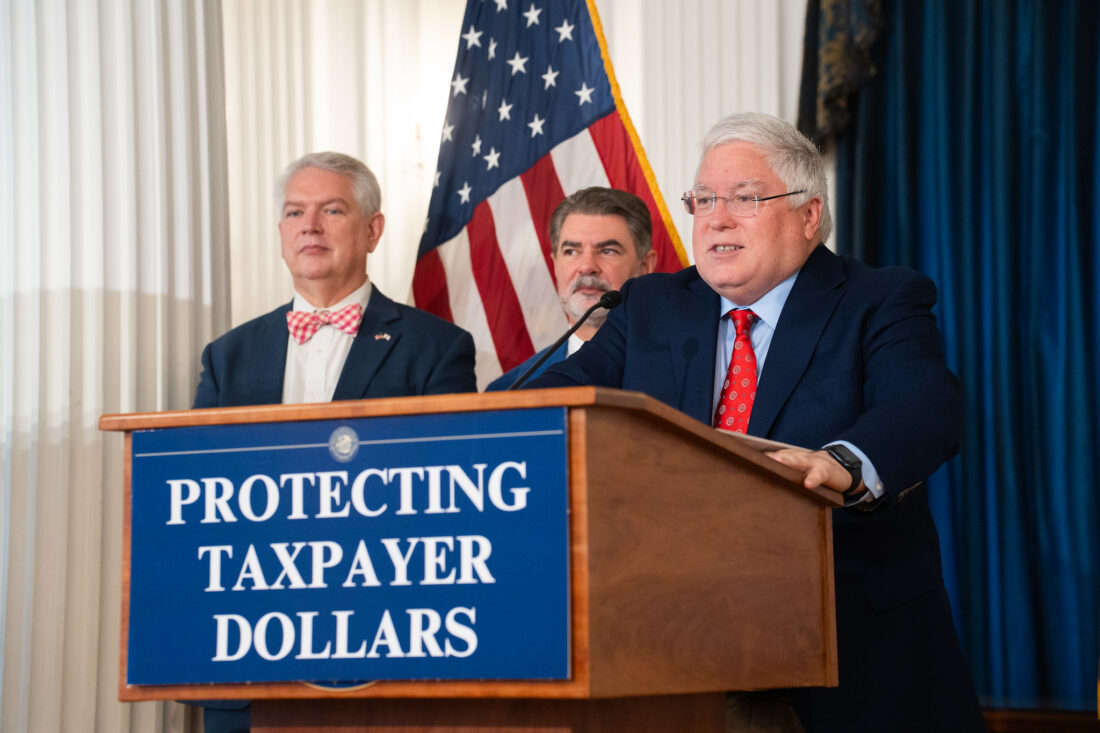
During a May 18 press conference, Gov. Patrick Morrisey said the state was facing a more than $40 million structural deficit in the Temporary Assistance for Needy Families program. (Photo Courtesy/West Virginia Governor's Office)
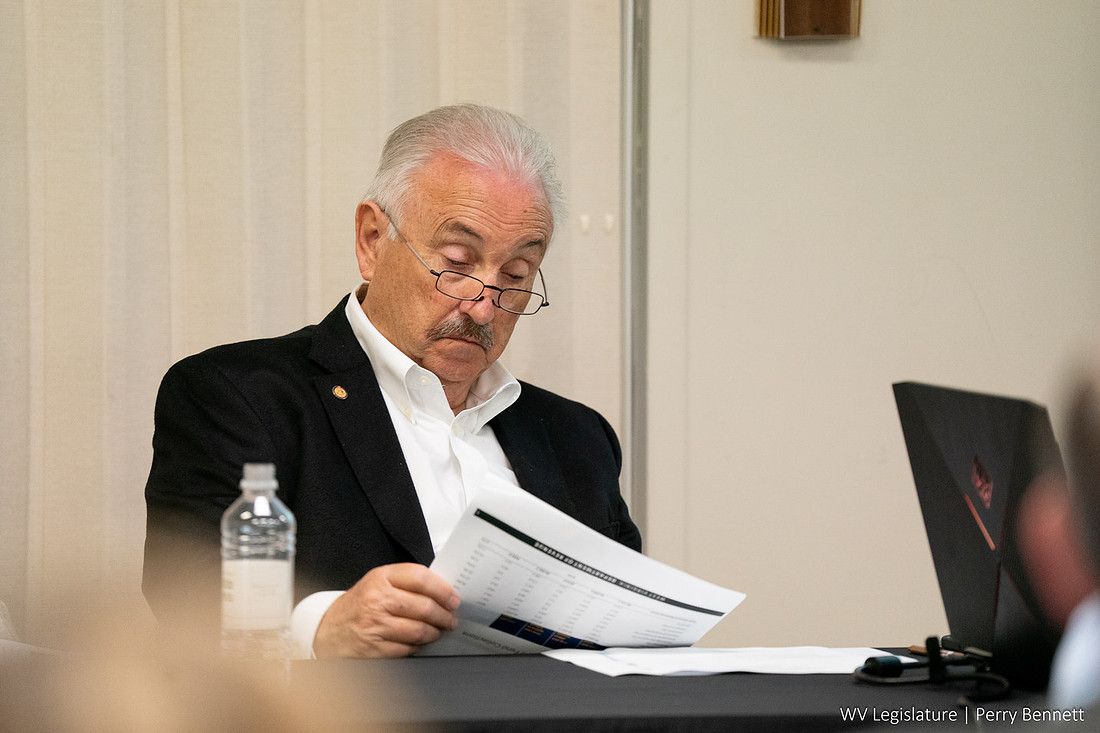
West Virginia House of Delegates Finance Committee Chairman Vernon Criss looks over monthly tax collection data during a legislative interim committee meeting at Canaan Valley Resort State Park in June. (Photo Courtesy/West Virginia Legislative Photography)
During a May 18 press conference, Gov. Patrick Morrisey said the state was facing a more than $40 million structural deficit in the Temporary Assistance for Needy Families program. (Photo Courtesy/West Virginia Governor's Office)
West Virginia House of Delegates Finance Committee Chairman Vernon Criss looks over monthly tax collection data during a legislative interim committee meeting at Canaan Valley Resort State Park in June. (Photo Courtesy/West Virginia Legislative Photography)
Trending
CHARLESTON - Gov. Patrick Morrisey continues to express the belief that spending in the Temporary Assistance for Needy Families program is not sustainable in the long run, but West Virginia lawmakers and advocates remain confused as to why programs are being curtailed now when funding exists
In May, Morrisey announced that the state’s TANF program, also called WV WORKS, was projected to have a structural deficit exceeding $40 million. Morrisey said TANF funds are shrinking, with the program estimated to have approximately 18 months of stability before the structural deficit becomes an immediate crisis.
According to Senate Bill 250, which set the general revenue budget for fiscal year 2027 that began on July 1, $177.1 million was approved by the Legislature for the TANF program through the state Department of Human Services, as well as $25.8 million for TANF maintenance of effort.
In fiscal year 2026, the budget line item for TANF was $176.7 million. But the fiscal year 2025 budget for TANF during the final year of former Gov. Jim Justice’s second term was $134.7 million, or $42.4 million less than the current fiscal year.
Morrisey placed the blame for the alleged structural deficit on an influx of federal dollars that came into the state during the COVID-19 pandemic, with previous state officials using the one-time funding to expand TANF spending.
"What’s happened is because there was a reliance on the one-time money that there was more spending done than money available on a going-forward basis," Morrisey said in an interview Wednesday following an economic development announcement in Wood County.
TANF is a federal block grant that puts states in the driver's seat to distribute the more than $16 billion allocated nationally. According to the DoHS Bureau for Family Assistance, there were 4,254 West Virginia families receiving TANF as of the end of 2025, with a family of three getting up to $542 per month in cash assistance.
The Bureau for Family Assistance manages the TANF program, which includes WV WORKS cash assistance, a school clothing assistance voucher program and grant-based programs for family support centers, the Good News Mountaineer Garage, community and technical college supports, child care subsidies, and other programs.
According to the Center on Budget and Policy Priorities, West Virginia spends approximately 36% of its TANF block grant on basic assistance. Unspent block grant funds can be carried over into the next fiscal year. According to DoHS records, West Virginia had more than $83 million in unobligated TANF balances at the end of September, the end of the previous federal fiscal year, down from $112 million at the end of September 2024.
"You have to make the changes because there’s a federal allotment that comes in," Morrisey said Wednesday. "If you end up spending $140 million, then what you do is you take out of that overage fund ... And then once you run out, then you actually don’t have money to even meet the existing program needs. So, you have to find a way to get back down to the pre-COVID spending."
West Virginia ended fiscal year 2026 with a $370 million general revenue budget surplus, covering the $245 million in appropriations placed in the surplus section of the fiscal year 2027 general revenue budget and leaving $125 million in unappropriated surplus collections for FY28.
On July 1, DoHS officials failed to release details to nonprofits and service providers for the school clothing allowance program, an annual benefit dating back nearly 50 years that helps families purchase clothes and back-to-school items for their children. The program provides $200 per eligible child.
On Wednesday, Legislative Action Team for Children and Families (LAT) sent out a press release criticizing the lack of details, including comments from parents who rely on the school clothing voucher program
"My son is starting school this year and does not have clothes to start in," said Wheeling resident Jessica Huggins, a stay-at-home mother of two. "We were counting on the school clothing voucher to help with that cost, and now we’re not even sure if or when that voucher is coming."
"As a single mother of teenagers who wear adult-sized clothing, the voucher provides valuable assistance," said Wheeling resident Amanda Armstrong. "The delay has made it harder to budget and to make sure my kids are prepared before school starts."
WCHS-TV reported earlier this week that TANF funding was only being made available to family service centers through September. DoHS officials told WCHS that long-term funding was being reviewed due to the alleged TANF structural deficit.
When asked Wednesday, Morrisey would not answer specific questions regarding the clothing allowance program or funding for family service centers, speaking only broadly about the TANF structural deficit. But Friday afternoon, DoHS announced that it will begin accepting applications for the school clothing allowance on July 20. The department said the program was "on hold amid uncertainty over the state's federal (TANF) funding."
House Finance Committee Chairman Vernon Criss, R-Wood, said Friday that the Legislature approved budgets for the Morrisey administration two years in a row that fund TANF at the levels his administration requested.
"If (Morrisey) had needed more at the time that he gave his budget to us in January, we would have been advised of that and we would have taken it under consideration at the time," Criss said. "But since he did not ask for any increase or any decrease in those programs, we funded it exactly as it had been the previous year."
Morrisey said the temporary TANF carryover balances mask the structural deficit, making it look like the program is fully funded in the budget when it is not.
"When you have one-time money, you could say you have the money. Clearly, there would be the money to do it over a 14- or 15-month period," he said. "What we’ve tried to do is get out in front to say that, yes, you could technically do it that way, but then the program’s going to run out of money."
Democratic lawmakers criticized the Morrisey administration Friday for creating uncertainty in TANF-funded programs while the state has end-of-fiscal-year surplus dollars and following the estimated $2 million expense for last week’s four-day America 250 Capitol City Celebration, which included the world’s largest portable Ferris wheel and performances by Alabama and the Marshall Tucker Band.
"The governor has repeatedly claimed the state faces challenges within its federal TANF program, but that explanation rings hollow after he announced a $370 million state budget surplus this week while continuing to withhold funding that lawmakers already approved for children's services," said Del. Mike Pushkin, D-Kanawha, chairman of the West Virginia Democratic Party.
"The only deficit is one of compassion in the executive branch," said House Minority Leader Pro Tempore Kayla Young, D-Kanawha. "The legislature fully funded TANF as requested by the Governor. The school clothing voucher program is not a gimmick, it keeps 80,000 kids throughout our state with clothes on their backs. Withholding the funds with school starting in a month is foul."
Criss said while the Legislature holds the power of the purse when it comes to the general revenue budget, DoHS and the governor have wide discretion to move TANF funds around. The Legislature has attempted to include within the budget bill a provision to limit intra-department transfers of appropriations to not more than 5%, though Morrisey has used his line-item veto power to remove this language from the budget bill each year.
"We have in the last two years tried to restrict that. The governor has not gone along with us on that," Criss said. "In the rest of state government, they have some small latitude to move some funds in most of the departments. At (the Division of Highways), for instance, they have to come to us and ask us to move from line item to line item.”
"So, we have it very restricted from the Highways standpoint, but we have a total lack of control when it comes to Human Services and Department Health," he continued. "By (state) constitution, we are the ones that should be overseeing the expenditures, and we’re not being able to do that when it comes to Human Services or the Department of Health."
The next target of TANF funding could be the state’s Child Care Assistance program, which provides financial assistance to working parents or parents attending public colleges to subsidize the cost of family-based child care or licensed center-based child care for families that meet income requirements.
During budget hearings at the beginning of the 2026 legislative session, former DoHS Cabinet Secretary Alex Mayer told members of the House Finance Committee that the state was paying $41 million out of TANF carryover funds for the state child care subsidy - almost the same amount as the TANF structural deficit.
"TANF carryover is not a pot of money that’s in perpetuity that comes back to the state at the same amount every year," Mayer said on Jan. 30. "It’s a bit of a moving target as to how much of that TANF is utilized and how much remains to help continue to support the carryover bucket that is funding child care."
Earlier this year, the Legislature passed House Bill 4191, which proposes tax credits for businesses that either build on-site facilities or financially back third-party child care providers for their staff.
The bill also mandated a shift toward enrollment-based subsidy payments instead of attendance-based payments, and a new reimbursement system for providers and DoHS to implement strategies that prevent families from suddenly losing child care assistance due to incremental pay raises. Morrisey allowed the bill to become law without his signature.
In statements to multiple media outlets, Morrisey has said he is collaborating with the Legislature on a fix for the TANF structure deficit, including the possibility of a special session.
"We’ve had positive meetings with the House and Senate, and key people there, and we’re going to continue," he said. "We’ve had back and forth with key legislators. So, we’re going to continue to have discussions with them, and at the appropriate point, we’ll make an announcement."
But with the state being 11 days into the new fiscal year, Criss said it was too soon to talk about a special session to appropriate additional monies, considering that the administration and DoHS have the authority to move dollars around. Criss said there is likely no appetite among lawmakers for a special session prior to the November general election.
"He has monies available, and the fact that we fully funded his programs with the monies that he asked for, then the cuts that would have to be made are on the administration," he said. "If he has decided that he’s got a problem in TANF or any of the Human Services programs, it is solely on him to make the decisions on what needs to be done as far as cuts are concerned.
"If he needs increases in dollars as a supplemental to the program, I would suggest he wait and see until January, because the Legislature will be back in January," Criss continued. "We will only be halfway through the budget year. And then if he needs supplementals at that time, then prove to us as a Legislature that he needs the funds or that there’s other funds not available that have been cut off from the feds that we need to supply with state dollars."
Steven Allen Adams can be reached at sadams@newsandsentinel.com.