
Morrisey celebrates legislation creating Workforce Pell Grant, micro-credentialing
Trending
CHARLESTON - Nearly 75 days since the end of the 2026 legislative session, Gov. Patrick Morrisey hit the road for Raleigh County Wednesday for ceremonial bill signings for two bills he believes will expand West Virginia's workforce.
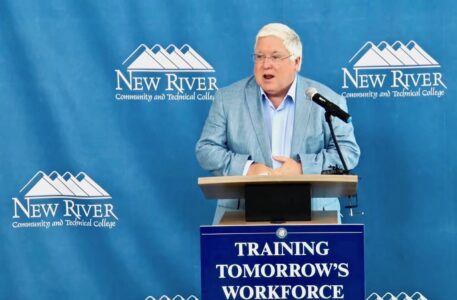
Morrisey traveled to New River Community and Technical College in Beaver to sign Senate Bill 402, the Workforce Readiness and Opportunity Act; and Senate Bill 490, approving short-term training programs for eligibility for federal Workforce Pell Grants.
"Over the last 16 months since I’ve been governor, we’ve been focusing every single day on economic development, trying to find ways to lift up our standard of living, to strengthen our economy, improve our per capita income, but also advance educational attainment," Morrisey said. "We’re really excited to be here because this is about how we train West Virginians for the high wages of today and tomorrow, and those jobs are coming."
SB 402 establishes a standardized micro-credential program under the Higher Education Policy Commission, with priority given to manual labor and skilled trades, including construction, manufacturing, and energy.
The new law goes hand-in-hand with House Bill 4009, allowing hiring parties to contribute to an independent contractor's benefits (health, retirement, disability, etc.) without creating a formal employer-employee relationship. Contributions are tax deductible for the hiring party and are excluded from the contractor’s gross income.
"This is important, because imagine if you develop a skill set in a particular area, you want to tout it to your employer … I have a micro-credential in this area, and that means something," Morrisey said. "West Virginia always needs to have the best possible workers. That’s how we’re going to have to grow."
SB 490 aligns West Virginia law with federal proposals to provide Pell Grant eligibility for short-term workforce training. This program is designed to bypass state bureaucracy and provide immediate support for students in intensive, skill-specific programs.
"We’re opening up a brand-new frontier for West Virginia workers by signing SB 490," Morrisey said. "This bill is going to unlock some of that Pell Grant eligibility, and it’s going to make sure that workers who already hold a bachelor’s degree but need new skills can also take advantage of it. That’s really important. I think West Virginia needs that agile infrastructure to be able to succeed in the new economy. And you’re seeing it in everything we’re doing."
SB 490 targets workforce development programs that involve between eight and 15 weeks of training. Eligible programs must align with high-skill, high-wage, or in-demand industry sectors as identified by the West Virginia Workforce Development Board. Training must lead to a recognized post-secondary credential that is both stackable and portable across multiple employers.
According to Morrisey, more than $12.5 billion has been committed to the state through private investment, with an estimated 12,800 jobs expected to be created through these investments. Morrisey also estimated that between 15,000 and 20,000 new construction workers will be needed for these projects.
"That $12.8 billion number, by the way, I think is a conservative number, because I don’t like to … over-promise. I like to under-promise and over-perform," Morrisey said. "When you start to look at these job opportunities coming … there are going to be a lot of great opportunities in Raleigh County and across the entire state of West Virginia."