
LSIC showcase at Parkersburg South highlights student projects, partnerships and hands-on learning across Wood County Schools
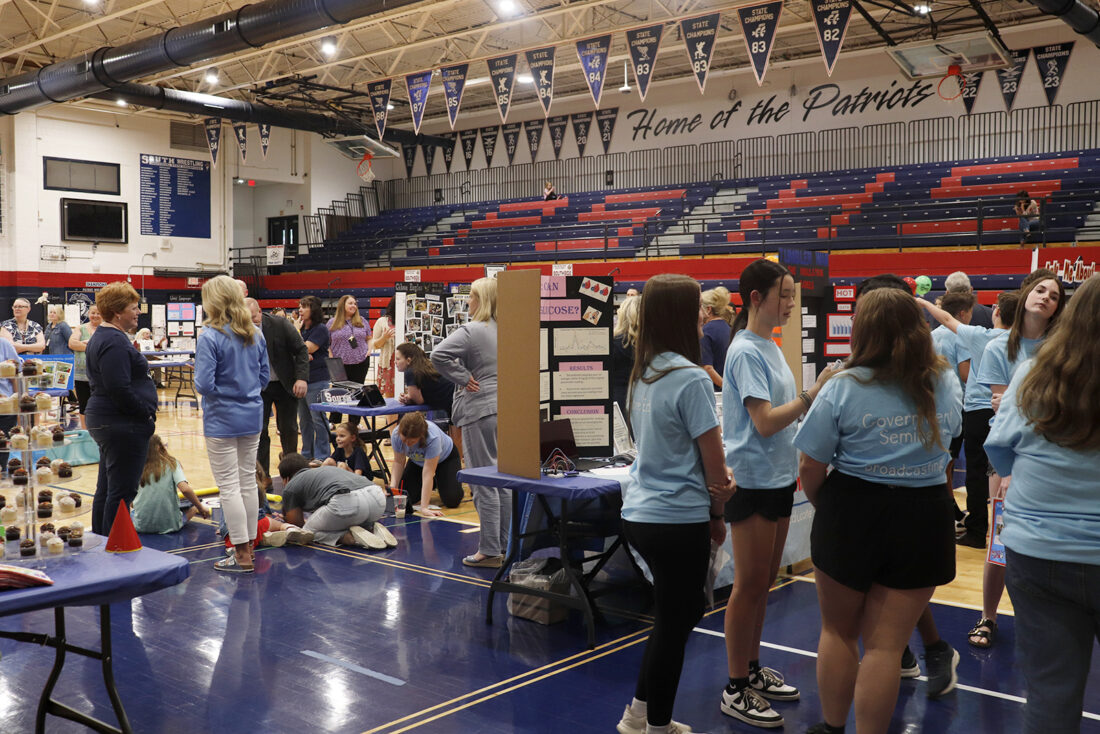
Dozens of attendees filled Parkersburg South High School for the Local School Improvement Council meeting Thursday evening to look at the displays from different Wood County Schools. (Photo by Gwen Sour)
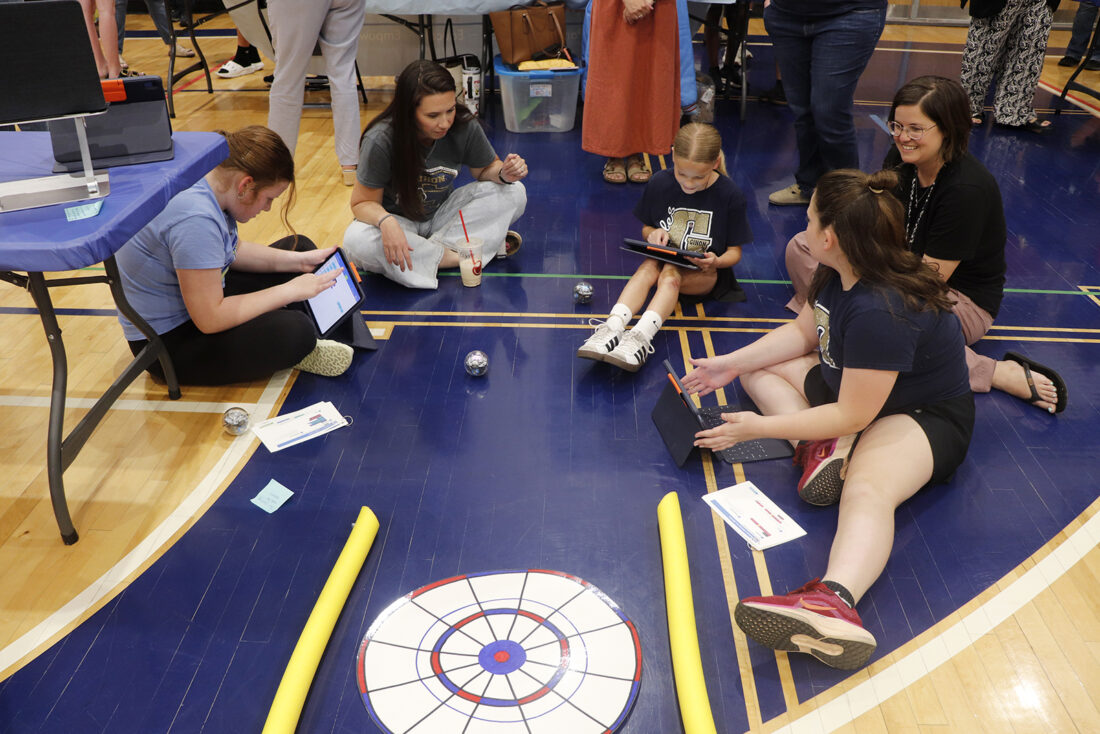
From left, Gracelynn Reed, Tia Freshower, Laurel Ware, Erica Gorrell and Ella Reed play with Spheros, a coding robot stem tool used in schools. (Photo by Gwen Sour)
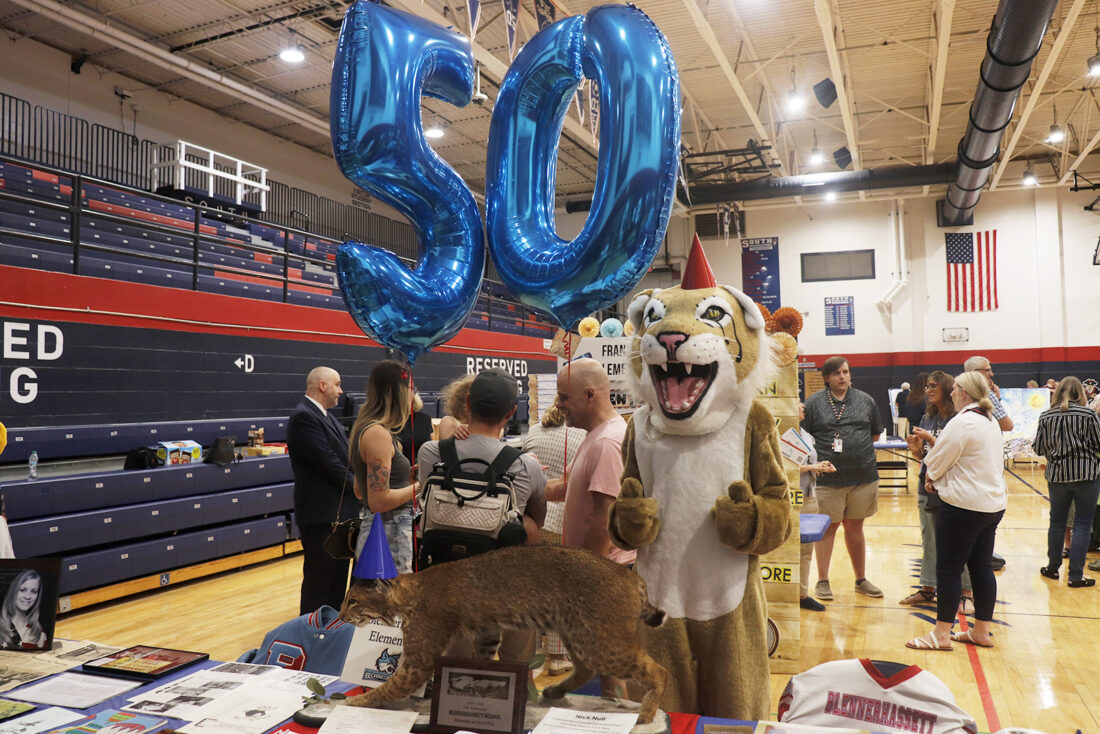
Jaxson Swiger, a Blennerhassett Elementary School alumnus dresses up as the school's mascot at the Local School Improvement Council meeting to celebrate the school's 50th birthday. (Photo by Gwen Sour)
Dozens of attendees filled Parkersburg South High School for the Local School Improvement Council meeting Thursday evening to look at the displays from different Wood County Schools. (Photo by Gwen Sour)
From left, Gracelynn Reed, Tia Freshower, Laurel Ware, Erica Gorrell and Ella Reed play with Spheros, a coding robot stem tool used in schools. (Photo by Gwen Sour)
Jaxson Swiger, a Blennerhassett Elementary School alumnus dresses up as the school's mascot at the Local School Improvement Council meeting to celebrate the school's 50th birthday. (Photo by Gwen Sour)
Trending
Students, educators and community members gathered Thursday at Parkersburg South High School for a Local School Improvement Council (LSIC) showcase, highlighting student learning and school initiatives from across Wood County Schools.
LSIC, which stands for Local School Improvement Council, is required under West Virginia code and brings together a mix of educators, administrators and community representatives focused on school improvement efforts.
Superintendent Christie Willis said the showcase provides an opportunity for schools to share accomplishments beyond traditional classroom assessments.
"When we do an LSIC showcase, the schools bring out something that they're very proud of -- student learning, what they want to share with the community, with parents -- to showcase what they've done this year," Willis said. "Sometimes they'll show us data notebooks, maybe a project that they've been working on, things that are nontraditional -- test paper, pencil -- which is very exciting to see some other ways that they can show what they've learned."
Displays throughout the school featured student-led presentations, interactive projects and demonstrations spanning subjects such as science, technology, engineering and math, as well as English and the arts.
At Gihon Elementary School's table, students led hands-on activities designed to incorporate math and science concepts, according to school nurse Sheri Braid.
"We have students doing different games and projects that incorporate math and science, and we have displays going to talk to the Board of Education," Braid said.
Franklin Elementary Center Principal Ryan McIntyre said his school's presentation focused on partnerships and programs developed throughout the year.
"We're showcasing several of the things that we've done this school year," McIntyre said, noting collaborations with local organizations that supported outdoor improvements, safety education and classroom resources.
Those partnerships included providing materials for school grounds, hosting fire safety demonstrations with local firefighters and introducing STEM-based learning opportunities such as virtual reality headsets for classroom use.
At the high school level, English Department Chair Gayl Campbell highlighted student work from multiple grade levels, including dual-credit courses and projects exploring American literature across historical eras.
Campbell said her curriculum spans early American literature through the mid-20th century, helping students understand how writing reflects changes in society, culture and belief systems.
Students examine works from authors such as Anne Bradstreet and Jonathan Edwards through the Great Awakening and Age of Reason, before moving into Romanticism, realism and modernism, she said.
Campbell said the goal is to help students connect literary techniques to broader historical and cultural shifts, including how symbolism evolves over time.
In one example, students studied nontraditional symbolism in modernist poetry, analyzing how everyday objects can represent routine, identity and purpose.
"They like knowing that," Campbell said, referring to discussions that connect literature to real-life experiences and historical context.
Student-created projects on display included visual interpretations of poetry, acrostic writing, playbills and collaborative class materials that build on teacher-led instruction.
Students also highlighted incentive-based programs designed to encourage positive behavior and academic success.
Third grader Alexa Grogg and Fourth grader Mikenna McKinley shared projects and lessons they presented during the event, including math concepts, attendance improvements and school reward systems.
"I have learned a lot about division, like adding fractions and stuff," Grogg said. McKinley added that she also improved her understanding of division over the year.
The students explained their school's "SOAR" program -- which stands for succeed, own, achieve and respect -- where students earn tickets for positive behavior that can be redeemed for special events such as STEM activities, virtual reality experiences and educational programs.