
U.S. Sen. Capito provides comments on health care, Venezuela and Minnesota ICE shooting
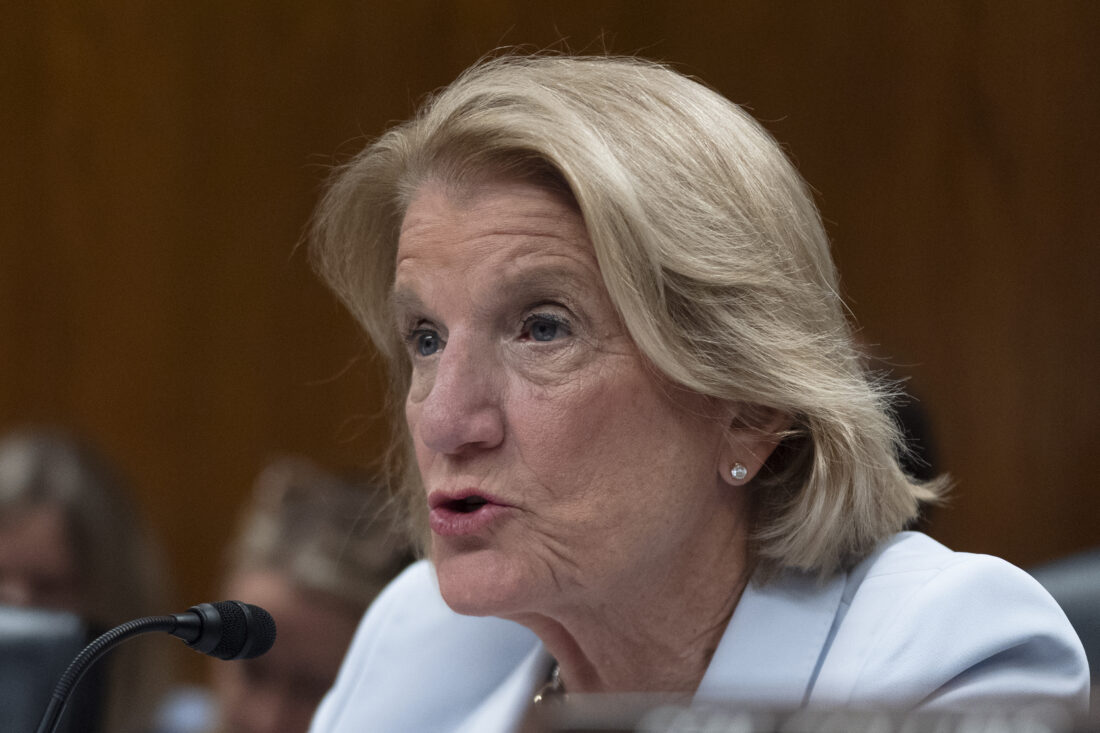
Sen. Shelly Moore Capito, R-W.Va., questions witness Health and Human Services Secretary Robert F. Kennedy Jr., during a Senate Committee on Appropriations subcommittee hearing to examine proposed budget estimates for fiscal year 2026 for the Department of Health and Human Services, on Capitol Hill, Tuesday, May 20, 2025, in Washington. (AP Photo/Manuel Balce Ceneta)
CHARLESTON – U.S. Sen. Shelley Moore Capito believes that federal Rural Health Transformation funding will benefit West Virginia, and that claims that rural hospitals could see a $1 billion cut in Medicaid funding are “overstated.” Capito provided a briefing to reporters Thursday in a conference call from Capitol Hill as both the U.S. Senate and House of Representatives returned to Washington, D.C., after a holiday break. The U.S. Centers for Medicare & Medicaid Services (CMS) announced at the end of December that West Virginia would receive $199.5 million for year one of the new Rural Health Transformation program put in place through President Donald Trump’s One Big Beautiful Bill Act, now called the Working Families Tax Cuts Act. “It is the largest federal investment in rural healthcare in American history and great news for West Virginia,” Capito said. “We promised to deliver real results, and I think this will really help our rural communities in West Virginia.” The Rural Health Transformation program will provide $10 billion a year to states each federal fiscal year through 2030. The state’s application outlined seven core initiatives, including expanding access to in-person and telehealth options, an EMS “treatment-in-place” program to reduce emergency room visits; creation of a unified health mobility platform to increase transportation options for residents needing access to care; forming a Mountaineer Care Force to attract and train clinical talent; and implementing Smart Care Catalyst to modernize technology and shift to value-based care. “It will help us with our recruitment and retention of our provider workforce,” Capito said. “It will help trainings for new technology. It’s evolving healthcare access and delivery systems … with new technologies, innovative methods to deliver care to improve outcomes. Broadband obviously is something that will help with that and other kinds of improvements. Also, it will help us with our substance abuse treatment and mental health services – a big area of concern for us in West Virginia.” While the Rural Health Transformation program has received praise from health care providers in the state, there remains concerns about other provisions in the One Big Beautiful Bill Act that could see substantial cuts in Medicaid funding for rural hospitals. Some estimates have placed those cuts at nearly $1 billion over the next several years. But Capito said most of those Medicaid cuts are aimed at eliminating waste, fraud and abuse in the system and believes that rural hospital service will not be adversely affected. “We see what’s happening in Minnesota in terms of waste, fraud and abuse in terms of the systems that have been set up to help people in our country and in West Virginia who really need help, whether it’s with healthcare or other items,” Capito said. “We want to make sure that the people that deserve and need these services are actually the ones that get them. “I think the projections … are actually way overstated,” Capito continued. “I think we know that we have had for years some of our rural hospitals and health centers sort of teetering on the edge of affordability and being able to stay in business. I think that’s where the Rural Health Transformation fund will really come into being a very strong part of our rural health delivery systems.” Following a high-level security briefing earlier this week between senators and Trump’s national security officials, Capito expressed strong support for the recent U.S. operation in Venezuela, framed as a law enforcement action to bring “narco terrorist” Nicholas Maduro, the president of Venezuela, to justice and to combat the flow of drugs and the influence of Venezuelan gangs in the United States. “I am so just awed at our law enforcement, our intelligence but also our military professionalism in carrying out this very, very precise operation … nothing short of awesome,” Capito said. “We know Nicholas Maduro has used his illegitimate presidency to push poisonous drugs into American communities. We know this is an issue for West Virginia, and so many of our families experienced immense pain and suffering. This was a very precise mission. It was a law enforcement mission to bring a narco terrorist to justice.” Capito also addressed the shooting Wednesday of Renee Nicole Good by U.S. Immigration and Customs Enforcement (ICE) in Minnesota. Good, a U.S. citizen, was shot and killed by and ICE agent after she attempted to leave the area after being ordered out of the car. The incident is being investigated by the FBI but the shooting is being described by U.S. Department of Homeland Security officials as self-defense. Local officials in Minnesota have been critical of ICE’s handling of the incident, with protests breaking out Thursday. “I think it’s tough being an ICE agent. It’s tough carrying out our immigration laws, particularly in communities such as where they were in Minnesota, where there’s a large immigrant community and broad pushback,” Capito said. “Any loss of life is a tragedy. I think that we see from the video there’s a question as to how this happened and why it happened. I look forward to the investigation that I believe President Trump has called for and I think that we’ll find the answers.” Steven Allen Adams can be reached at sadams@newsandsentinel.comLocal News
McCuskey prepares to defend W.Va. law protecting sports for biological girls, women at U.S. Supreme Court
U.S. Sen. Capito provides comments on health care, Venezuela and Minnesota ICE shooting

Marietta Police seek missing man

Boley announces retirement from West Virginia Senate

US will exit 66 international organizations as it further retreats from global cooperation
