Judge grants permanent injunction in favor of religious vaccine exemptions
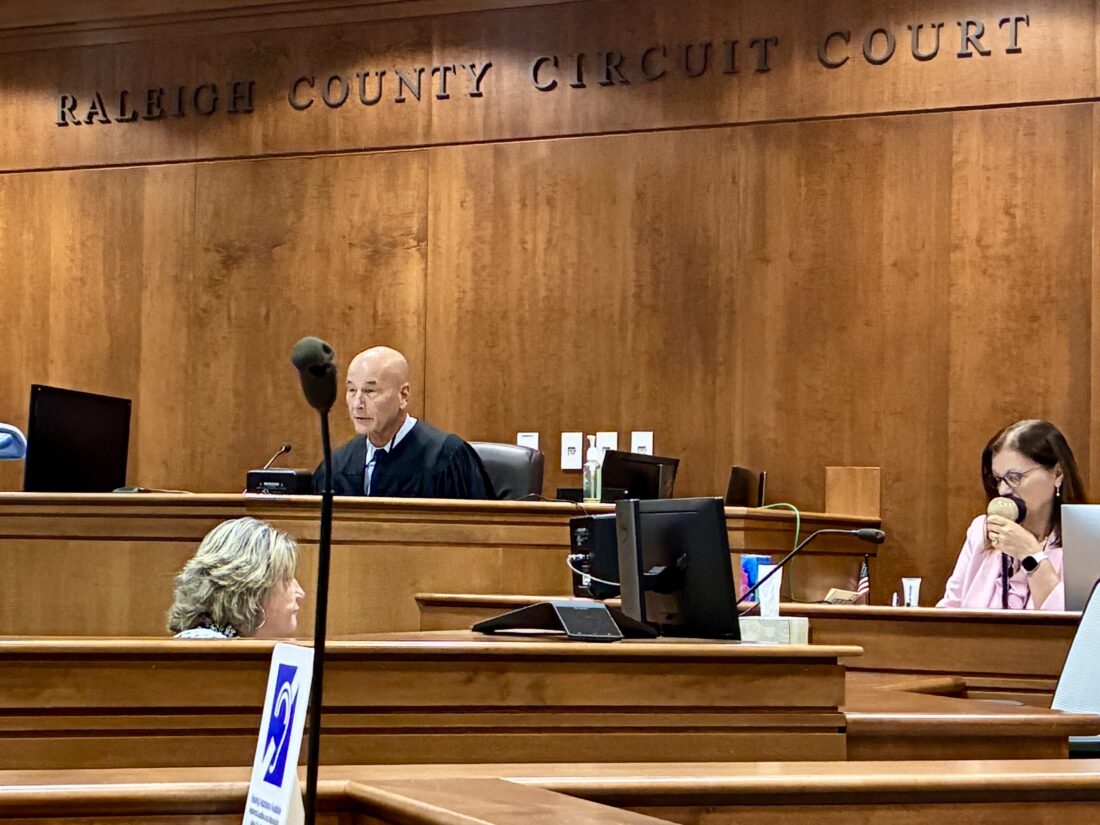
Raleigh County Circuit Court Judge Michael Froble issued a preliminary injunction in July requiring county and state education officials to accept religious exemptions to West Virginia’s compulsory vaccination law granted for three students under an executive order issued in January by Gov. Patrick Morrisey. (File photo)
CHARLESTON – A Raleigh County judge issued his official written ruling Wednesday, siding with parents against state and local education officials over their refusal to accept religious exemptions to West Virginia’s school-age vaccine law. The order by 14th Judicial Circuit Judge Michael Froble in Guzman v. West Virginia Board of Education has wide-ranging implications. It grants permanent injunctive and declaratory relief to the plaintiffs and the certified class of families with religious vaccine exemptions statewide, except those with pending cases before other circuit court judges. In his ruling, Froble cited the Equal Protection for Religion Act – 2023 legislation prohibiting excessive government limitations on the exercise of religious faith – as allowing Gov. Patrick Morrisey to use his executive order authority to create a religious exemption to West Virginia’s compulsory vaccine law. “The Court found that Plaintiffs met their burden under EPRA, that Defendants’ universal-denial policy substantially burdened Plaintiffs’ religious exercise by forcing them to choose between vaccination and public education, and that Defendants treated comparable or greater risks more leniently while failing to employ less restrictive alternatives,” Froble wrote. Raleigh County parent Miranda Guzman filed a lawsuit in June along with other parents against the the state Board of Education, State Superintendent of Schools Michele Blatt and the Raleigh County Board of Education seeking to block guidance issued by the state board for county school systems to follow the law requiring children attending public and private school to show proof of immunization unless a medical exemption can be shown. State law on the books since the 1930s has required some form of immunizations for school-age children. State code now requires children to be vaccinated against diphtheria, pertussis, tetanus, polio, measles, mumps, rubella, varicella and hepatitis B. In one of his first acts after taking office, Morrisey signed an executive order allowing for religious and conscientious objections to the vaccination mandates, issuing additional guidance to the Department of Health and county school systems later in the spring. In a unanimous vote in June, the state Board of Education instructed county school systems to follow existing state code. This came after the 2025 regular session of the West Virginia Legislature, when a bill was introduced on Morrisey’s behalf to codify religious vaccine exemptions. That bill passed the state Senate but failed in the House of Delegates. Despite the bill dying during the session, Froble said legislative intent should not be considered. “Legislative inaction did not determine EPRA’s applicability, and the Court does not accept Defendants’ argument that religious exemptions can only be created by legislative action or that the Legislature’s failure to amend the Compulsory Vaccination Law forecloses judicial relief,” Froble wrote. “Legislative intent is not absolute nor controlling in interpreting a statute or determining its application; at most, it is a factor,” Froble continued. “The Legislature’s decision not to amend the CVL during the most recent session does not establish that EPRA provides no protection.” Froble acknowledged that the state does have a compelling interest in protecting public health, something upheld by several U.S. Supreme Court decisions. However, he said allowing the current 570 religious exemptions for students, representing approximately 0.24% of the total public school enrollment, would not put public health at risk given the state’s school-age vaccination rate of approximately 98%. “Although expert witnesses disputed the precise herd-immunity threshold, the Court found that recognizing 570 exemptions … would not jeopardize herd immunity and that Defendants failed to present evidence of any geographic ‘clustering’ of exemptions,” Froble wrote. “The record also did not establish whether all 570 individuals granted exemptions would attend public schools, nor did Defendants prove that granting or withholding exemptions would materially reduce vaccination rates or substantially increase disease transmission within West Virginia.” Froble also said the compulsory vaccine law is not narrowly tailored because it ignores other significant sources of transmission risk, including not requiring vaccinations for approximately 18,000 teachers and 10,000 other school staff who are in close proximity to children. Froble previously granted a preliminary injunction last summer in the Raleigh County case which has already been appealed to the state Supreme Court of Appeals by the West Virginia Board of Education. Circuit court judges in Kanawha, Berkeley and Mineral counties have denied preliminary injunctions in similar lawsuits, siding with the state’s compulsory vaccine law. But Froble’s order Wednesday includes all other families with religious vaccine exemptions who are not part of those cases. Froble released a written order on Oct. 16 turning the Raleigh County case into a class action lawsuit for the more than 570 individuals granted religious exemptions to date, as well as any religious exemptions granted in the future. Both parties are fighting the class action order in dueling filings before the Supreme Court, with the state board seeking an expedited ruling on a motion to stay the class action part of the case. In a statement Wednesday afternoon, Morrisey celebrated Froble’s ruling, calling it a victory for religious freedom. Morrisey also called for the Legislature to once again take up a bill adding religious exemptions to the compulsory vaccine law. “Today’s ruling is a win for every family forced from school over their faith,” Morrisey said. “I will always take a stand for religious liberty and for the children of this state. I applaud the court for upholding West Virginia’s Equal Protection for Religion Act. Now is the time for the Legislature to act. I am calling on every lawmaker to step forward and solidify this freedom for every West Virginian.” Steven Allen Adams can be reached at sadams@newsandsentinel.comLocal News
Parkersburg City Council denies appeal after business license rejection
Venezuela war powers resolution fails in Senate as 2 Republicans bow to Trump pressure
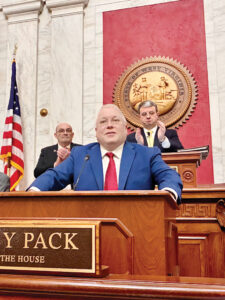
Scaling Mountains: Morrisey touts ‘West Virginia’s comeback’ in second State of the State address
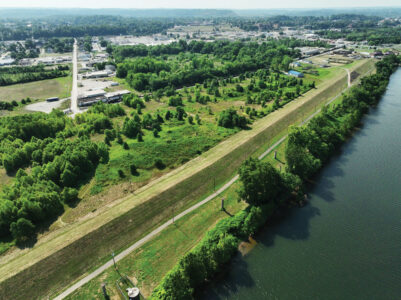
Wood County receives three site readiness grants
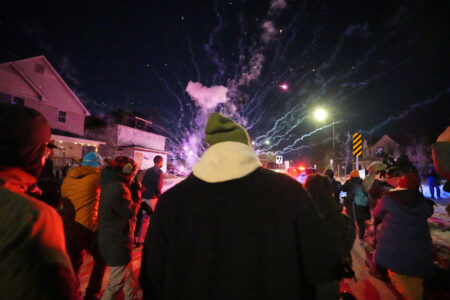
Officials: Federal officer shoots person in leg after being attacked during Minneapolis arrest