Murphy’s campaign for governor focuses on ideas
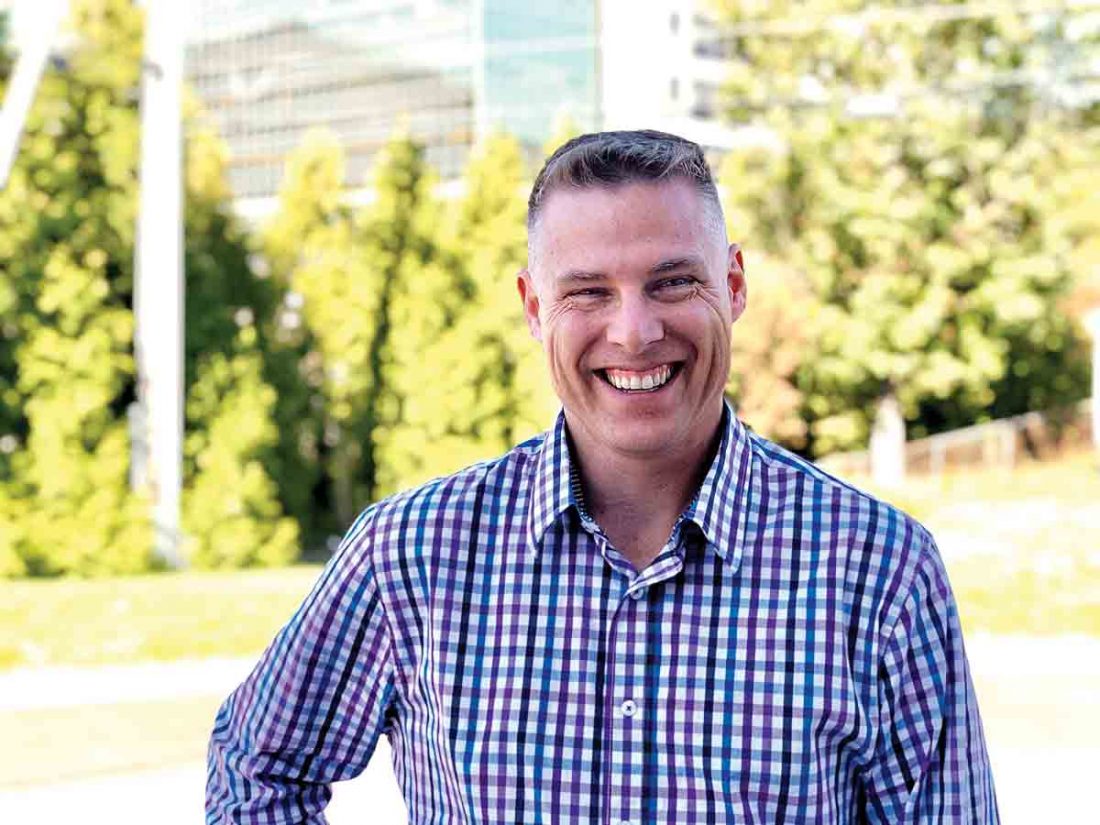
Jody Murphy is seeking the Democratic Party’s nomination for governor of West Virginia. (Photo by Steven Allen Adams)
CHARLESTON — Some candidates seeking the Democratic Party’s nomination for governor of West Virginia have campaign donations, dozens of volunteers and the support of party leaders.
Candidate Jody Murphy has his ideas, and he hopes spreading those ideas can get him a fair look in the May 12 primary.
Six candidates are raising money between now and the January candidate filing period to get on the primary ballot, including Boone County state Sen. Ron Stollings, Kanawha County Commissioner Ben Salango and Charleston-area community organizer Stephen Smith.
Murphy believes he has at least one attribute setting him apart from his competitors, past governors and from any of the Republicans he might face in November 2020: he’s not part of the Charleston machine.
“Everyone that says they’re going to make changes aren’t going to make changes,” Murphy said. “We have to do things differently. We have to do things that others won’t. We have to look where others can’t. We have to think off the table and nobody in the current administration or nobody else that I see is going to do that.”
Murphy is not a typical candidate for higher office.
He’s not had experience as an elected official. He’s doesn’t own a business himself, but can take credit for helping others start businesses.
He’s not a party activist or a community organizer. But Murphy does have experience looking at government with a journalist’s eye.
The Fayette County native, after working in the whitewater rafting industry, joined the Beckley Register-Herald in 1997 as a sports writer. He moved to the Mid-Ohio Valley in 2002 and worked for The Parkersburg News and Sentinel for 11 years covering sports and later Parkersburg city government.
In 2013, Murphy made a career change, becoming a business development specialist for the Pleasants County Development Authority and working on ways to recruit businesses to the county. He later became executive director of the Pleasants County Convention and Visitors Bureau and the Pleasants County Chamber of Commerce. He lives in Parkersburg with his wife and family.
“I think I’ve got a lot better economic background and economic understanding of the state and what needs to be done to grow the economy and to grow residency,” Murphy said.
A decade ago, people were lucky to get a cell phone signal in St. Marys, he said. But with the growth of natural gas production in the valley and North Central West Virginia due to horizontal drilling and fracking, Pleasants County has made a name for itself for providing support services to the natural gas industry.
The 46-year-old Murphy wants to take Pleasants County’s example statewide. He also wants to help mold a state where his three sons will stay in when they become adults.
“I want my kids to live here and all my grandkids to live here. I don’t want to go to North Carolina to visit my kids,” Murphy said. “We’re losing old people. We’re losing young people and we’re losing our working class worst of all. If we continue to lose our working class, our taxes aren’t going to get lower. We need more taxpayers, not more taxes. I want to grow residency.”
On Sept. 29, Murphy released a multi-page platform laying out his ideas for economic development, government reform and education. Ideas ranged from focusing on entrepreneurship to diversity the economy away from a sole focus on natural gas and coal, to giving away acreage at county-owned industrial parks to woo potential manufacturing operations if they agree to certain stipulations such as hiring a specific number of employees.
“Let’s say we give away 30 acres of that land,” Murphy said. “If you recall, Amazon put out the (request for proposal) for their headquarters and how many cities bid on that? Why don’t we reverse that? In Pleasants County, the average commercial acre goes for $35,000 an acre. If we give away 10 acres, we’re essentially giving away $350,000, right? But you’re going to have somebody coming in there and they’re going to pay property taxes on that.
“If they bring in 30 to 45 workers, those are families that are going to live…in the area,” Murphy said. “They’re going to pay taxes, plus they’re going to shop and they’re going to buy groceries and they’re going to put their kids in little league and in the school system.”
One of Murphy’s education idea centers around a novel concept for offering free post-secondary education while at the same time keeping West Virginia’s high school graduates in the state and in their communities longer.
Murphy proposes a county levy, similar to what counties already do to fund K-12 education, to fund post-secondary education for high school graduates as long as the student agrees to work in the state for a certain time frame and other requirements.
“We, as a society, determined decades ago the we were going to pay for our kids to go to high school to get an education,” Murphy said. “Now we can take the next step and we need to pay, as a society, for these kids to get a better education to do more. I think that’s on us to make sure that these kids have a plan, and if they don’t have a plan to make sure they get one.”
Murphy knows he has an uphill battle.
Smith has raised nearly half a million dollars in the last year. Stollings has a lengthy tenure as a lawmaker. Salango has the support of many stalwarts of the state Democratic Party and can self-fund. But Murphy said he’s going to keep traveling the state, meeting as many Democratic and unaffiliated voters as he can and get his message out.
“I keep plugging away. It’s like eating an elephant. How are you eating an elephant? One bite at a time,” Murphy said.
“I don’t know if I can win. I’m realistic about that, but I believe in my ideas and that’s why I’m running,” he said. “I really believe that my ideas, whether they’re me implementing them or somebody else implementing them, can make a positive change in West Virginia.”
Local News
Ty Smith writes ‘Defenders of Zzzodd’
WVU Parkersburg president discusses value of community colleges
PARKERSBURG – The changing face of higher education is starting to recognize what community colleges bring to ...
Marietta College symposium examines energy, Ohio River infrastructure and workforce development in Appalachia
Prescription Take Back Day returns Saturday
Local law enforcement and other organizations will be working to make sure unused prescription medications are ...
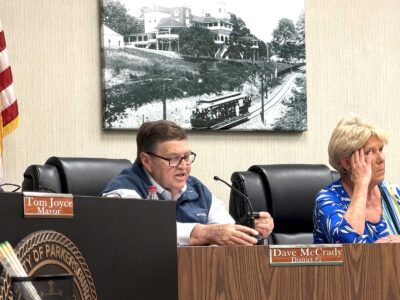
Parkersburg residents displeased with budget revisions, council responds to sanitation petition