Budget bills on the move in West Virginia House, Senate
-
- Photo by Steven Allen Adams Delegate Eric Householder, R-Berkeley, left, chairs a meeting of the House Finance Committee Thursday as they go over HB 2020, the budget bill.
-
- Photo by Steven Allen Adams Members of the House Finance Committee go over HB 2020, the budget bill, Thursday afternoon.
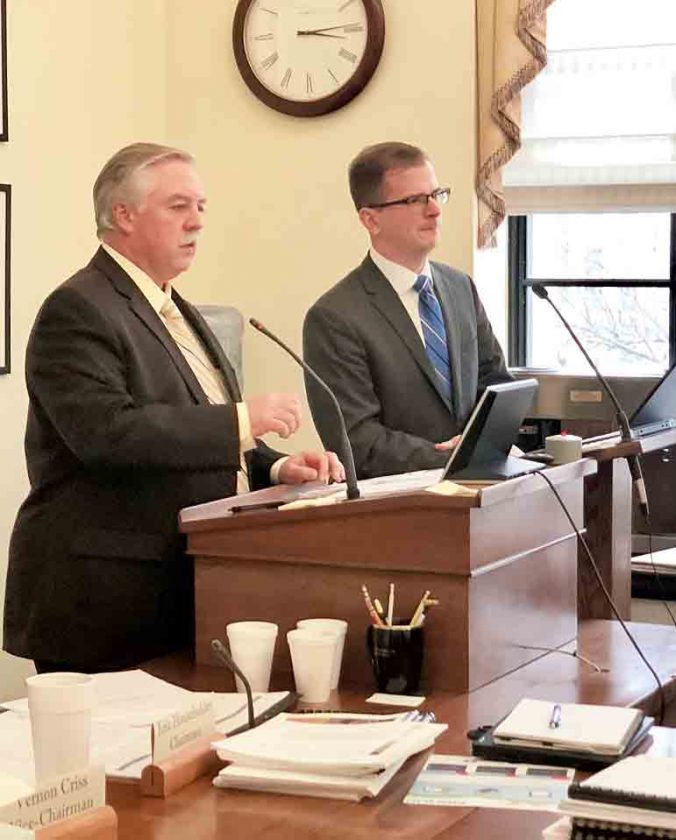
Photo by Steven Allen Adams Delegate Eric Householder, R-Berkeley, left, chairs a meeting of the House Finance Committee Thursday as they go over HB 2020, the budget bill.
CHARLESTON — The West Virginia Legislature’s House and Senate finance committees are moving budget bills with the goal of being finished by the 60-day deadline.
House Finance Committee passed out its version of the fiscal year 2020 budget Thursday afternoon after debuting the committee substitute Wednesday. The Senate Finance Committee unveiled its budget draft and passed it in a 30-minute discussion the same afternoon. The next fiscal year begins July 1, 2019.
The House version of the budget, HB 2020, will be the vehicle both bodies use to come up with a compromise budget proposal. It could be up for passage to the Senate by Saturday or Monday.
“Our intention from the beginning was to have a budget out by day 60,” said House Finance Committee Chairman Eric Householder, R-Berkeley. “I know our Senate colleagues are following the same course of action as we are. If everything goes well, by day 58 we should be fine. It will go to conference and it should go from there.”
HB 2020 is smaller than the original budget proposal from Gov. Jim Justice, but more than the House’s new revenue estimate. The House budget proposal reduces the governor’s fiscal year 2020 revenue estimate from $4.676 billion to $4.616 billion, a 1.3 percent decrease. The Senate version of the budget at $4.659 billion is .34 percent less than the governor’s budget.
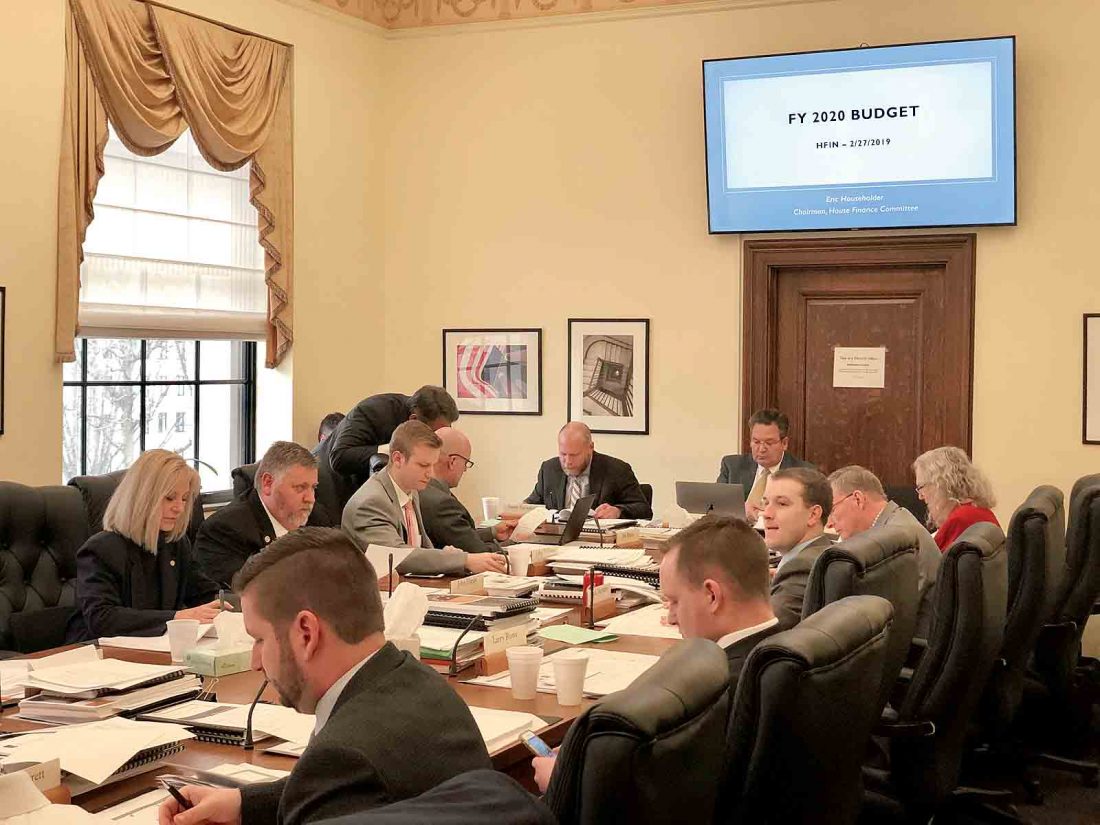
Photo by Steven Allen Adams Members of the House Finance Committee go over HB 2020, the budget bill, Thursday afternoon.
Anticipated reductions in revenue in the House budget include $30 million from a 1 percent decrease in steam coal severance tax collections, $2.2 million for tax cuts for S Corp Banking and limestone/sandstone severance, $16 million for plugging old natural gas and oil wells, and $10 million for the restored film tax credit.
Several proposals made by Justice during his State of the State Address Jan. 9 were cut from the House draft budget. This includes $25 million for Jim’s Dream, a drug treatment and workforce training program designed to give drug addicts a second chance to be productive workers. The Senate version of the budget reduced Jim’s Dream appropriations to $15 million.
Other cuts in the House budget include $5 million for an intermediate court of appeals, $6 million for the Division of Tourism for marketing, and $1 million for a healthy lifestyles program in the Division of Health. All in all, the House cut more than $49 million from Justice’s proposed budget.
However, if there is a budget surplus at the end of June and after half of the surplus is sent to the Rainy Day Fund, the House budget proposes any remaining budget surplus could be used to fund some of those cuts, including $300,000 for food banks, $6 million for tourism, and $15 million for components of Jim’s Dream.
The House budget includes approximately $40 million in new spending. These expenditures include $11 million for Medicaid, $10 million spread out among the state’s four-year colleges and universities, $5 million for community and technical colleges, and $4.2 million for a new Cybersecurity Office. Other expenditures include $500,000 for broadband development and $310,000 for the state Treasurer’s Office to manage the banking program for medical cannabis.
The grand total of general revenue expenditures proposed by the House Finance Committee is more than $4.666 billion. That’s .20 percent less than the governor’s budget, but with the proposed budget cuts and new expenditures, it leaves a nearly $50 million hole in the House’s budget. The West Virginia Constitution requires a balanced budget.
To get the draft budget balanced, the House proposes using $53 million Medicaid supplemental combined with sweeping $8.7 million from special revenue accounts. The grand total would be $61.7 million, which would leave the fiscal year 2020 budget with an estimated $11.9 million surplus.
The House budget still accounts for the 5 percent pay raise for teachers, school service personnel, West Virginia State Police, and other public employees paid out of general revenue. The House passed HB 2730 last week to give teachers, school service personnel, and troopers a raise, though the Senate has yet to take it up.
The Senate version of the budget doesn’t factor in the teacher/school service personnel raises. Last week, the Senate moved a pay raise bill that only included troopers. Pay raises for public employees is already built into both the House and governor’s budgets. The Senate budget also doesn’t factor in the Social Security and steam coal severance tax breaks.
“The Senate has not passed them yet,” said Senate Finance Committee Chairman Craig Blair, R-Berkeley. “For instance, the pay raise for the teachers is contemplated on the House side. It’s when we merge the bills together and we amend ours into it and go to conference, then we work it out.”
On the other side of the building, the House hasn’t passed Senate Bill 1, creating the last-dollar-in community and technical college bill. Originally estimated to cost $7 million, Householder said, the House Education Committee expanded the bill to include four-year colleges and universities, which could increase the cost to more than $50 million. Householder expects his committee to start working on that bill Monday.
“Senate Bill 1 is an important bill to the Senate,” Householder said. “We’re going to make some changes to the bill to try to get it back down to where the original introduced version was. If not, it forces me to have to pull money out of Medicaid and I don’t think that’s the direction that people want to go.”
The goal now for both finance chairmen is to make sure bills that have a substantial cost get passed so that it’s possible to complete the budget without an extension of the legislative session.
“In order to construct this budget obviously you need to have key pieces of legislation out early,” Householder said. “That’s the biggest impact. Once you get your budget out, you have to be careful. Any impact or any amendments made on the floor directly impacts the budget.
“If we can get the bills that have fiscal implications done early, then that makes it so we can know our budget,” Blair said.
Local News
Highway projects slated in Wood County
PARKERSBURG - Two highway projects will begin this week in Wood County, according to the West Virginia Division of ...
Morrisey touts education efforts during stop at Gihon Elementary
Congressional candidates showered with money during April reporting period
Parkersburg recycling lawsuit continues despite new contract
PARKERSBURG – The plaintiff in a lawsuit over Parkersburg’s suspension of curbside recycling is asking a judge ...
Ham Radio Open House a big success