
Building Up the Fort: Restored Wheeling building home to new businesses
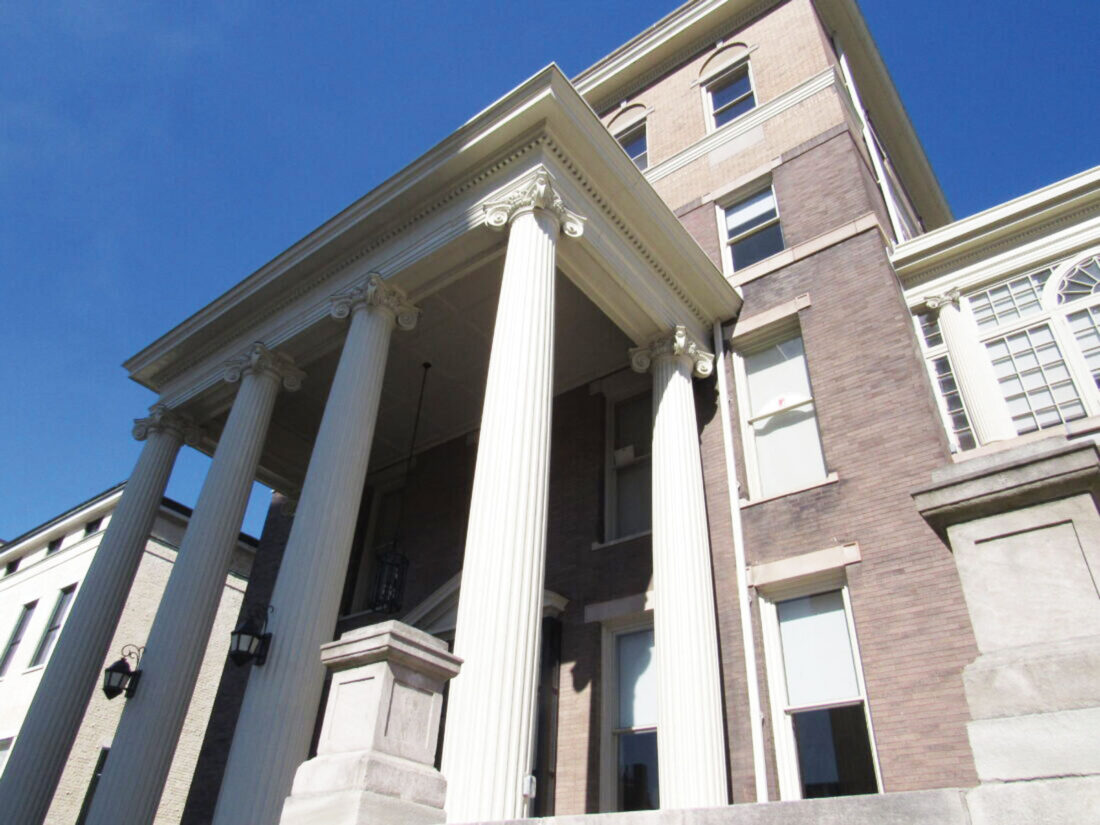
The exterior of the Fort Henry Building was also rehabilitated. (Photo by Shelley Hanson)
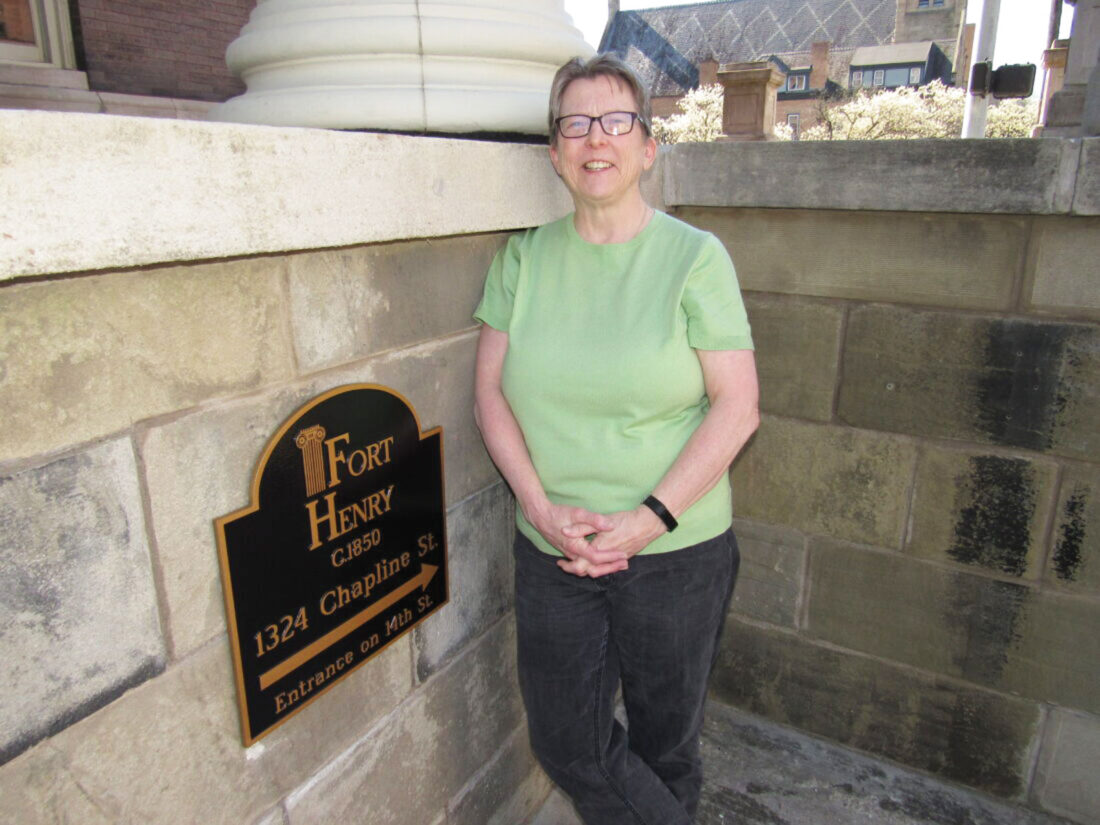
The Fort Henry Building project’s architect Christina Schessler, senior architect for McKinley Architecture and Engineering, stands beside the new plaque on the front of the Fort Henry Building. (Photo Provided)
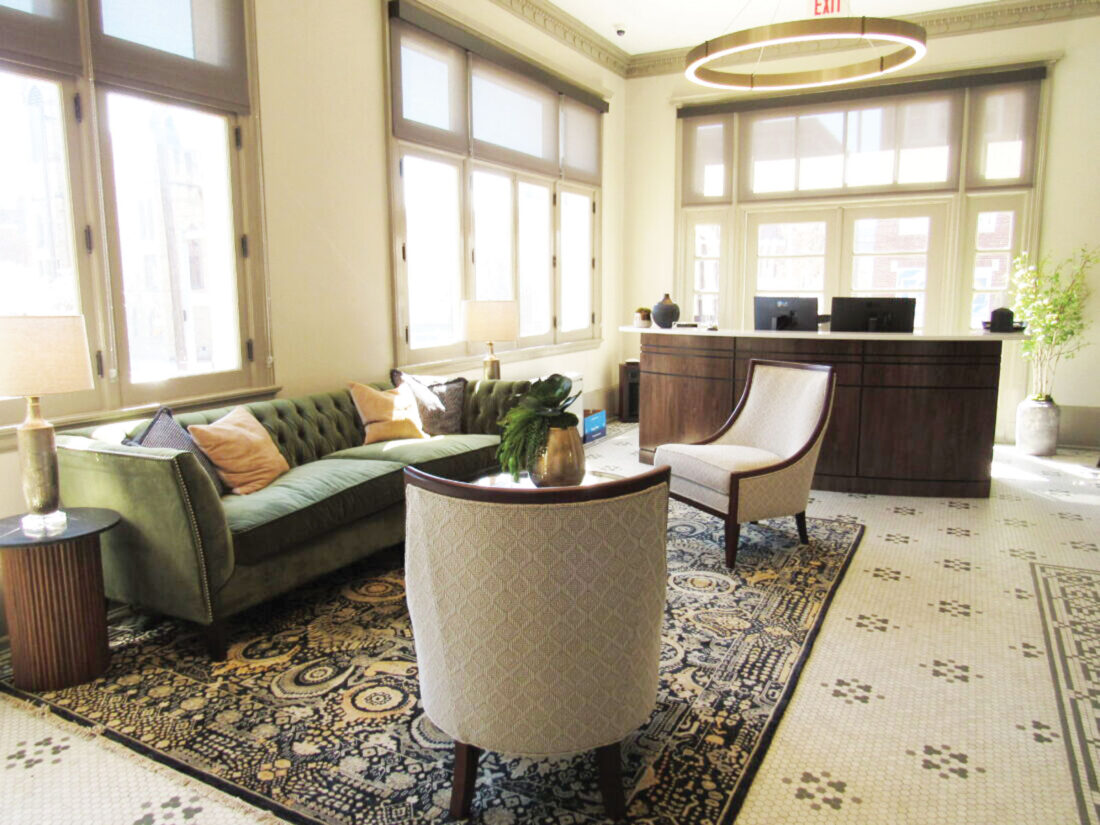
The Fort Henry Building, to date, is home to three different companies including law firm Steptoe & Johnson. The firm’s lobby is shown here. Notice the original woodwork and tiled floor. (Photo by Shelley Hanson)
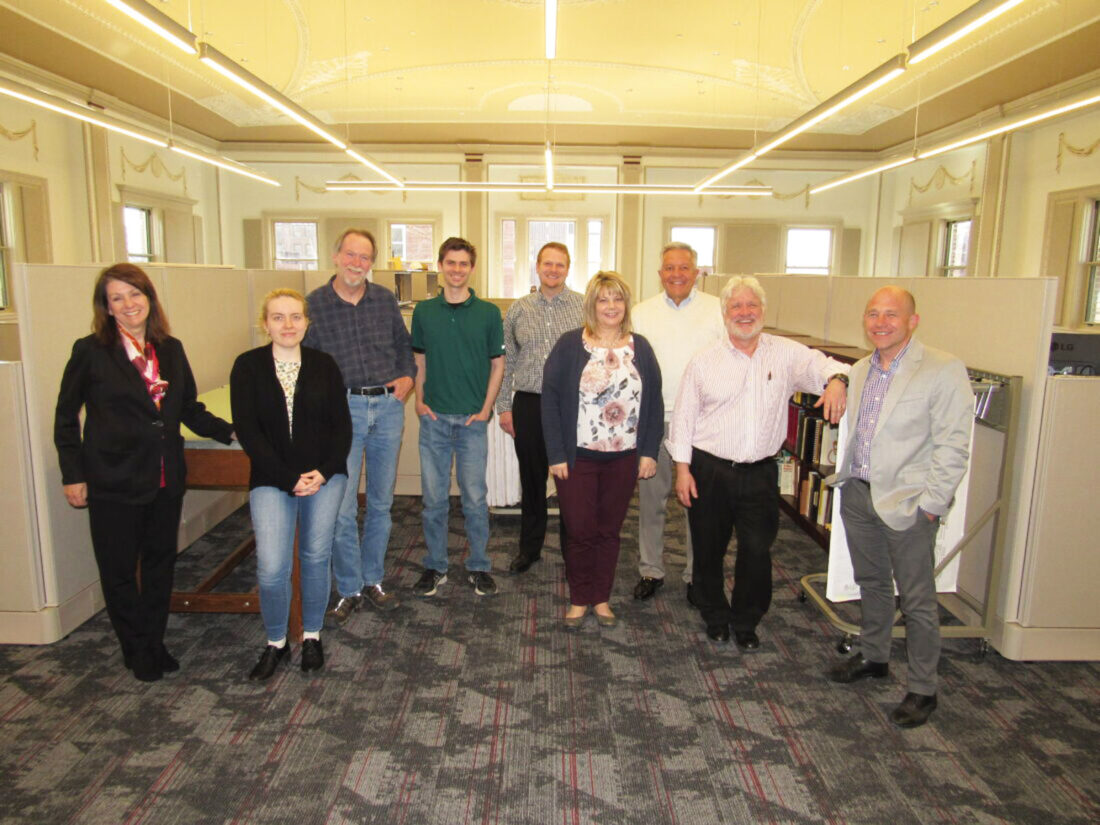
A few of the McKinley Architecture and Engineering employees pose inside the former ballroom area of the Fort Henry Building in Wheeling where ornate plasterwork was discovered under drop ceilings during the interior rehabilitation of the structure. From left are Lisa DiCarlo, Virginia Houck, Mike Clark, Sam Nau, David Carenbauer, Lisa Goodnight, Ernie Dellatorre, Tim Mizer and Sean Doyle. (Photo by Shelley Hanson)
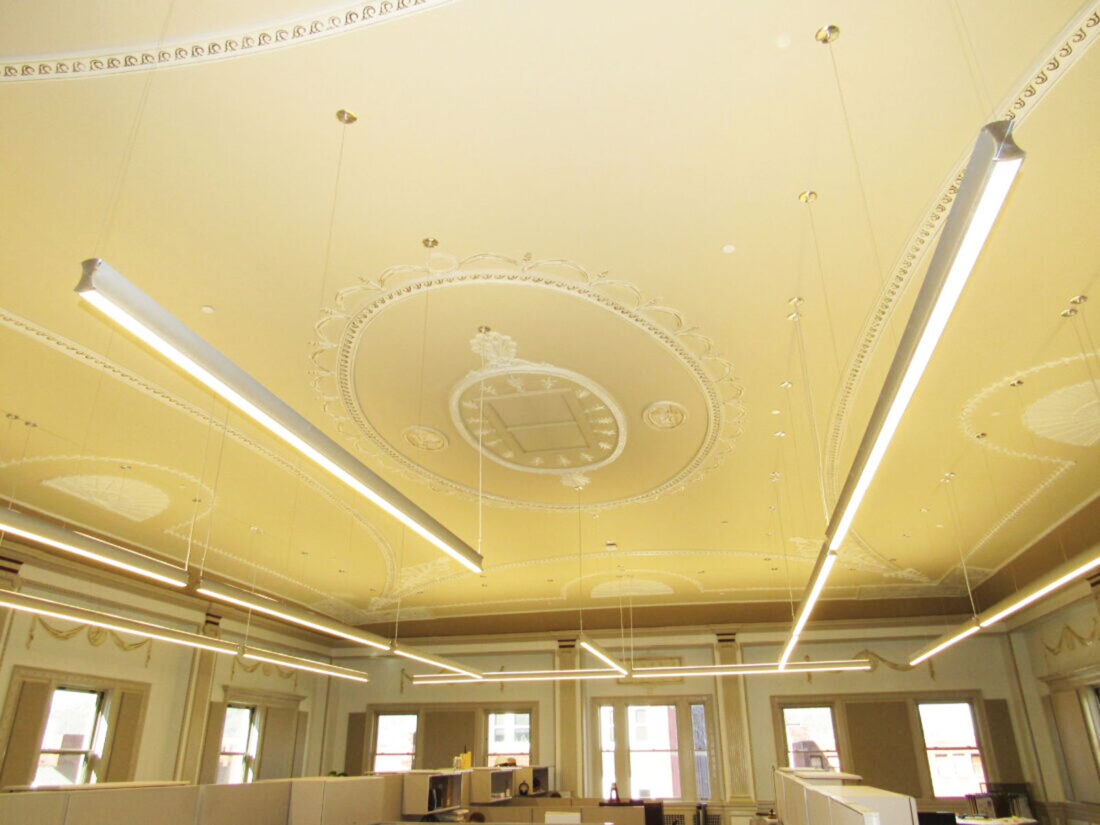
Shown here is the ballroom ceiling decorated in ornate plaster work that had been covered in a drop ceiling for decades. (Photo by Shelley Hanson)
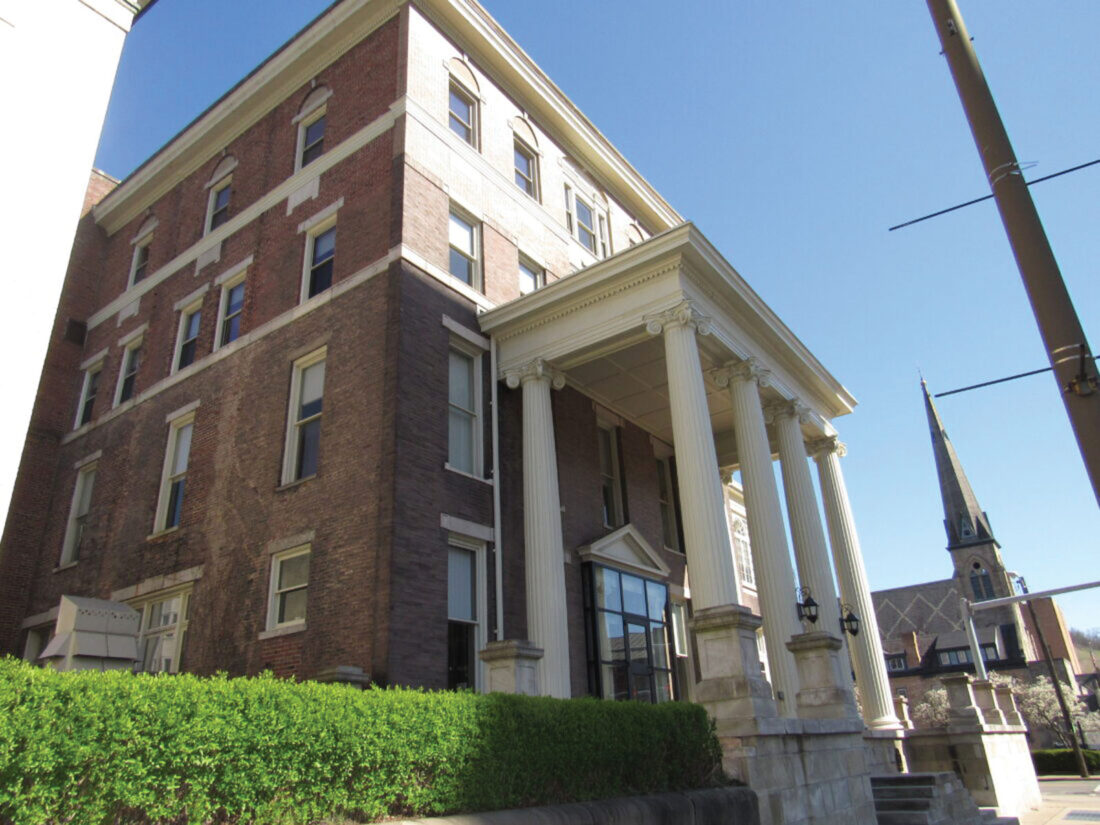
The exterior of the Fort Henry Building was also rehabilitated. (Photo by Shelley Hanson)
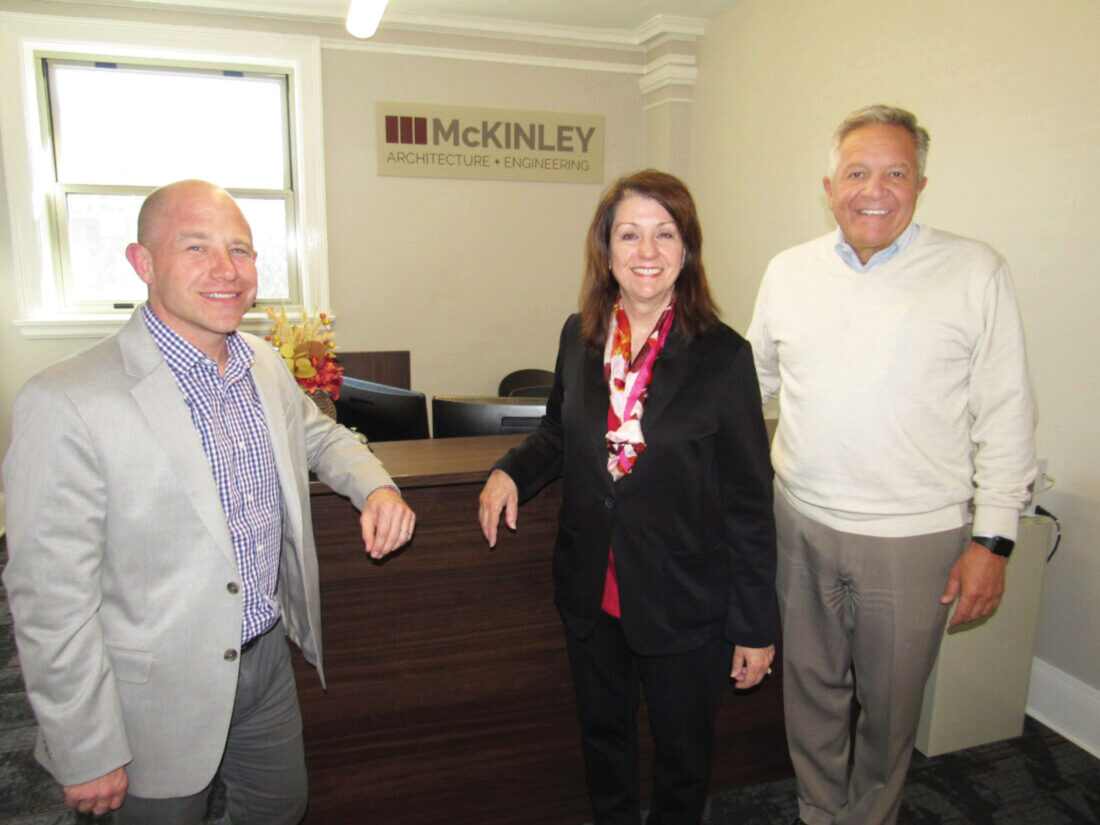
McKinley Architecture and Engineering employees, from left, Sean Doyle, director of operations; Lisa DiCarlo, controller; and Ernest Dellatorre, director of business development, stand in the company’s reception area at the newly rehabilitated Fort Henry Building in Wheeling. (Photo by Shelley Hanson)
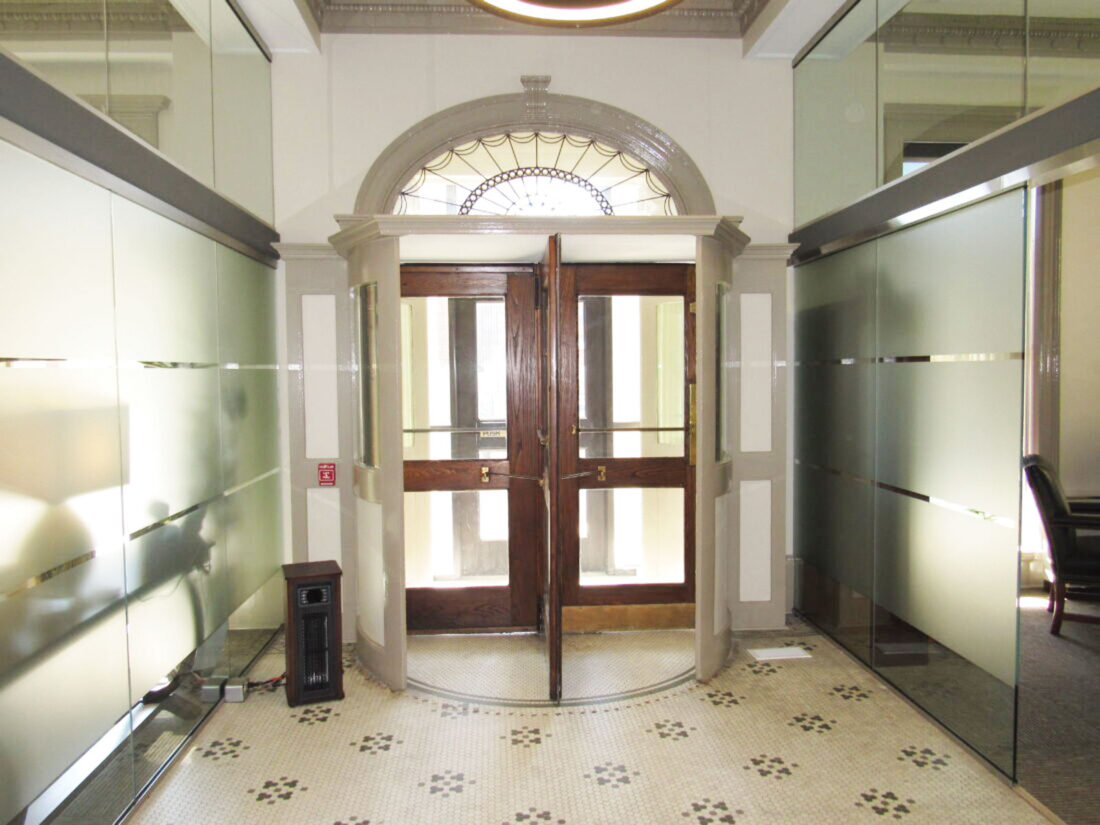
The original revolving doors are shown at the Fort Henry Building. (Photo by Shelley Hanson)
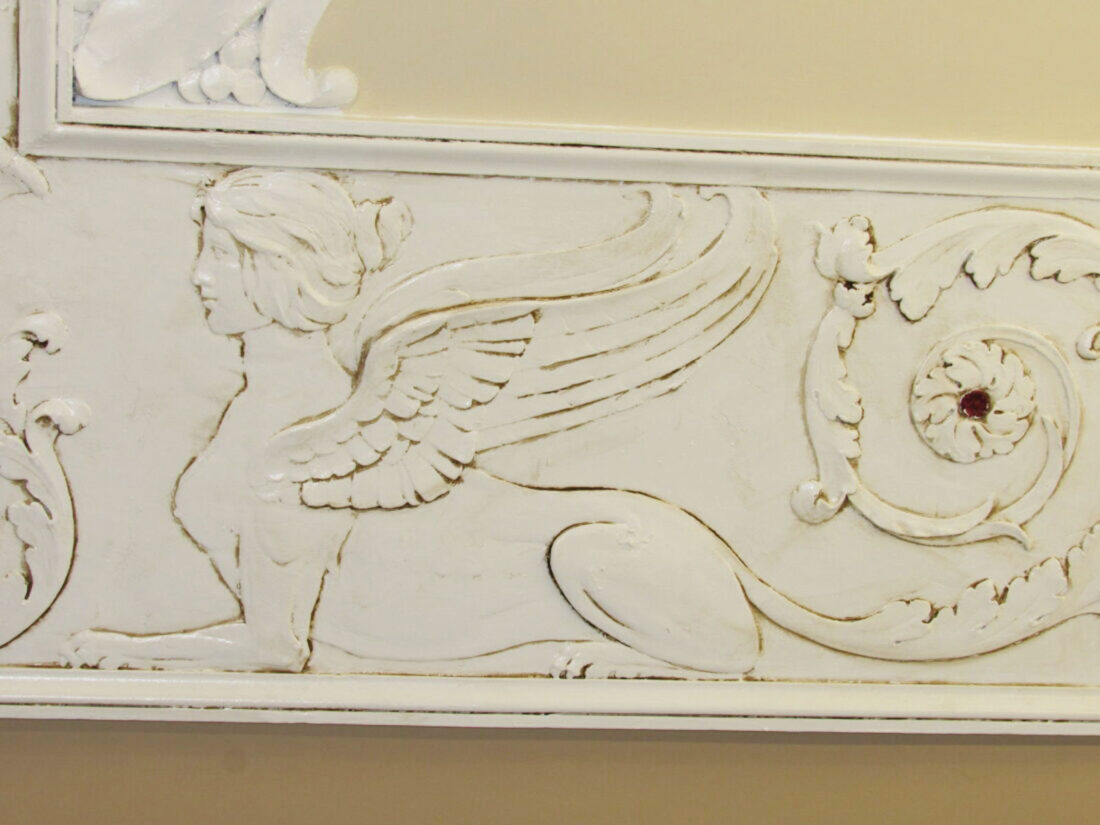
Shown here is some of the ornate plaster work depicting a sphinx inside the Fort Henry Building ballroom area. (Photo by Shelley Hanson)
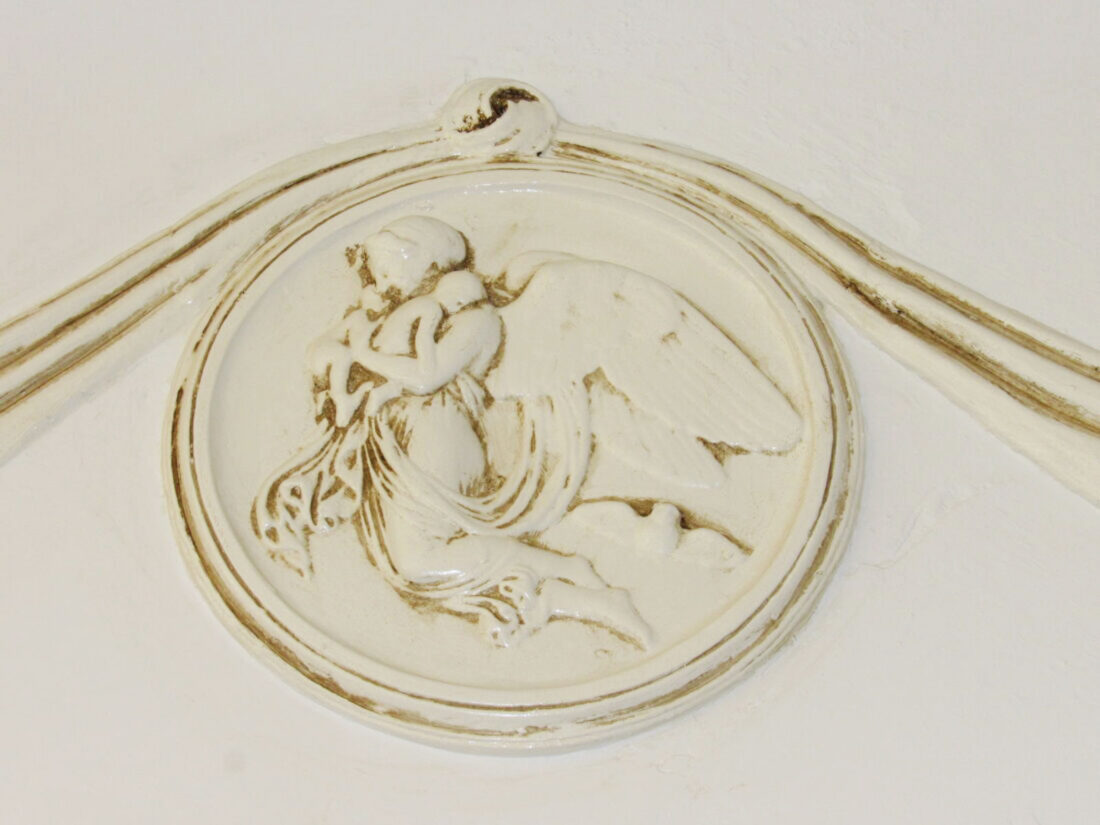
Plasterwork of an angel holding babies is shown inside the ballroom at the Fort Henry Building in Wheeling. (Photo by Shelley Hanson)
The exterior of the Fort Henry Building was also rehabilitated. (Photo by Shelley Hanson)
The Fort Henry Building project’s architect Christina Schessler, senior architect for McKinley Architecture and Engineering, stands beside the new plaque on the front of the Fort Henry Building. (Photo Provided)
The Fort Henry Building, to date, is home to three different companies including law firm Steptoe & Johnson. The firm’s lobby is shown here. Notice the original woodwork and tiled floor. (Photo by Shelley Hanson)
A few of the McKinley Architecture and Engineering employees pose inside the former ballroom area of the Fort Henry Building in Wheeling where ornate plasterwork was discovered under drop ceilings during the interior rehabilitation of the structure. From left are Lisa DiCarlo, Virginia Houck, Mike Clark, Sam Nau, David Carenbauer, Lisa Goodnight, Ernie Dellatorre, Tim Mizer and Sean Doyle. (Photo by Shelley Hanson)
Shown here is the ballroom ceiling decorated in ornate plaster work that had been covered in a drop ceiling for decades. (Photo by Shelley Hanson)
The exterior of the Fort Henry Building was also rehabilitated. (Photo by Shelley Hanson)
McKinley Architecture and Engineering employees, from left, Sean Doyle, director of operations; Lisa DiCarlo, controller; and Ernest Dellatorre, director of business development, stand in the company’s reception area at the newly rehabilitated Fort Henry Building in Wheeling. (Photo by Shelley Hanson)
The original revolving doors are shown at the Fort Henry Building. (Photo by Shelley Hanson)
Shown here is some of the ornate plaster work depicting a sphinx inside the Fort Henry Building ballroom area. (Photo by Shelley Hanson)
Plasterwork of an angel holding babies is shown inside the ballroom at the Fort Henry Building in Wheeling. (Photo by Shelley Hanson)
Trending
WHEELING, W.Va. (AP) -- Work to renovate the Fort Henry Building is now complete with the historic structure now home to three companies.
Ernest Dellatorre, director of business development for McKinley Architecture and Engineering, said the most recent phase of rehabilitation to the interior of the building was completed in March. McKinley owns the building, located at 1324 Chapline St., and has also moved its office from rented space at the Maxwell Center in Center Wheeling.
There are two other tenants, Steptoe & Johnson law office and a West Virginia Division of Rehabilitation Services office. About 3,700 square feet of space is still available to rent.
Dellatorre said the interior work brought some interesting discoveries to the building that once housed the Fort Henry Club.
"One surprise was that hidden above a suspended ceiling in the formal fourth floor ballroom was the original 1920 domed plaster ceiling with intricate detail including seashells, flowers, medallions, and bas-relief, that we restored to its original magnificent ambiance," he said.
"We also found hidden in a wall on the first-floor original French doors that were restored in place and now currently in use.
"We found menus, photographs, newspapers, books and other artifacts that will eventually be displayed."
Dellatorre said the Fort Henry Building is one of McKinley's latest preservation projects in West Virginia. The project's architect was Christina Schessler, senior architect for McKinley.
"We have a passion for historic preservation that began with the founder of our company David B. McKinley," he said.
"We originally worked with the Fort Henry Club members to revitalize the building. When that did not come to fruition, we took it upon ourselves to purchase and restore the building to its original charm."
Dellatorre said they are planning to hold an open house in the future to showcase the renovations.
"Before any interior work could be done, there were many external issues to deal with such as building stabilization including removing an earlier addition, repairing roof structure, replacing roof, replacing drainage by separating storm and sanitary lines," he said.
"Some important and impressive people have walked these corridors: Charles Lindbergh, Babe Ruth, Jimmy Stewart, and President Herbert Hoover are just a few of the names we found in the local history books covering Wheeling.
"All these people have influenced our national history, and they all stopped at the Fort Henry."
The first phase of renovations began in 2015.
Schessler said she began working on the design of the building in 2009. Since it is a historic structure and historic tax credits were sought for the project, certain original portions and aspects of the building had to be retained, as required by the Secretary of the Interior, she noted. This included retaining as much of the original plasterwork and woodwork as possible.
"Anything the club thought was an important space we had to keep. A lot of it was in good shape," she noted.
During the installation of new mechanicals in the building, it was discovered that some woodwork was more damaged than it looked on the surface.
"Paint hides a lot of things," she said.
This led to the recreation of some wood pieces to match the old. Sections of plasterwork also had to be repaired or recreated because it was very damaged in sections of the building.
Regarding the ballroom dome, Schessler said they were hopeful that some ornate plasterwork remained.
"Whether it was intact was unknown. The majority of it was still there," she said.
Schessler said in addition to meeting historical guidelines, Americans With Disabilities Act guidelines also had to be met, specifically at the side entrance of the building. Previously when one entered it had a set of stairs that led to a landing and then another set of steps that went down to the elevator area. This was not ADA compliant.
To remedy the situation, the entire staircase was removed to make a smooth, one-level transition from the sidewalk outside into a new hallway leading to the elevators.
'"It took awhile to come up with that idea. Mr. McKinley came up with that," Schessler said of the company's founder. She added McKinley thought of the idea casually while talking with her at a social event.
As a way to put their own "stamp" on the building, McKinley employees signed their names on a wall now hidden behind an acoustic panel in the ballroom. Schessler hopes someday, maybe even 100 years from now, that someone else making improvements to the building will find their signatures.
"It was a good experience," she said of the project. "We're happy to be here. We're still in downtown Wheeling, which was important to us."
David H. McKinley, chairman of McKinley Architecture and Engineering, said the company has worked tirelessly on the $8 million project.
To finally finish the building and bring our vision to fruition, brings all of us a sense of personal accomplishment," he said. "We are proud of our personal efforts, and are rewarded with being a tenant in this beautiful rehabilitation.
"We had to navigate the fallout from the COVID-19 pandemic, supply chain delays and economic slow-down. Protecting historical structures is expensive, but worthwhile.
The time it took to complete; almost 10 years."
He noted the building has historic appeal and is located in the heart of the city.
"Despite being more than a century old, the building is in good condition. When you look at an old building such as that, you have to determine if it can be saved; this building has strong bones and is structurally sound," he said.
"We would rather save a building than have it torn down, and are honored that we could not only save - but also own a building that we restored."
The building is included in the Wheeling Historic District in the National Register of Historic Place; its reference No. 79002597. The firm has worked on more than 150 rehabilitation projects.
"This restoration showcases our care for historic components, attention to detail, and carefully integrating modern purposes into a historic fabric," he said of the Fort Henry.
The Fort Henry Building was originally built as the James Fitzsimmons residence in 1850, according to information from the Ohio County Public Library. The townhouse later would be purchased by Allen Howell.
On August 6, 1890, an initial organizational meeting of the Fort Henry Club took place in the Howell Mansion. The club would be incorporated as the Fort Henry Club on Sept. 4, 1890. The Howell Mansion was then converted to an exclusive men's club and after extensive renovations, the Fort Henry Club opened Dec. 23, 1890.
The club served three meals a day and had a chef on duty around the clock, according to the library's information. Businessmen from Wheeling and all over the country kept their memberships so they would have a place to go when in the city.
But after decades of economic and population decline in Wheeling, the Fort Henry Club was forced to close by the late 2000s.
It was first purchased by St. Matthew's Episcopal Church, a neighbor of the Fort Henry Club Building. McKinley Architecture and Engineering first became involved with the project, then took ownership of the property in September 2013.