West Virginia’s Professional Charter School Board stays mum on court ruling requiring county referendums
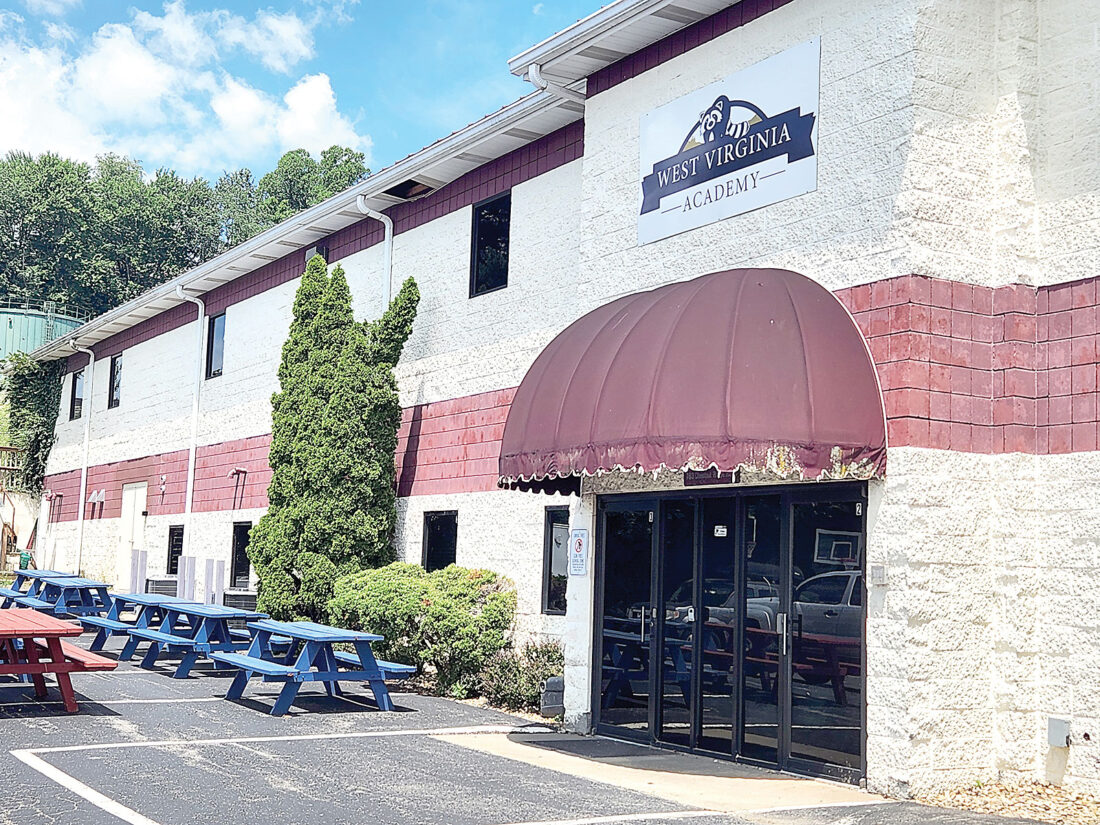
File Photo West Virginia Academy, the state’s first charter school, is based in Morgantown. (File Photo)
CHARLESTON – Members of the board that oversees West Virginia’s public charter schools did not publicly discuss a recent ruling by a lower court that could cause all future and existing charter schools to be approved by county voters. The Professional Charter School Board (PCSB) met virtually for its regular meeting Wednesday, going into executive session to privately discuss legal matters and personnel matters. But the only action the board took following the executive session was approval of a $4,000 per year increase in the salary of Grants Manager Bridget Carr. Eighth Judicial Circuit Court Judge Jennifer Bailey issued a ruling on Dec. 3 finding that the creation of the state’s five brick-and-mortar public charter schools and two statewide virtual charter schools violates the state Constitution. House Bill 206, passed by the Legislature in 2019 and amended in 2021 by House Bill 2012, created the current public charter school pilot project. The pilot program allows for the approval of 10 public charter schools every three years and a limit of two statewide virtual charter schools. State Code allows for the PCSB to authorize new charter schools, though counties can also authorize charter schools or create county-level virtual charter schools, but no county has done so. Bailey issued a permanent injunction that immediately prohibits the PCSB from authorizing any new charter schools unless local voters approve them via special election. The court also denied the PCSB’s motions to dismiss. Execution of the judgment and all related proceedings are currently stayed for 60 days to permit the defendants to appeal Bailey’s order. Although the injunction does not yet halt the operation of currently existing charter schools, the court established a multi-stage plan to enforce compliance, reserving the right to issue further injunctions or mandamus relief if the Legislature fails to act. Such actions could close the current charter school system. Bailey found that the public charter school pilot program violates Article 12, Section 10 of the West Virginia Constitution, because charter schools represent “independent free school organizations” that were authorized without the constitutionally mandated consent of a majority of affected county voters. The ruling stems from a lawsuit filed in 2021 by Monongalia County residents Sam Brunett and Robert McCloud against former governor and now U.S. Senator Jim Justice, R-W.Va., and legislative leaders, asking the court to declare the charter school law unconstitutional and instead allow county residents to vote for proposed charter schools. In a December 2021 order, Bailey blocked Justice from further implementation of the public charter school program. The state Supreme Court stayed that decision in a February 2022 order. In a June 2023 opinion, the Supreme Court determined that Bailey erred in her 2021 decision, dissolving her preliminary injunction and remanded the case back to Kanawha County for further proceedings. At Wednesday’s meeting, the PCSB voted to approve a federal Charter Schools Program (CSP) subgrant award to Charleston-based Phalen Leadership Academies West Virginia (PLA West Virginia) in the amount of up to $1.28 million, contingent on the signing of a charter agreement with the PCSB. PLA West Virginia, the only school to apply for a CSP subgrant this cycle, was originally seeking $1.75 million “Their grant application has been deemed fundable by a panel of peer reviewers identifying strengths, such as the capacity for teacher recruitment, inclusive student support systems, and plans for strong community and parent engagement,” Carr said. The PCSB was awarded $12.2 million in 2023 over a five-year period through the U.S. Department of Education’s Expanding Opportunity Through Quality Charter Schools program. Eligibility for the grant only requires an application, but the board added the charter agreement contingency. The CSP grant is a reimbursement-based grant. Funds are divided per year according to the approved budget, and PLA would need to incur costs first and then submit invoices for reimbursement. PLA West Virginia plans to launch a K-5 elementary school in Charleston in the fall of 2026, with the goal of creating up to four charter schools in underserved communities across the state. The PCSB also welcomed its new executive director Barry Holstein, who succeeds former executive director James Paul. Holstein is a former federal employee with the U.S. Treasury Department and has private sector manufacturing experience. “I have been involved with the charter school movement in West Virginia and school choice broadly … so this is an exciting time,” Holstein said. “I appreciate the confidence of the board in bringing me on for this position.” According to the most recent October headcount enrollment report, there are 4,243 students enrollment in the charter school system including 3,441 students enrolled in the two statewide virtual charter schools (the Virtual Preparatory Academy of West Virginia and the West Virginia Virtual Academy) and 802 students enrolled five physical charter schools: the West Virginia Academy in Morgantown, The Eastern Panhandle Preparatory Academy in Kearneysville, The Workforce Initiative (WIN) Academy in South Charleston, the Clarksburg Classical Academy, and the Wisdom Academy in Morgantown. According to Holstein, the 4,243 students enrolled in the charter school system this school year represents an increase of nearly 1,000 students year-over-year since the 2022-23 school year when there were only 1,248 students enrolled during the first full year of the charter school rollout. “Everything is seemingly positive relative to enrollment growth across the board, and I look forward to the continuing,” Holstein said. The board also welcomed newly appointed board member Shepherdstown resident Latonia Page, who was appointed by Gov. Patrick Morrisey in November. She most recently served as a senior executive service member at the U.S. Office of Personnel Management and has more than 35 years of experience in various federal, military, and nonprofit roles. “I definitely call the Mountain State my home,” Page said. “I’m recently transitioning from an executive position in the federal government and I’m really happy to be able to bring my effort to bear with this board.” Steven Allen Adams can be reached at sadams@newsandsentinel.comLocal News

US and Israel launch a major attack on Iran and Trump urges Iranians to ‘take over your government’

West Virginia officials announce burning restrictions

Treasury Department terminates union contracts for IRS and Bureau of the Fiscal Service workers

Teen of the Week: Fort Frye’s Parker Burris eager to explore career in foreign service
Trump raises the possibility of a ‘friendly takeover of Cuba’ coming out of talks with Havana