
Harvesting Votes: Leonhardt facing two challengers in GOP primary for third and final term as agriculture commissioner
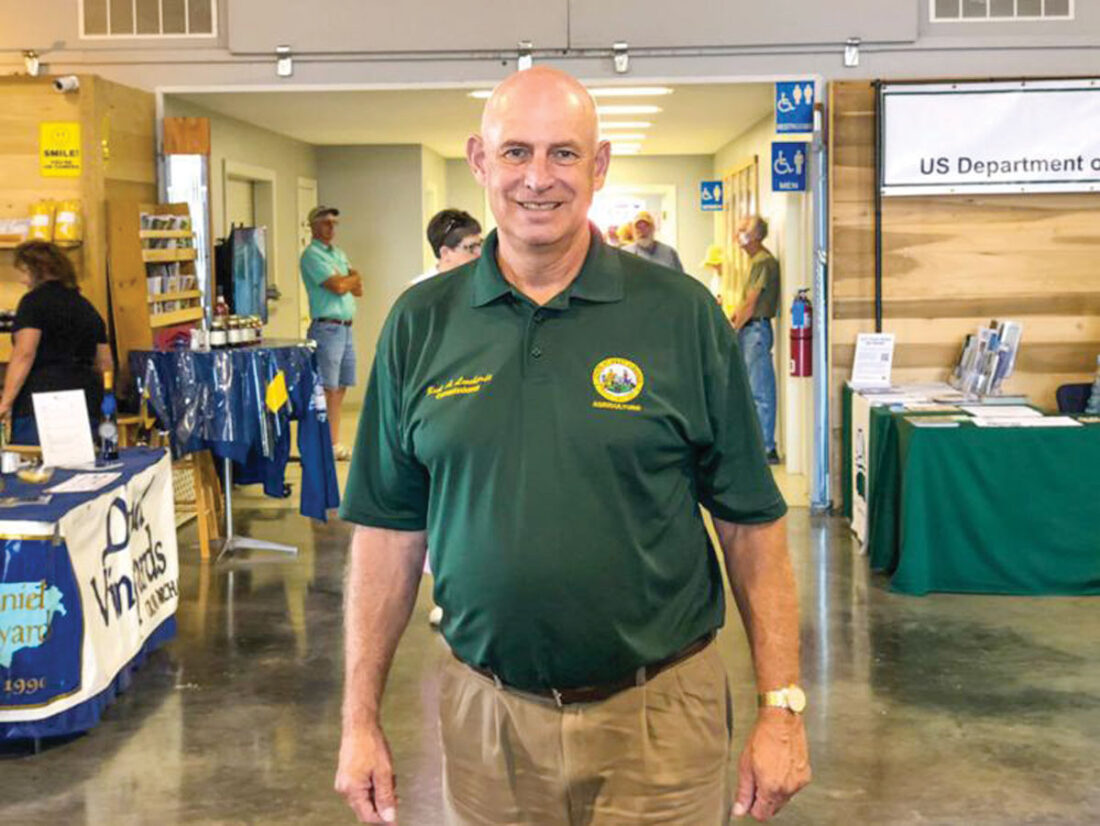
West Virginia Agriculture Commissioner Kent Leonhardt hopes voters will give him one final term in office. (File Photo)
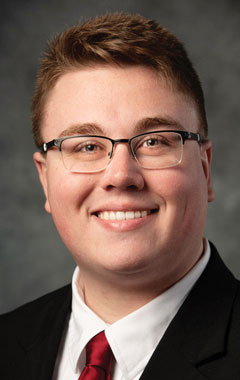
Former Putnam County Delegate Joshua Higginbotham (Photo courtesy of WV Legislative Photograph)
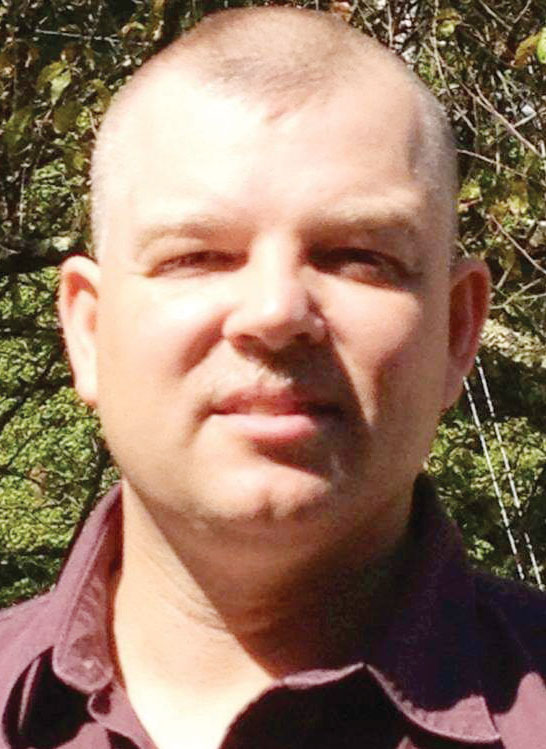
Roy Ramey (Photo Provided)
West Virginia Agriculture Commissioner Kent Leonhardt hopes voters will give him one final term in office. (File Photo)
Former Putnam County Delegate Joshua Higginbotham (Photo courtesy of WV Legislative Photograph)
Roy Ramey (Photo Provided)
Trending
CHARLESTON -- Agriculture Commissioner Kent Leonhardt still has work he wants to see completed at the West Virginia Department of Agriculture as he runs for a final four-year term. But he will have to get through a contested primary against a former lawmaker and an opponent he defeated in 2020.
Leonhardt is seeking a third term as the top representative for farming and agriculture in West Virginia. He points to nearly eight years of success growing the state's agribusiness sector, protecting animals and crops from diseases and helping the state weather the COVID-19 pandemic as reasons for voters to keep him in place.
"It's actually been a great ride, and we want to stay in office another term because we want to continue the good work we're doing and we want to make sure it's in place for those that follow my team in later years," Leonhardt said. "We've set the foundation for agriculture in the state of West Virginia. Not only that, we're seeing agriculture grow in West Virginia."
***
EDITOR'S NOTE: Listen to the full interviews with the three Republican candidates for commissioner of agriculture on the Mountain State Views podcast, available on most major podcast platforms.
***
A retired Marine Corps lieutenant colonel, Leonhardt settled down on a farm in Monongalia County. After running -- and losing -- as a Republican candidate for agriculture commissioner in 2012 to former state Sen. Walt Helmick, Leonhardt ran for the Senate himself. He spent half of one term representing the 2nd District, spanning from Marshall and Monongalia counties in the north to Calhoun and Gilmer counties in the south. In 2016, he challenged Helmick again and won.
Leonhardt has two Republican challengers this primary election cycle. Joshua Higginbotham is a former member of the House of Delegates from Putnam County. First elected in 2016, he rose to chairman of the House Economic Development Committee. He resigned in 2021 after moving out of his district, running for state Senate from Kanawha County and losing the 2022 GOP primary to state Sen. Mark Hunt, R-Kanawha.
Raised on his family's cattle farm near Poca, Higginbotham has degrees in history and political science from the University of Charleston. He works as a lobbyist for concealed carry advocacy organization Delta Defense.
Higginbotham said his background on his family's farm and his knowledge of economic development makes him the perfect person to lead the Department of Agriculture.
"It did surprise a lot of people that I ran for ag commissioner, but it shouldn't have," Higginbotham said. "West Virginia is not a state that can compete with Indiana, Iowa and Ohio. We just have the terrain that is not suitable for growing that much. But what we can excel at is the processing, manufacturing and distribution of agricultural products ... that's where my economic development experience comes in because I have some of those industry connections and obviously the policy experience to help make that happen."
Leonhart's other challenger is Roy Ramey of Lesage, a U.S. Army officer for 33 years and active with the U.S. Army Reserves. He is the owner of Avalon Farms, which raises poultry and pigs, as well as various crops.
Ramey has been unhappy with what he sees as heavy-handed state rules and regulations developed by the Department of Agriculture under Leonhardt's watch. Ramey challenged Leonhardt in the 2020 Republican primary for agriculture commissioner, losing 37% to Leonhardt's 63%. He remains unhappy with Leonhardt's leadership at the Department of Agriculture.
"I started seeing a lot of heavy regulations that I just wasn't good with," Ramey said. "Those regulations (are) what really put me on this path to decide to run instead of complaining about it. I'm not a complainer. I'm a doer. I'm a fixer. And I have experience at that kind of a thing. So, I just decided I wasn't going to complain anymore."
Leonhardt said during his time as commissioner, meat production in the state has increased by 51%, the number of farmers' markets have tripled and retail sales of West Virginia-grown products have increased. He also said interest in farming and agriculture for people under the age of 30 is increasing.
"That is awesome, because everybody's been concerned about the graying of agriculture in this country," Leonhardt said. "West Virginia is kind of going against the trend nationally, and that's great news, but I want to continue the work that I've been doing, bringing agriculture to the forefront of the nation in particular."
Leonhardt is most proud of the Mountaintop Beverage manufacturing facility in Morgantown, which makes shelf-stable dairy products, such as milk that can last weeks beyond traditional pasteurized milk. The facility is expected to increase its manufacturing capacity once a new interchange is built to the Morgantown Industrial Park where the facility is located.
Since he became agriculture commissioner, Leonhardt said, the state's economic output figures have increased from $700 million to $950 million. The health of agriculture in the state is not only good for the economy, but also good for the environment, he said.
"We're going to break that $1 billion mark in my next term, which is all great for the economy of West Virginia," Leonhardt said. "Agritourism is doing well. And when you think about the beauty of our forests and waters and the tourism that we talk about, agriculture plays a big role in keeping our waters clean and our forest healthy."
Ramey disagrees with Leonhardt's rosy assessment of agriculture in West Virginia. He points to U.S. Census data that shows the state has lost 1,122 farms since Leonhardt took office in 2017, with 162,000 acres of farmland lost during that same timeframe. Ramey's platform calls for reducing and eliminating state agriculture regulations, which he believes will reverse the closing of farms and boost the economy.
"I'm going to look at all of the policies that are within the authority of the commissioner, and we're just going to cut out the red tape," Ramey said. "If there's something that's hindering farmers on anything, such as an application period, let's open that up. Let's get the government out of the way as much as possible. And if it's anything within my authority to do so, I'm going to err in favor of the farmer and making it easier for them to do their job and us not being in their way."
Ramey worked this year to see House Bill 4911, allowing for the sale of raw milk, make it into law - one of two laws that went into effect without the signature of Gov. Jim Justice. Ramey also supports the PRIME Act sponsored by U.S. Rep. Thomas Massie, R-Ky. The bill, which has yet to be taken up, would exempt from federal inspection meat slaughtered at custom slaughter houses for distribution within a state's boundaries.
"Basically that helps cut some of the meat regulations," Ramey said. "It's safe enough right now to use custom slaughter for individuals to own an animal and have it slaughtered for themselves. If it's safe enough for that, and we know nobody's getting sick from that, then why is it not safe enough to sell a pound of steak or a pound of hamburger off of that same animal?"
Higginbotham wants to bring a more analytical approach to the Department of Agriculture, focused on bringing his education and economic development background in the Legislature to help incentivize young people to start agriculture businesses.
"My priority outside of the economic development is getting more young people involved in agriculture," Higginbotham said. "We have to not only encourage it from that educational standpoint, but make sure that we're passing the baton after they graduate. There's thousands of kids in FFA in this state. A very small percentage of them are actually going into agriculture after they graduate. That's the problem."
Higginbotham wants to work with the Legislature to change the tax code to ensure that agriculture operations are being taxed fairly. He also wants to work with the U.S. Department of Agriculture Rural Development and the U.S. Small Business Administration to secure grants to be able to offer micro-loans to existing agricultural businesses.
"A lot of folks, they can't afford property right now because of interest rates, because they don't think that they can properly develop it, or they don't have the right equipment," Higginbotham said. "Smaller producers need equipment, and that is where that microloan program comes in."
In a final term, Leonhardt wants to work towards finally seeing a new, state-of-the-art agriculture laboratory. Leonhardt has long been an advocate for funding of a new state agriculture lab. The Legislature has traditionally ignored this request, while Gov. Jim Justice - who has agricultural businesses - had wanted to see a combined state lab that also included the state Department of Health and the West Virginia State Police.
This year, Justice proposed a new agriculture lab on the campus of West Virginia State University in Institute for $50 million. However, the money was removed from the budget bill passed by the Legislature earlier this year, though it could be returned in a special session in May. Leonhardt remains hopeful that a new agriculture lab can be built if he wins a third term.
"I still want to modernize the agricultural labs for the State of West Virginia," Leonhardt said. "Our people do great work. They deserve a great place to work in; not a 1950s building that used to be a bowling alley."
Leonhardt would also like to see a future agriculture lab serve as a teaching facility for new veterinarians and vet techs. The state is seeing a shortage of medical professionals that specialize in animals, especially livestock.
"Right now, we have like one tech in the state for every two or three veterinarians, and we really should have three technicians per veterinarian," Leonhardt said. "If we get that, then we support the funding programs to put more West Virginia students going to vet school. Then hopefully if they see that opportunity that we've built, that they'll come back to the State of West Virginia and practice here."
Higginbotham is also disappointed that a new agriculture lab hasn't been built yet. He supports the original idea of combining all of the state's labs into one facility.
"We've been talking about it for seven years. We haven't been able to make it happen," Higginbotham said. "We need a state lab. I would recommend putting it all under one roof, that way we're not siloed."
Ramey does not support spending taxpayer dollars to build a new state-of-the-art agriculture laboratory, seeing the project as a possible waste of dollars and resources.
"I'm a small government kind of guy, and part of that includes cutting the budget," he said. "Do we need to do some testing and have some laboratory? Maybe, and I'm willing to look into that, but I'm not willing to pull out the taxpayer's wallet and commit them to a $50 million price tag."
Steven Allen Adams can be reached at sadams@newsandsentinel.com