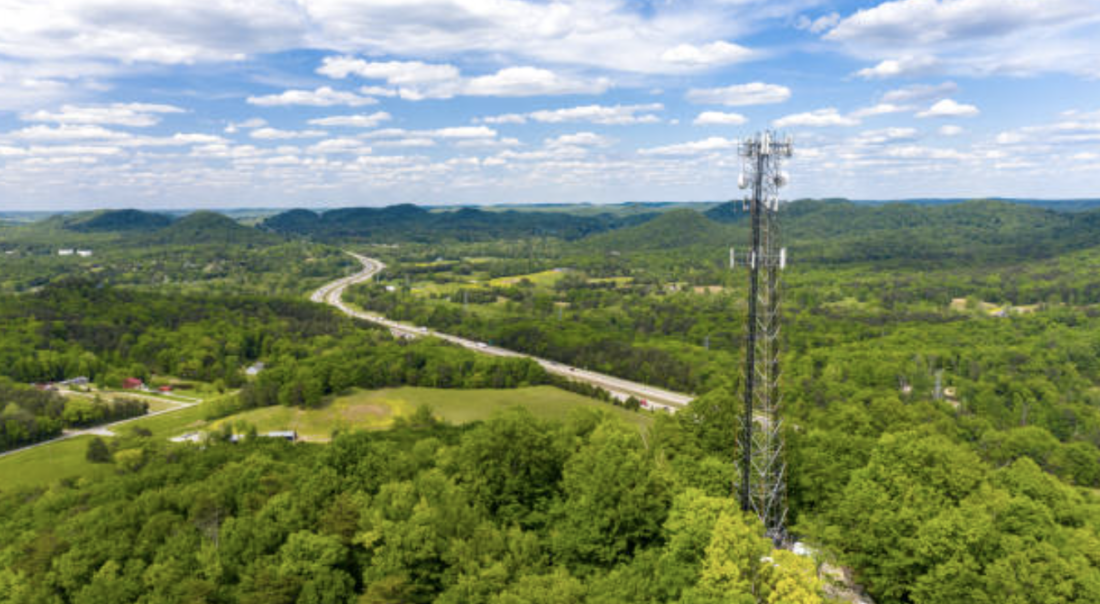
New broadband investments promise greater digital access for remote areas of Wood and Wirt Counties
Broadband access in Wood and Wirt Counties has long depended on where you live, with strong service near Parkersburg and weaker options the farther you move into rural terrain. If you’ve ever tried to work, study, or stream from a dead zone in the hills, you know the frustration all too well. Topography, aging infrastructure and sparse population clusters have slowed development for decades, with county-level broadband mapping data showing why.
In Wirt County, nearly 60% of locations lack consistent broadband availability, compared with roughly 87% availability in Wood County, in a stark contrast that highlights persistent rural gaps. These significant service disparities reflect broader statewide challenges, where rural West Virginians are far less likely to have access to speeds that meet federal benchmarks. As recent statewide momentum begins to reach these two counties, you’re starting to see a shift in the approach: fewer temporary fixes, more long-term infrastructure and a clearer commitment to bringing high-speed internet into places that have waited far too long for dependable service.
Statewide funding boost helps rural communities take the lead
Over the past year, West Virginia has intensified its broadband expansion efforts, backed by historic levels of federal funding. The state’s Broadband Equity, Access and Deployment plan outlines goals for connecting roughly 74,000 unserved and underserved locations, a number that includes many rural addresses similar to those in Wood and Wirt Counties, with provisional awards already distributed to nine providers covering services to tens of thousands of those eligible sites under the federal program.
Federal approval in late 2025 unlocked approximately $546 million USD for 142 deployment projects around the state, marking one of the largest infrastructure pushes in West Virginia’s recent history. You can already feel the shift in tone from state leaders, who describe high-speed connectivity as a core economic engine rather than a luxury. That perspective matters, because it frames broadband as essential to everyday life, critical for telehealth, education, business, entertainment and the ability to participate fully in the digital world.
How evolving online expectations drive rural broadband needs
As West Virginia invests heavily in new broadband construction, the expectations placed on rural networks have grown dramatically. Everything from healthcare platforms to remote job tools depends on steady bandwidth, with digital services becoming so deeply woven into daily life that you feel the difference immediately when your connection isn’t stable. Meanwhile, even the entertainment industries demonstrate how performance standards are shifting.
For example, the rise of platforms competing to be recognized among online casinos with the fastest payout illustrates how users now rely on low-latency systems built for fast, uninterrupted transactions. When digital industries operate at that level, it raises broader expectations for rural communities as well, because residents should be able to participate in modern online ecosystems without limitations tied to geography.
What new investments mean for Wood and Wirt Counties
Wood and Wirt Counties are included in the state’s wider digital equity planning effort, which has produced targeted strategies for improving access, affordability and digital skills across eighteen counties. Wood County’s connectivity varies widely, with strong provider competition near urban centers but weaker, inconsistent service in rural stretches farther east. You may have dealt with this contrast firsthand if your home or business sits beyond the main fiber corridors.
New infrastructure projects supported by state programs are intended to reach these areas, particularly through fiber-focused buildouts and line-extension initiatives. Wirt County, historically among the lowest in broadband availability statewide, stands to gain significantly as providers expand networks into places long overlooked by the market. While construction timelines depend on terrain, permitting and provider capacity, the counties are positioned to see meaningful improvements during the next several years.
Tangible benefits that stretch beyond internet speeds
The payoff of stronger broadband reaches into nearly every corner of daily life, and you’ll notice the impact in ways that go far beyond smoother streaming. Rural residents stand to gain better access to telehealth services, reducing the need for long trips to medical providers. Students benefit from a more reliable connection for digital coursework, interactive tools and communication with teachers.
Small businesses, particularly home-based and agricultural operations, can tap into e-commerce opportunities that were difficult or impossible with unreliable service. Workers gain access to remote job markets, online training and professional development opportunities that help strengthen local economies. As state officials emphasize economic resilience, broadband emerges as one of the most important tools for keeping rural counties competitive and connected. Ultimately, when service improves, the surrounding community tends to grow stronger with it.
What comes next for deployment and digital inclusion
Looking ahead, the transformation in Wood and Wirt Counties will unfold in phases as construction, testing and service activation move forward. Providers are working through engineering plans, fiber installation, tower upgrades and network extensions that will gradually fill existing coverage gaps. You can expect progress at different speeds depending on location, but both counties are positioned for steady improvement over the next eighteen to thirty-six months.
Alongside physical infrastructure, digital inclusion programs will play an important role by helping residents adopt reliable service, improve digital literacy and use online tools effectively for work, school, healthcare and business. The broader vision is a future where people in remote parts of these counties experience the same opportunities available in more connected regions. With continued investment, community engagement and thoughtful planning, the digital landscape of Wood and Wirt Counties is poised for a meaningful and lasting transformation.