
Military dogs honored during Belpre program
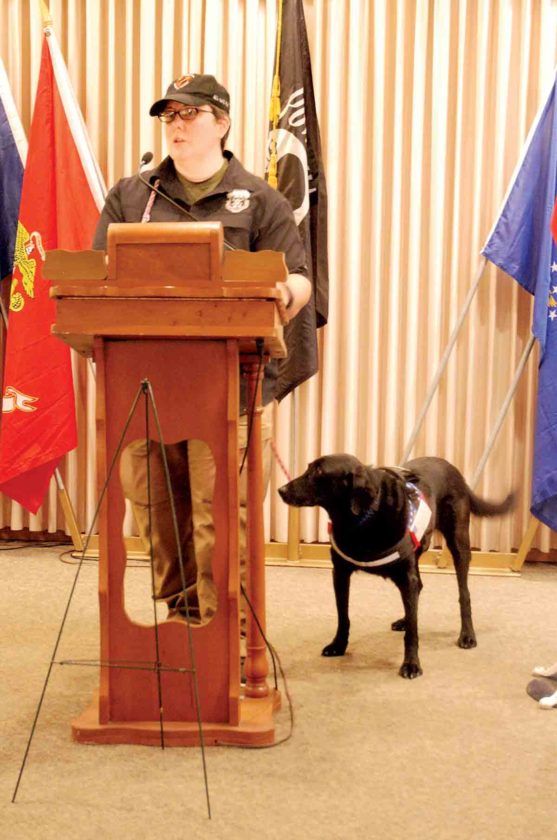
Waverly resident Amanda Ingraham speaks about military working dogs during Belpre’s Memorial Day ceremony Monday at Leavitt Funeral Home. At her side is Foxy, a retired military dog Ingraham trained to find explosives. (Photo by Evan Bevins)
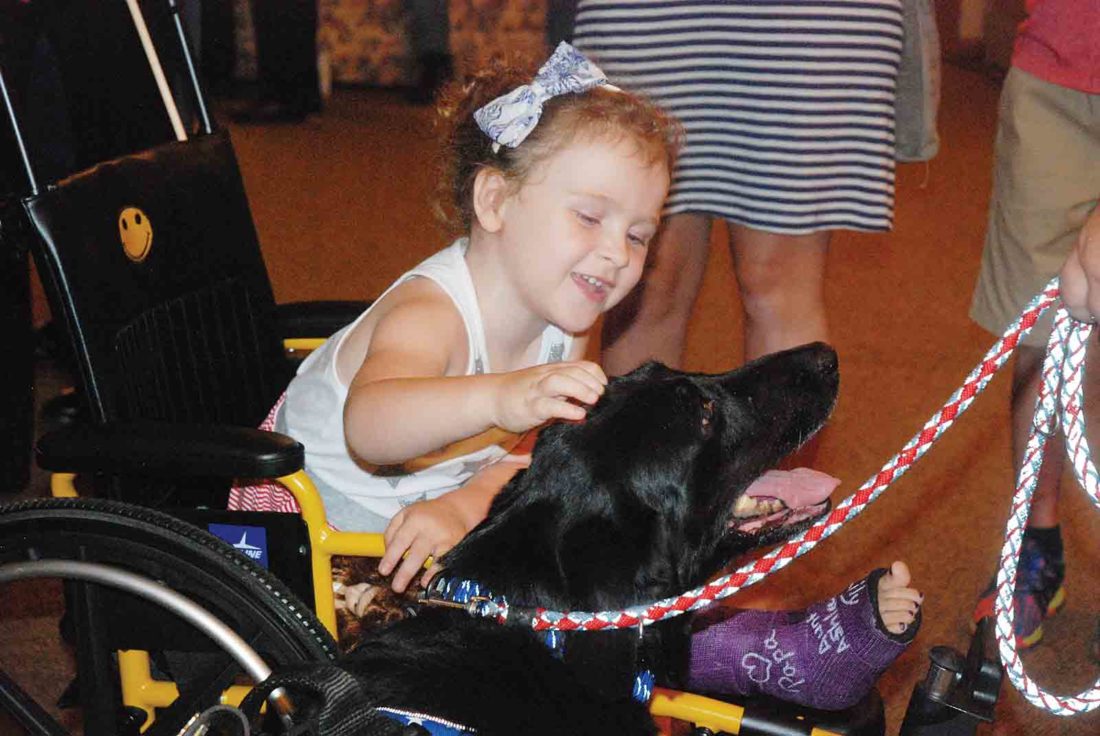
Belpre resident Lily Atkinson, 3, pets Foxy, a retired military working dog, following Belpre’s Memorial Day program Monday at Leavitt Funeral Home. Foxy’s handler, Waverly resident Amanda Ingraham, was the featured speaker at the program. (Photo by Evan Bevins)
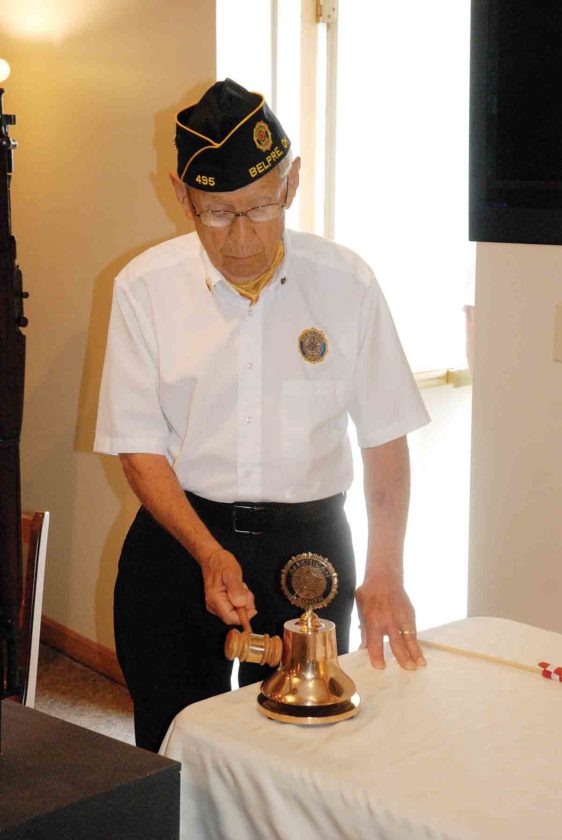
American Legion Post 495 member Don Ery rings a bell as each name of a post member who died in the last year is read during the Belpre Memorial Day program Monday at Leavitt Funeral Home. (Photo by Evan Bevins)
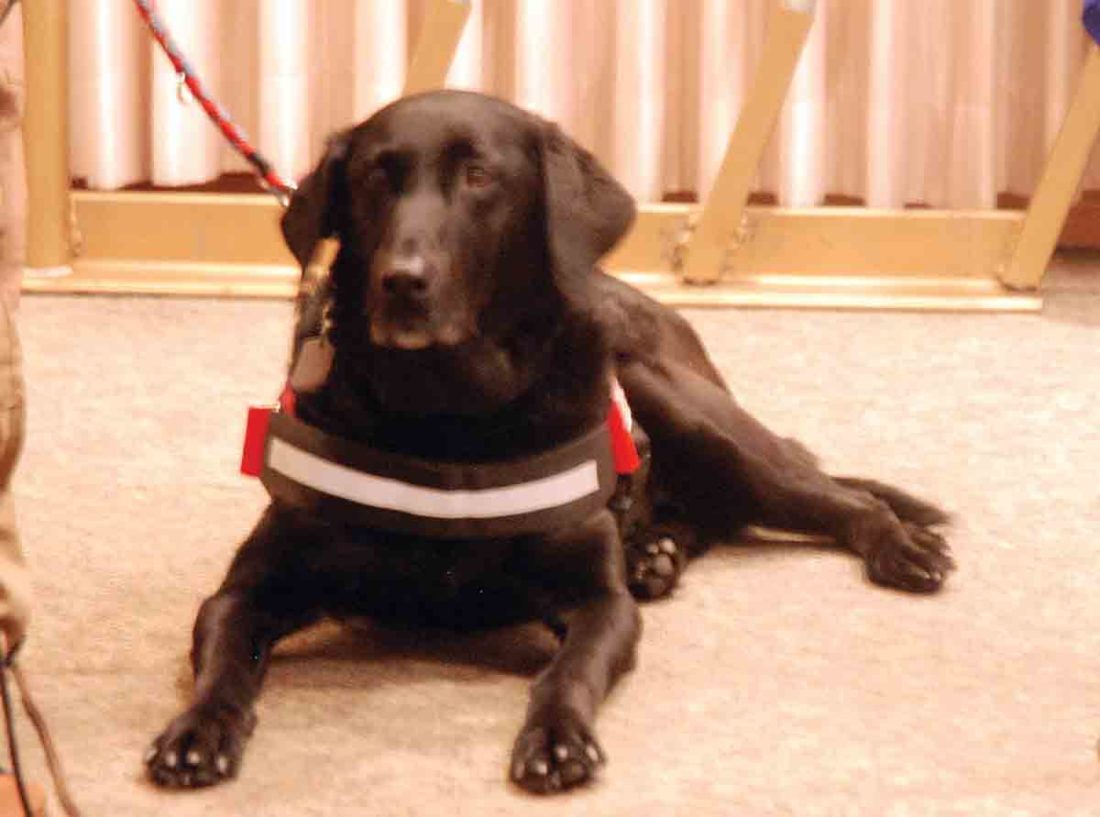
Retired military working dog Foxy surveys the crowd during Belpre’s Memorial Day program Monday at Leavitt Funeral Home. (Photo by Evan Bevins)
Waverly resident Amanda Ingraham speaks about military working dogs during Belpre’s Memorial Day ceremony Monday at Leavitt Funeral Home. At her side is Foxy, a retired military dog Ingraham trained to find explosives. (Photo by Evan Bevins)
Belpre resident Lily Atkinson, 3, pets Foxy, a retired military working dog, following Belpre’s Memorial Day program Monday at Leavitt Funeral Home. Foxy’s handler, Waverly resident Amanda Ingraham, was the featured speaker at the program. (Photo by Evan Bevins)
American Legion Post 495 member Don Ery rings a bell as each name of a post member who died in the last year is read during the Belpre Memorial Day program Monday at Leavitt Funeral Home. (Photo by Evan Bevins)
Retired military working dog Foxy surveys the crowd during Belpre’s Memorial Day program Monday at Leavitt Funeral Home. (Photo by Evan Bevins)
Trending
BELPRE -- As they honored the men and women who gave their lives in service to the United States Monday, American Legion Post 495 also highlighted the contributions of a lesser known group: military working dogs.
"Military war dogs have saved countless lives since their first appearance on the battlefield," Post Commander Tommy Logston said during the annual Memorial Day program at Leavitt Funeral Home.
Dogs are used in a variety of ways in the military, including finding explosives, locating enemy troops by scent and acting as sentries. Dogs were used to deliver messages in the Civil War and World War I, and canine corps units were estimated to have saved thousands of lives in Vietnam, Logston said.
Waverly resident Amanda Ingraham, who worked with half a dozen canines in her nine years in the Army, was the featured speaker. She brought along Foxy, a retired military working dog with whom she was deployed to Afghanistan.
Ingraham admitted she had some reservations when she was paired with the black Labrador retriever instead of the German shepherds or Belgian malinois that are something of a "status symbol" among canine handlers.
"Of all the dogs in the world, why give me a Lab?" she said. "That is not a military working dog."
But Foxy soon proved her wrong, with her ability to locate explosives.
"She became the fastest, best searching dog we had in our platoon," Ingraham said.
However, Foxy's skills were limited to explosive detection. While another canine, Rex, has alerted her to the presence of enemy combatants, in a test, Foxy trotted right past an armed individual and gave Ingraham the all clear, since no explosives were to be found.
"She's not going to tell me there's somebody there," Ingraham said with a laugh. "She's probably going to love on them and move on."
Foxy, who is now retired, suffered a concussion on a mission and still did her job searching for explosives. She now lives with Ingraham and another retired military dog, Cinte, who suffered from post-traumatic stress disorder.
"They had a lot of mortars on the base, and the dog could not stand any more loud noise," Ingraham said.
Ingraham set up a military working dog memorial and explained to the nearly 100 people in attendance the symbolism behind it, including the open kennel door for the dog that would not return, the overturned dishes and rolled up leash that would no longer be used and the animal's favorite toy.
"We put everything we have into these dogs," she said. "They're not just equipment. They're family members to us."
Post Financial Officer Bob Hadfield said the idea for the theme of the program came about after Ingraham attended the dedication of a monument to military dogs at the veterans memorial in Howes Grove Park.
"We just wanted to show the people that the military dogs do their part too," he said.
Steubenville resident Robert Moody, an Army veteran, came to the ceremony to honor his late father-in-law, Harold Riley, whose name was read along with other members of Post 495 who died over the last year.
"I loved it," he said of the program. "I learned a lot."
Before Ingraham spoke, Belpre Mayor Mike Lorentz welcomed those in attendance and asked them to contemplate the sacrifice of Americans who died in service to the country.
"Think about how many gave their lives for you and me and the freedoms we enjoy," he said.
***
Seven Famous Dogs of War
* Sallie -- A brindle bull terrier who served as the regimental mascot for the 11th Pennsylvania Volunteer Infantry during the Civil War; she followed the men closely on marches and the battlefield, always on the front lines.
* Sergeant Stubby -- Not a trained military dog, this pit bull managed to alert World War I soldiers to gas attacks in time for them to don their masks, captured a German spy and saved a girl from an oncoming car.
* Chips -- The most decorated canine of World War II, this German shepherd/collie/husky mix was trapped with his handler by machine gun fire during the invasion of Sicily. He broke free and attacked the shooters, eventually leading to their surrender.
* York -- Decorated for outstanding service with the 26th Infantry Scout Dog Platoon during the Korean War, performing 148 combat patrols from 1951 to 1953.
* Nemo -- German shepherd who attacked a group of Viet Cong infiltrators trying to get into the Tan Son Nhut Air Base in Vietnam, despite being shot, allowing his handler to call for reinforcements. Despite losing his right eye, he survived and finished his tour in Vietnam.
* Lex -- A German shepherd who refused to leave the body of his handler, Cpl. Dustin Lee, after Lee was killed in a mortar attack in Iraq. He later comforted Lee's siblings at his funeral.
* Cairo -- A Belgian malinois who was among the first on the ground with Navy S.E.A.L. Team 6 during the raid that killed Osama bin Laden.
Source: Provided by American Legion Post 459.