
Mid-Ohio Valley hospitals monitoring IEI fire effects on lungs
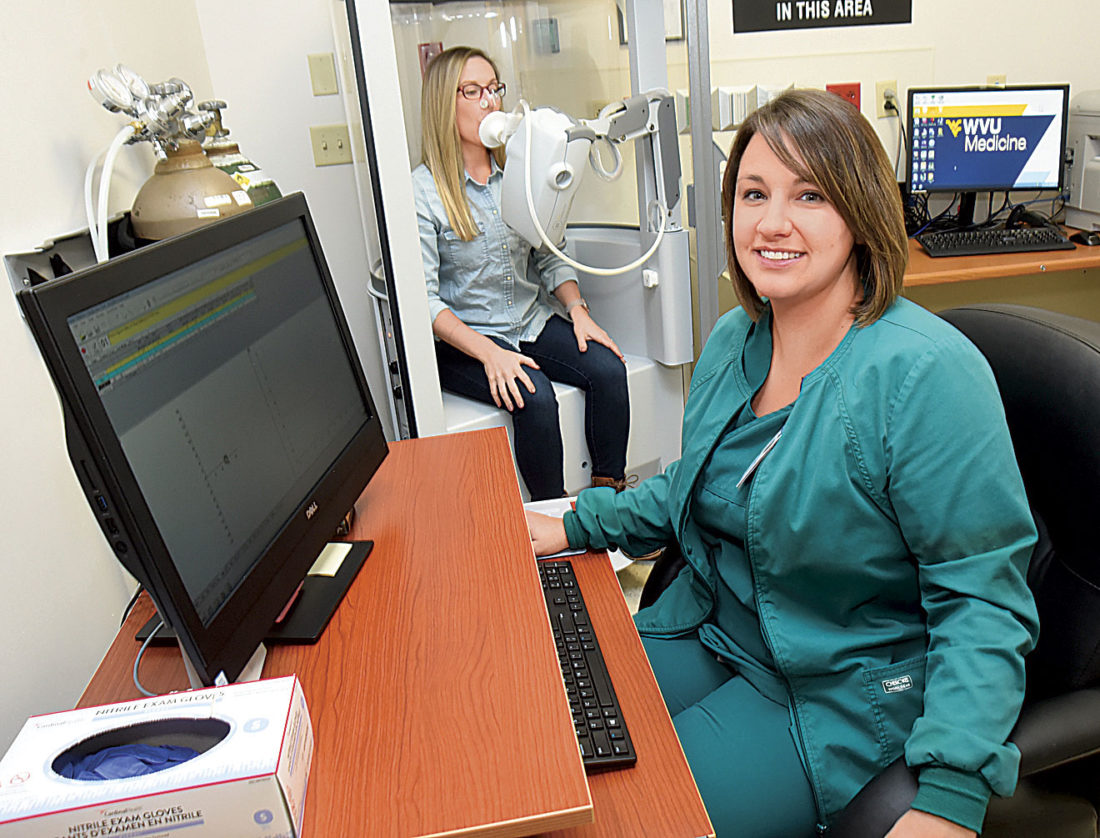
Photo by Jeff Baughan Monica McDonald, a lead respiratory therapist in the pulmonary respiratory area, sits with a monitor while Jessica Haugh demonstrates how a spirometry patient performs the level one test.
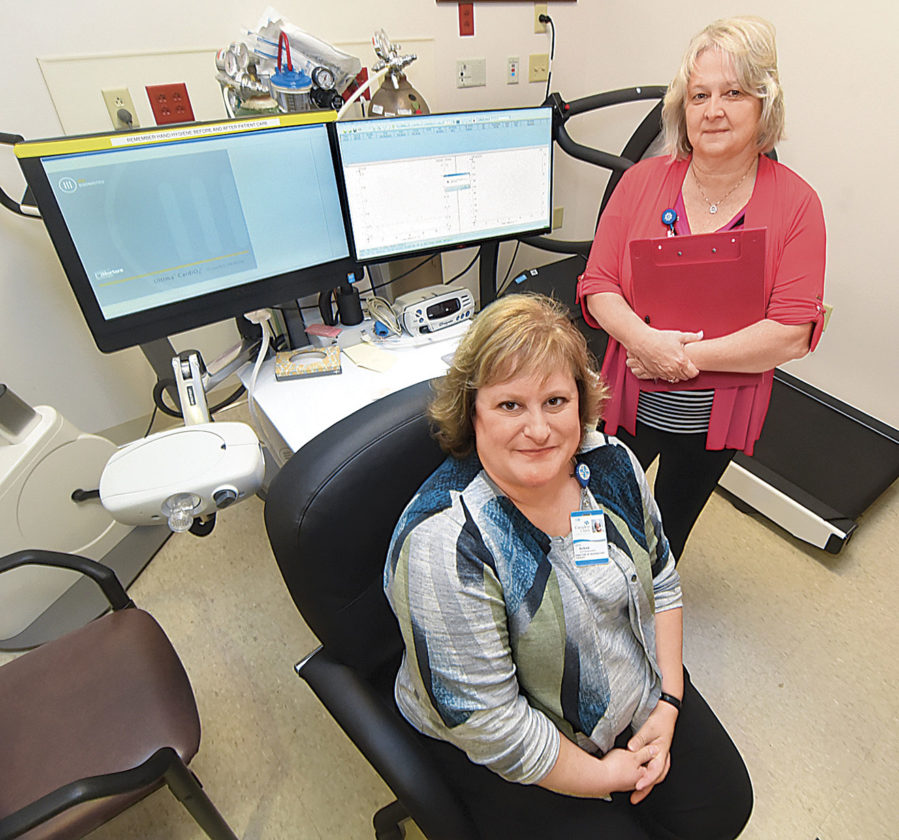
Photo by Jeff Baughan Susan Aufdenkampe, director of Respiratory Therapy at Camden Clark Medical Center, seated, and Susan Abdella, directory of Emergency Services, have kept track of pulmonary testing since the IEI fire.
Photo by Jeff Baughan Monica McDonald, a lead respiratory therapist in the pulmonary respiratory area, sits with a monitor while Jessica Haugh demonstrates how a spirometry patient performs the level one test.
Photo by Jeff Baughan Susan Aufdenkampe, director of Respiratory Therapy at Camden Clark Medical Center, seated, and Susan Abdella, directory of Emergency Services, have kept track of pulmonary testing since the IEI fire.
Trending
PARKERSBURG -- While some problems with the Intercontinental Export-Import Plastics (IEI) fire are immediately evident, others are not so evident immediately, such as pulmonary problems.
According to Susan Aufdenkampe, director of Respiratory Therapy at Camden Clark Medical Center, the numbers of patients being seen for pulmonary problems did not spike considerably during the week after the major industrial fire. The valley, however, was blanketed by black and brown smoke for days after the fire.
Rain and cloud cover in days following forced smoke from the fire area closer to the ground.
"We generally see between 50-60 a week for a pulmonary function test," Aufdenkampe said. "And there were days we would do as many as 7-10 tests a day but to say the numbers are related exactly to smoke and fire, hard to tell. What I can tell you is this: if we start seeing an influx of people with lung problems who have been referred by primary care physicians, then you know there is a reaction to the effects of the fire.
"And since we're about two weeks after the fire and it takes about two weeks to get in to see a primary care physician," she said, "we're just about at that timetable for things to start happening."
Susan Abdella, directory of Emergency Services at Camden Clark, said, "We offered free pulmonary tests, which are level one tests and known as spirometry, to the first responders to the scene and 70 took advantage of the testing."
"Of those numbers, one needed to have a more intensive four-stage pulmonary examination," Aufdenkampe said.
Jennifer Offenberger, associate vice president of Marketing and Service Excellence of the Memorial Health System, said "our health system tracked patients over a four day period that may have been impacted by the air quality from the Ames plant fire.
"Our Belpre Medical Campus Emergency Department and our Belpre Physician's Care Express tracked 94 patients during that time," she said. "They were treated based on their symptoms."
Offenberger said the number "would be considered a spike in the number of tests made in Belpre. And Belpre has a fully functioning emergency room like Marietta Memorial does so the same procedures would be possible."
Aufdenkampe said the difference between the baseline test, which takes 10 minutes and is known as a level one test, and the full pulmonary function test, which is known as a level four test, is the level four test requires 90 minutes.
"Most first responders tested have had spirometry annually," she added. "After the tests, we reviewed their results and we were able to compare their knowledge with previous testing results. Anyone who had a lower lung capacity or diminished lung capacity, we recommended a visit to their primary care physician."
"People just can't come in with a cough and ask for a pulmonary test," said Abdella. "It has to be a physician ordered event unless the person comes in with obvious trouble. Then they are treated for acute symptoms. They might get a breathing treatment, a chest X-ray or other tests. Then they may be admitted or discharged depending on the severity of the problem.
"If a person doesn't know their baseline numbers, they should come in during one of the community events and have a screening to get the numbers.," she said. "If a person has experienced issues before or had exposure, then they can be proactive to their own health care."
Abdella described the lungs as being "made up of paper thin tissue. Anything that damages that tissue… that hampers the air capacity of the lungs, is going to have an effect on a person to be able to function properly. Whether it's smoking or lung disease, asthma, chronic bronchitis, it's a lot easier for air to pass through tissue paper than cardboard, which is what comparing the healthy tissue to the damaged tissue would be like.
"Chronic Obstructive Pulmonary Disease (COPD) is a very real problem and it's not restricted to our area," she said. According to the Centers for Disease Control, West Virginia has one of the highest rates per capita for COPD in the country. That is backed up from facts from wv.gov, which states West Virginia has a prevalence of COPD at 10.6 percent, the second highest in the nation.
Abdella said "it's caused by many different things like genetics or workplace situations; but the causes are different. Our area is dependent on industrial plants, so we work with them collaboratively about possible health issues. I meet with Chemours regularly; if I get a patient who works there, I know how to handle it."
Aufdenkampe said patients can be helpful by knowing their health conditions and symptoms. "Then if something changes within those conditions, they can call their primary care physician.
"Lots of people can have a 'lung disease' but it varies depending on the individual," she said. "No two are the same. 'Lung disease' is not a cookie cutter treatment. Everybody with a lung disease requires individualized treatment because each individual is different. What works for someone may not work for the other.
"If your symptoms include coughing but now you're coughing up mucus or blood for instance, it's time to make a call to your doctor," said Aufdenkampe.
***
At a Glance
* Camden Clark Medical Center is hosting three free pulmonary function testing clinics at the Camden Clark Health and Wellness Center at 2804 Birch St., Parkersburg.
* The hours are Saturday: 7-10:30 a.m., Wednesday: 9 a.m. to noon and Thursday: 2-5 p.m. To schedule an appointment for the free test, call 304-424-2348.