
The Way I See It: Marietta troops played role in Ohio’s only civil war battle
Trending
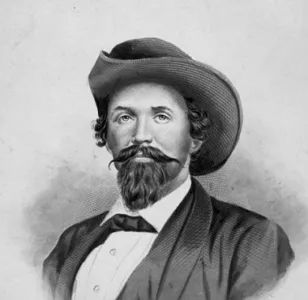
A renegade group of Confederate soldiers led by Brigadier General John Hunt Morgan fought the only battle waged on Ohio soil during the Civil War. The Battle of Buffington Island denied the troops safe passage back to friendly territory. A group of Marietta soldiers played an important role in the battle along the Ohio River. Local soldiers would again play a role as the fleeing Confederates attempted to cross the Muskingum River north of McConnelsville.
Today, hundreds of turn-by-turn road signs allow you to retrace the steps of the raid across southeastern Ohio.
The raid was intended to divert attention from other areas. It started on June 11, 1863, in Tennessee and continued until July 26 as Morgan and more than 2,000 soldiers attempted to outrun the Union troops chasing them. In the end, they failed.
The raiders entered Ohio north of Cincinnati on July 13, and they attempted to leave the state on July 18 by crossing the Ohio River at Buffington Island. West Virginia had been created a month before after half the state split from Virginia, but there were still plenty of Confederate supporters in the state and Morgan knew he could count on them to get back to friendly territory.
Things went poorly for Morgan. The river, normally shallow enough that you could walk across, was flowing at a 20-year high. Getting out of Ohio was going to prove to be difficult for a number of reasons.
Union troops had anticipated his arrival and were ready. Among them were Capt. D.L. Wood, of the eighteenth U.S. Infantry, who had been ordered by Col. William Putnam to assemble 200 recruits from Marietta and the surrounding area to travel down to the island and start digging an earthen bank that they would fortify with guns and cannons to keep the raiders from reaching the island. They even commandeered a sternwheeler to keep it from falling into Confederate hands.
The earthen works convinced Morgan that the area was more fortified than it actually was. At night it must have appeared as if an entire army was in waiting. By the time Morgan had the clarity of daylight, the earthworks had been abandoned and the river crossing protected by sternwheelers that had been converted to gun boats. Two cannons from Harmar lay in ruin at the bottom of the hill. The men from Marietta had walked down the riverbank and boarded the sternwheeler Starlight and were safely in Ravenswood by dawn waiting for the raiders.
Morgan lost a lot of troops at Buffington Island, hundreds were captured or wounded and were sent down river to Cincinnati as prisoners of war. Morgan meanwhile was still trying to get across the river. He traveled upstream along the riverbank and was repeatedly turned away by gunboats. He finally gave up near Hockingport and headed into Athens County. He attempted to cause havoc as he passed through Nelsonville, burning canal boats and bridges behind him.
Union troops were at this point six hours behind the raiders. The troops took time out of their chase to enjoy a meal prepared by the women of Nelsonville before renewing their pursuit.
Both sides knew that the raiders would have to cross the Muskingum River. Union forces were working to be ready. The raiders became somewhat split as they neared the river, one group headed toward Eaglesport and another for Rokeby Lock early on July 23. The Morgan County Militia were ready for them at Eaglesport. Ill-equipped with older guns, most of their shots failed to hit their targets. Morgan headed toward Rokeby Lock and the shallow waters found downstream from the dam. Those in Eaglesport hijacked a ferryboat and headed toward Rokeby Lock with the intent of using it to ferry troops across the river.
Morgan was cut off from the north by a gunboat traveling down the Muskingum and from the south by a large group of Union soldiers led by Col. Joseph Hill, including two battery pieces from Marietta. Squeezed from three sides, Morgan continued to head east.
Morgan, along with 364 of his men, would be captured on July 26 just 12 miles from the Pennsylvania state line. He was thrown in the state prison in Columbus, only to later escape and board a train that took him to Cincinnati where he simply crossed over into Kentucky. He would die later in the war.
Today, Morgan High School's mascot is the Raiders, named for the rebels who rode through the county a century and a half ago. Much of his 1,000-mile route is marked by white and black signs. Author David Mowery's book "Morgan's Great Raid" does a great job detailing the ride through the north. He also helped produce "Morgan's Raid Across Ohio: The Civil War Guidebook of the John Hunt Morgan Heritage Trail" that will give you a current day turn-by-turn explanation of the ride across the state.
The Muskingum River at Rokeby Lock, and the Ohio River at Buffington Island, still look much the way they did in 1863, giving modern day observers an interesting perspective into what would end up being the only Ohio battle of the war.
Art Smith is the online manager of The Parkersburg News and Sentinel and The Marietta Times. He can be contacted at asmith@newsandsentinel.com.