
Trending
Thousands of fans will fill Ohio Stadium Saturday to see the Buckeyes play Ball State. The tradition of calling someone a Buckeye did not start at THE Ohio State University. It likely started in Marietta.
Several years ago, I was working on a photo story about the Washington County Courthouse. Retired Judge Ed Lane was my tour guide, and he was explaining in detail the artwork in the large courtroom. The medallions around the ceiling honor the first officers of the first court in the Northwest Territory. One of those men was Ebenezer Sproat. Lane casually mentioned that Sproat was the first Buckeye in Ohio and he had been so named by the native Americans he met when he arrived. I wanted to believe Lane, but honestly, it seemed a little farfetched. It turns out Lane was likely correct.
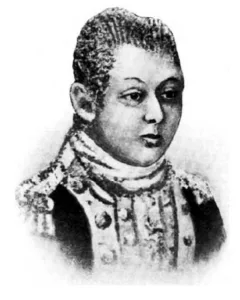
Two other early pioneers, Ephraim Cutler and Samuel Hildreth, wrote a book in 1852 named "Biographical and Historical Memories of the Early Pioneers Settlers in Ohio." A whole chapter of the book is devoted to Sproat. Sproat, one of the first New Englanders to arrive in Marietta, was the first sheriff in town and for that matter, the Northwest Territory. A decorated officer in the Continental Army, he was by all accounts a very tall man. Many of the indigenous population that was here before the pioneers, regularly traded meat, skins and other items with those in Marietta at Fort Harmar, including Sproat. They gave him the nickname of Hetuck, the Shawnee word for the eye of a buck deer, or Big Buckeye. Soon the entire community knew who the Big Buckeye was.
As the sheriff of the county, he opened the first court held in the territory in 1788. He marched with his sword drawn from the Point, which would have been near the current day Lafayette Hotel to the block house of Campus Martius. Cutler's book describes it as "an august spectacle, conducted with great dignity and decorum, making a deep impression on the (native Americans) many of whom witnessed the ceremonies, and at this time bestowed on him the Indian name, by which they ever after designated him." It was likely one of the first parades in Marietta and it appears he made a good impression. In my head I envision him walking down the bike path through Muskingum Park, but the reality is that the young town was much more rugged then than it is now. The sight of a man walking down the street with a large sword would be as much of a spectacle now as it was then.
Early Pioneers were soon known as Buckeyes. William Henry Harrison, an Ohio resident, but not a native, used the buckeye in his campaign in 1840 to appeal more to the "common" voter. He was elected president but died a month after taking office. Sproat died in 1805, long before the university in Columbus would use his nickname for themselves and long before it was named the official tree in 1953. He is buried in Mound Cemetery.
Ohio State University later adopted the Buckeye as its symbol and when the team takes the field Saturday, many of their players will display the buckeye leaf on their helmets as badges of honor for having played well, a tradition started by the former coach and Ohio native Woody Hayes in 1968. All the players and most of the fans in the giant stadium in Columbus are likely proud to call themselves Buckeyes. They all follow in the footsteps of the original Buckeye, Col. Ebenezer Sproat, who was a Buckeye long before Ohio was even a state.
I am not a Buckeye, but a Bobcat, having attended Ohio University, a college established by Manasseh Cutler and Rufus Putnam and chartered in 1804 long before the college in Columbus chose Sproat's nickname as their own.
Art Smith is online manager of The Parkersburg News and Sentinel. He can be reached at asmith@newsandsentinel.com.