
The Way I See It: Bird populations shift in winter months
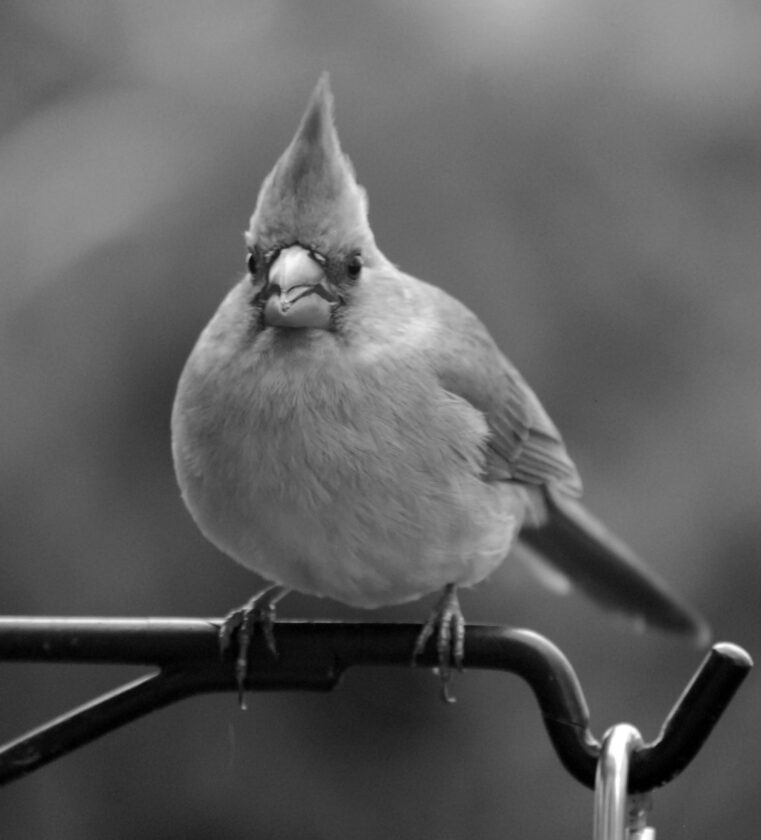
A female cardinal sits near a feeder in a Marietta area yard. (Photo Provided)
If you are an amateur bird watcher like me, you have likely noticed that the group of birds you see in the winter is somewhat different than those that you see in the summer.
Just as is the case with the human population, some birds stay here for the winter while others leave town and fly south for the cold months.
Winter is a great time to bird watch as your view is not normally blocked by those pesky leaves on trees.
Birds can somewhat be broken into three groups. Those that leave, those that stay, and those that see our area rivers as a southern destination and stop here for the winter.
Most birds that stay are well equipped to make it through the winter without the aid of humans, just as they have for thousands of years. You can put out bird feeders if you want. Watching birds dine on your suet and sunflower seeds brings joy to many, but the birds are not depending on your hand-out to survive.
Those that stay behind will continue to feed on seeds and other foods that they find in the woods, fields and yards. Take a walk in the woods in the dead of winter and you will be surprised at the number of birds that you will see.
One of the first birds you are likely to see is the robin. The first robin of spring is also likely to be the last robin of fall and the current robin of winter. The bird never leaves. The feeding grounds may be different, but they are in this area year-round. The cardinal, the beautiful red bird that is the state bird of both Ohio and West Virginia, never leaves and loves backyard feeders in the winter. Woodpeckers stay around for the cold as well. Because of their body structure, they frequently have to awkwardly hang to get their fill at a feeder. There are several varieties of woodpeckers including the downy, red-belly and red headed variety that will fly out of the woods to your yard to grab a quick bite.
The birds that leave have by now flown south and are likely relaxing on the beach somewhere.
They include the osprey that you can sometimes find around the river in the warmer months as well as the cliff swallows that in the summer you will find darting in and out of nests built below the Putnam Bridge. In the rural area where I live, the barn swallows are a welcome and common summer tenant in barns and sheds. They eat millions of bugs and love to follow you around the yard when you are cutting the grass, in the winter they fly the coops and barns they call home in the summer. Purple martins abandon their cool houses on poles in the winter to fly to warmer areas as well.
The ruby throated hummingbirds are gone for the year too. They are so popular that there are websites designed to track their migration north in the spring.
Since our rivers rarely freeze completely over, a lot of water birds can be found near our waterways. Ducks like the northern shoveler, northern pintail, redhead, ring-necked and bufflehead are common along the river.
The area around dams like Devols along the Muskingum River can be a great place for bird watching. When northern waters freeze over, you are likely to see an increase of bald eagles that will add to the number that live here year-round. Gulls, including ring-billed gulls and American herring gulls, are also common in this area after the great lakes freeze over. The area is currently filled with dozens of gulls using floating ice in the river as rest spots.
There is a parking area near the lock in Devola, as well as on the west side of the river along Muskingum River Road. Both make great viewing areas. A slow drive up the west side of the Muskingum should offer you a chance to see a lot of birds. There is a small parking area below the Lowell dam as well. My wife Lori and I drove down the road from Waterford to Marietta last weekend and had 8 bald eagle sightings in just a few hours.
The leafless days of winter offer a great chance to see some unique wildlife. Bundle up and go enjoy it.
Art Smith is online manager of The Parkersburg News and Sentinel and The Marietta Times. He can be reached at asmith@mariettatimes.com.
Local columns

Life Through the Lens: If it costs nothing, it has no value
The Way I See It: Bird populations shift in winter months

Reporter’s Notebook: Media literacy

Look Back: Memory lane

Mid-Ohio Valley Climate Corner: Earth’s greatest enemy, part two
