
Trending
As an avid watcher of true crime YouTube content and documentaries, I decided I would switch it up and delve into a book of the same topic.
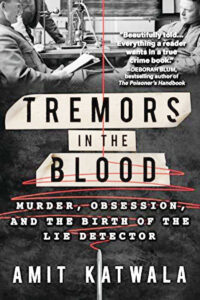
"Tremors in the Blood: Murder, Obsession and the Birth of the Lie Detector" by Amit Katwala caught my eye because I knew it would dig into the history of a device that has impacted the justice system whether it be positive or negative.
It begins with a quote from Daniel Defoe to explain the title and subject matter of the book. Defoe says "guilt carries fear always about with it; there is a tremor in the blood of a thief." It helps to explain the logic behind the birth of the polygraph machine detailed in the book.
The book takes place in the 1920s and Katwala immediately describes the events that led to the death of Anna Wilkes who was killed in a supposed drive-by shooting with her husband driving and children sitting in the backseat. Henry was later on trial for her death and underwent a polygraph test.
The next section focuses on August Vollmer, the Berkeley, Calif., chief of police who championed the idea of the polygraph test. Katwala describes Vollmer's background and describes some of his law enforcement ideals; to get away from "third degree" questioning and police brutality.
John Larson joins the scene next and becomes a colleague of Vollmer and another part of the team to create the test. Larson becomes the main person to administer the tests.
Seventeen-year-old Leonarde Keeler joined the duo and quickly became enamored with the polygraph and spent many later years marketing the test.
When Katwala talks about these men, he focuses more on their lives and less about the invention of the test. I had zero interest in their life events and details about their personalities, later squabbles and frustrations. Katwala spent too much time providing unnecessary information that didn't go with the overall goal of the novel: the history of the polygraph and how/why it was formed.
The most interesting part of the book was toward the end where the polygraph comes into play during a murder trial involving a death-row inmate.
The few cases Katwala describes and the role the polygraph played were fascinating and gave the reader the opportunity to decide for themselves whether or not the test was accurate.
In the epilogue, Katwala outlines his own thoughts on the polygraph and essentially says it doesn't work and gives results that could easily be misinterpreted. Three people could have three different opinions on the results of the test.
Reading this really confirmed my suspicion that polygraph tests don't really work and probably shouldn't be used in a court of law or as means of evidence to prove someone either guilty or innocent. In this book and these cases, I thought the test got it wrong and the convictions that resulted should have been overturned.
Katwala helped me form a clear opinion, which I appreciate, and taught me a lot about the evolution of law enforcement of the justice system, something I'm always anxious to learn.
If he had focused more on the cases and tests and less on the people who created them, the book would have been more successful.
About one-third of the book could have been edited out for a more concise look at this part of history but I certainly don't regret reading.
Candice Black can be reached at cblack@newsandsentinel.com.