
Look Back: Parkersburg’s other airport
Trending
Before opportunities of simulated flight offered by modern computer games, few children had the opportunity to fulfill the childhood dream of flying. Most kids had to imagine looking over a crowded instrument panel, and could only dream of peering through the blades of a propeller.
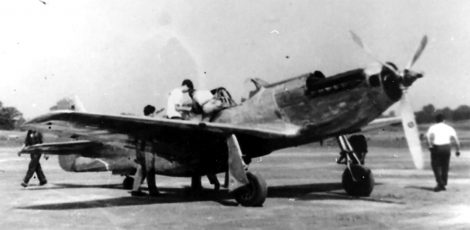
But, for a few years, beginning in the late 1940s, the kids living in the Gihon Road area of south Parkersburg, were in "kid heaven;" they had their own P-51 Mustang.
Two of those fortunate youngsters were brothers Charlie and John McCrady. Charlie [now deceased] still recalls "knocking down more enemy planes than you could count." He was probably the area's youngest "ace."
Carl Broughton and Bill Perrine flew the Mustang into "Guinn's Field." It was their intention to prepare the plane to participate in the Cleveland Air Show. Former County Commissioner, Lou Guinn, developer of the airfield, recalls that on their initial landing, the pilot overcompensated for the short runway and applied the brakes too hard. This resulted in the plane being "stood on its nose," and bending the framework. Pushed to the side of the runway, interest in repairing the disabled aircraft quickly waned, and the local kids soon took over, creating a training site for neighborhood "pilots to be."
Guinn built the airport in 1947 by leveling runways, installing proper drainage and building a hanger. The runways were 1,800 and 2,200 feet long. He was then ready to begin training for the returning World War II veterans. Funding for the training was through the G.I. Bill.
One of the vets who took advantage of this training was south Parkersburg resident Don Smith. Smith recalls the field as a somewhat treacherous place to land. When approaching the landing strip by coming over the present Franklin School complex, the pilot had to drop down somewhat quickly. But, there always seemed to be an "updraft" that would lift the small planes several feet.
Prior to his leaving the business for the Korean War, Guinn estimates the Guinn's Airport and Flying Service had trained perhaps 150 pilots. While away in the service, his lease on the property lapsed, and the land reverted back to the owners.
What happened to the Mustang? In 1951, it was sold to the South American country of Columbia, which sent four or five mechanics and a pilot here to prepare the plane to be flown out. Guinn recalls that only one of them could speak good English.
When the aircraft was again air-worthy, the pilot planned to take off toward the stately Blizzard mansion. If he cleared the house (which Guinn doubted), a much larger obstacle would quickly be looming in his path -- the tall stacks of the American Viscose plant.
With the plane far back on the runway, brakes held tight and the engine revved to the max, the brakes were quickly released. Mildred McCrady, mother of the two aforementioned young pilots, remembers the loud roar created as the plane tried to attain the maximum power that would be needed to clear its first obstacle. Barely clearing the Blizzard house, the pilot avoided the stacks by sharply banking the plane. Guinn remembers that the pilot buzzed the field a couple times, waved goodbye, and another bit of local history was gone, leaving but memories behind.
The Parkersburg News
Feb. 13, 2000
***
Bob Enoch is president of the Wood County Historical and Preservation Society. If you have comments or questions about Look Back items, please contact him at: roberteenoch@gmail.com, or by mail at WCHPS, PO Box 565, Parkersburg, WV 26102.