
Look Back: Tracking a train of memories
Historical newspaper excerpts from the Wood County Historical Society
Trending
The 'accomodation'
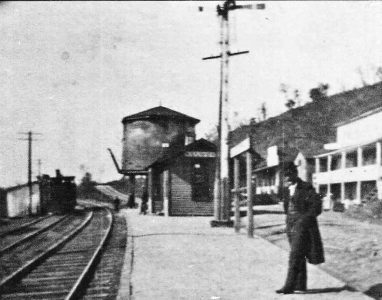
The undated story of "the past" that follows was found in Margaret Cokeley's column, Pages From the Past that appeared in the Parkersburg News several years ago. An old resident of the area, Earle R. Bee, is responding to an earlier letter about trains, the "Accomodation" and "flag stops." Excerpts from Cokeley's column and Mr. Bee's remembrances follow:
Mr. Bee begins to share his memories from the teens, 1920s and 30s. "I lived close to the railroad at Nicolette, which is near Jackson's Switch. The trains were part of the entertainment of growing up. You can imagine the thrill of seeing the 'crack' passenger trains go by and slow down going through the switch. The luxury of riding in a pullman and eating in the dining car, usually at the end of the train, was a dream of all children living near the tracks. I think I should mention that for me this dream, upon becoming a reality, was not disappointing. The journeys taken on the National Limited, the Diplomat, and the Cincinnatian still live in my memories.
"Back to the Accomodations: These trains were within our grasp and filled our needs. There were four trains daily; two leaving Parkersburg at 7 a.m. and 4 p.m. for points east and Grafton; two arriving in Parkersburg at 11 a.m. and 7 p.m. Of course, they stopped at all towns and hamlets between Parkersburg and Grafton. In the larger towns, depots were available, but at Nicolette the only shelter from the elements was the porch of an abandoned store building. In order to board the train, it was necessary to wave a handkerchief on or adjacent to the stopping point. That's where the name of the train originated. They were doing you an 'accommodation.'
"The first stop east of Parkersburg was Stewart Station. This was also sometimes Shacktown. [This stop was located 2 or 3 miles east of Parkersburg, between Dry Run and Mill Run.] The fare was 10 cents. The next stop was Nicolette where I lived and the fare was 20 cents. Would you believe even at that low rate many of us walked the six miles to town just to 'save money?' The next stop was at Davisville, which was just across the river from a station called Scarce-of-Fat. The fourth stop was Kanawha Station; the fifth at Walker and the sixth at Eatons. From there on I have forgotten the small stops at Ellenboro, Pennsboro, West Union, Salem, Wolf Summit and beyond.
"These lines were well traveled in those days since few automobiles were owned and the distance was too great for horse and buggy or wagon. You would see people with baskets of eggs, fresh butter, cottage cheese and garden produce. They were bringing them to Parkersburg to the market. On circus day the train would be packed with those who wished to see the free parade which came from East Street, down Market Street, up Juliana Street, and on out Seventh Street to Stephenson's Field."
***
Bob Enoch is president of the Wood County Historical Society. Would you like to help preserve our past for future generations? The society offers informative monthly meetings and an interesting, 20-page quarterly newsletter. Dues are just $20/year. Send to: WCHPS, P.O. Box 565, Parkersburg, WV 26102.