
Morrisey announces plan to preserve chestnut trees in Mason County
Trending
PARKERSBURG - A plan to preserve a grove of rare chestnut trees at a closed state nursery in Mason County where a data center is under development has been announced by the governor.
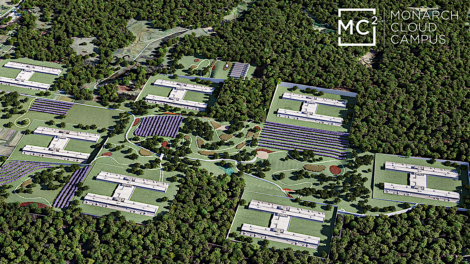
The 200 trees were planted in the 1970s at the former Clements State Tree Nursery located near the Monarch Compute Campus, a data center under development by Nscale.
Chestnut trees in North America were nearly eradicated in the early 1900s by a fungus introduced by a species of chestnut trees imported from Japan and China. The grove in Mason County contains descendants of surviving chestnut trees.
"I recognize the historical and ecological importance of chestnut and chinquapin trees at the former Clements State Tree Nursery and am committed to ensuring their preservation," Gov. Patrick Morrisey said.
Following an Oct. 5 assessment involving the American Chestnut Foundation, the West Virginia Division of Natural Resources and the West Virginia Department of Agriculture, a plan is in place to protect the trees and preserve their genetic lineage, Morrisey said.
The nursery was closed by the Division of Forestry in May 2021 due to sustained financial losses and remains undisturbed. Since 2023, first under Fidelis and now Nscale, access to the property for seed and sapling harvesting has continued uninterrupted, according to the governor.
The American Chestnut Foundation and the divisions of Natural Resources and Forestry have already taken steps to preserve the genetic lineage of these trees, establishing multiple two-acre stands on state land, along with two additional plots using grafts and seedlings, Morrisey said.
The preservation plan includes a more suitable environment within the property, potentially as part of an arboretum or integrated landscaping, Morrisey said. That work is scheduled for late 2027, during the trees’ dormant season, under professional arborist supervision, and the trees will remain accessible for future seed and sapling harvesting, he said.
Nscale will cover the cost of the preservation and relocation efforts with no expense to West Virginia taxpayers, Morrisey said.
"While West Virginia pursues major economic development opportunities, it must protect the natural resources and heritage that make our state special," he said. "I am committed to working together with Nscale, the Department of Agriculture and concerned citizens to ensure the concerns about the trees are addressed and I thank everyone for their thoughtfulness in developing solutions.
Nscale on Tuesday released a statement attributable to a company spokesperson.
"We understand the deep community connection to the former Clements State Tree Nursery site, and we look forward to working closely with the Morrisey Administration, including the Department of Agriculture and Division of Forestry and the American Chestnut Foundation regarding the American Chestnut trees while responsibly developing the Monarch Compute Campus," the spokesperson said.
"We want to be clear, there was never a plan to bulldoze the nursery or cut down the trees. Nscale does not currently own the former Clements State Tree Nursery but we are under a plan for purchase agreement," the spokesperson said.
The company, upon ownership of the land, will be focused on how to best care for the trees which, according to a recent assessment by an arborist, suffer from blight and adverse health conditions, the spokesperson said.
"We have always planned to incorporate the American Chestnut trees into the Monarch Compute Campus," the spokesperson said. "As construction progresses, we will work closely with professional arborists and experts to determine how best to preserve and integrate them, covering all costs."
Opposition to the data center remains. Alexander Cole, a member of Mason County United, an organization opposed the data center, said while the chestnut trees "are dear to my heart," the preservation agreement doesn't change any position with the facility.
"I'm more concerned about the effects around the data center," he said.
The issues with the facility, among others, are the effect on nearby residents and the environment, the amount of energy it will need and the constant noise, Cole said. Data centers run around the clock every day.
Preserving the trees "doesn't solve the biggest issues with the data center," Cole said.