
Joint Finance Committee receives updates on tax collections, Rural Health Transformation
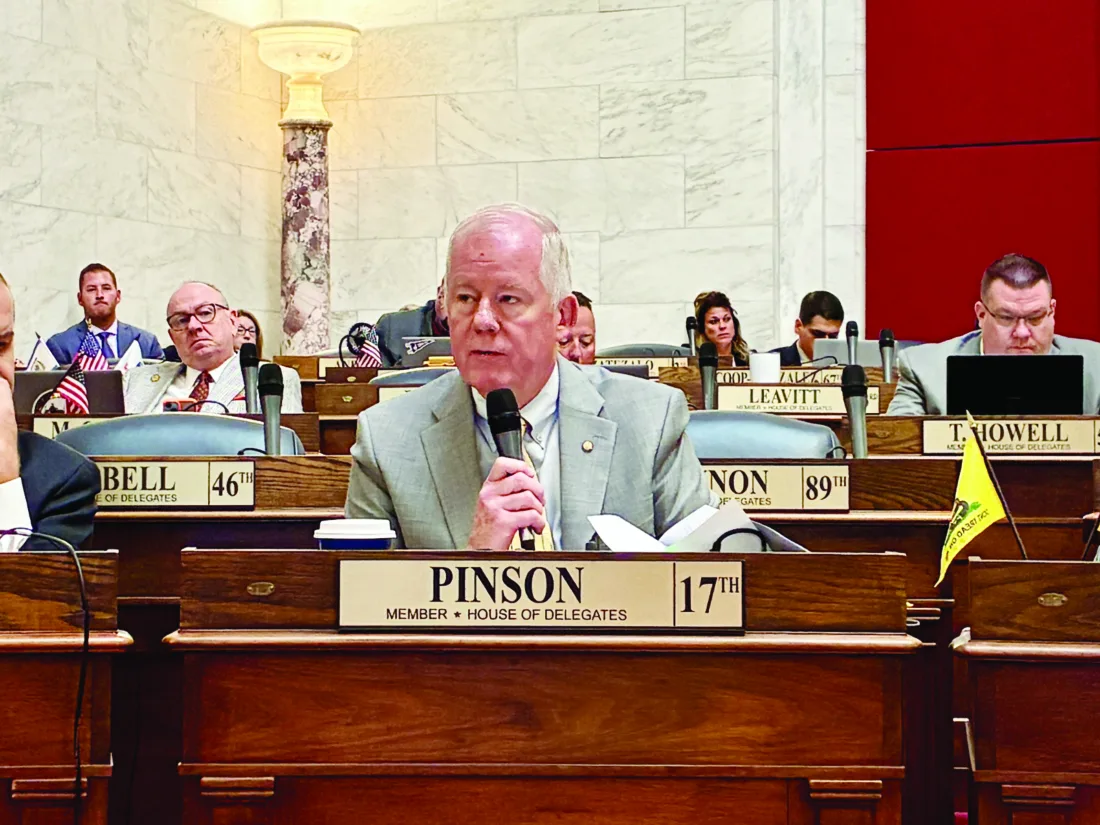
Del. Bob Fehrenbacher asked questions about in-state versus out-of-state Rural Health Transformation grantees during Tuesday’s Joint Finance Committee meeting. (Photo by Steven Allen Adams)
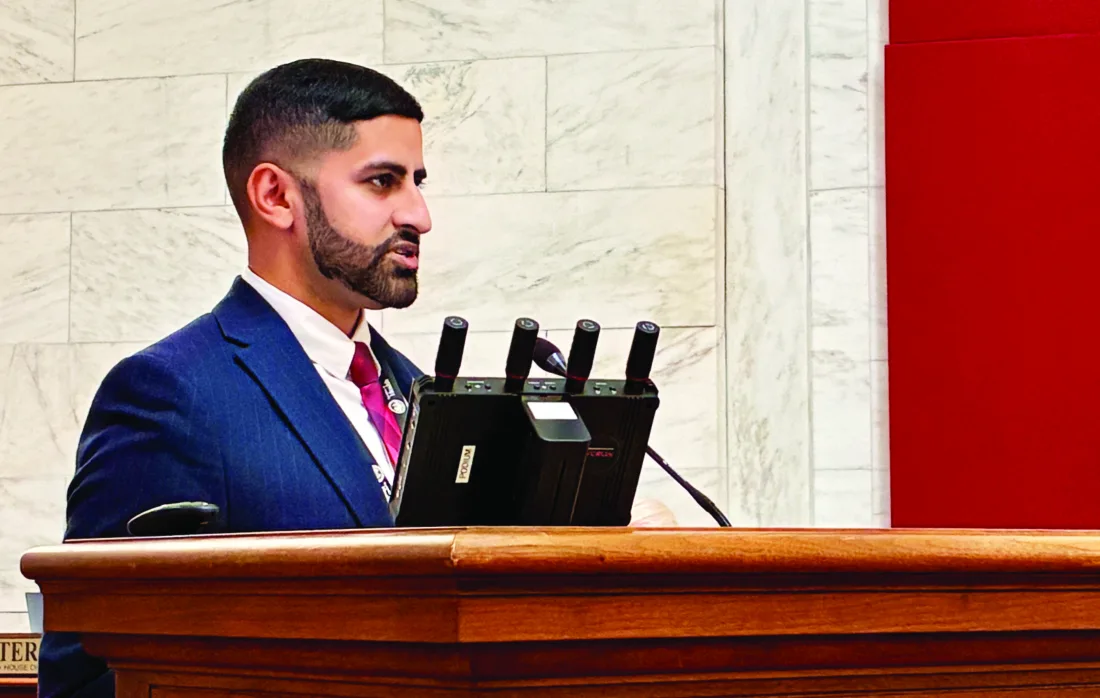
West Virginia Department of Health Secretary Dr. Arvin Singh briefs lawmakers Tuesday on the latest with the Rural Health Transformation program on the final day of September interim meetings at the State Capitol Building. (Photo by Steven Allen Adams)
Del. Bob Fehrenbacher asked questions about in-state versus out-of-state Rural Health Transformation grantees during Tuesday’s Joint Finance Committee meeting. (Photo by Steven Allen Adams)
West Virginia Department of Health Secretary Dr. Arvin Singh briefs lawmakers Tuesday on the latest with the Rural Health Transformation program on the final day of September interim meetings at the State Capitol Building. (Photo by Steven Allen Adams)
Trending
CHARLESTON - Members of the West Virginia Legislature's Joint Standing Committee on Finance were updated Tuesday on the latest regarding general revenue fund tax collections and federal Rural Health Transformation grants on the last day of interim meetings.
Department of Revenue Cabinet Secretary Eric Nelson and Deputy Secretary Pete Shirley said gains in the collections of personal income tax, sales tax and severance tax were the driving forces behind positive revenues for the first two months of fiscal year 2027 that began on July 1. According to data released Tuesday by the Senate Finance Committee and the state Department of Revenue, West Virginia has collected $838.3 million in taxes so far.
As of the end of August, the state has received $46.1 million in surplus tax collections, 5.8% more than the $792.3 million estimate from the Department of Revenue and 6.8% more than what was collected in the first two months of fiscal year 2026.
"We were up 8% over estimate and just right around 13% over prior year," Nelson said. "We're pretty pleased with that. The increases were primarily led by increases in personal income tax and severance, and those two have kind of led the way over these last six months."
Nelson and Shirley explained that while consumer spending remains higher than the rate of inflation, corporate net income tax collections have declined due to the state's decision to align with federal tax relief provisions included in last year's One Big Beautiful Bill Act. That has a projected annual impact of $110 million, with $100 million of that specifically affecting the corporate side.
"I think the posture of the administration (of Gov. Patrick Morrisey) was that we wanted to conform to the Big Beautiful Bill," Shirley said. "We wanted to provide the same relief that was being provided by the federal government, we wanted to provide it here in West Virginia through our corporate net income tax structure. I believe we started to see, especially in the latter half of 2025, a lot of businesses begin to anticipate that that is what would happen."
While personal income tax collections are outperforming expectations despite multiple cuts in tax rates since 2023, an analysis by the Department of Revenue found this is not driven solely by wage growth. Payments from paycheck withholding grew by 2.4% over the past 12 months. August personal income tax refunds were $7.5 million lower than the previous year. Personal income tax collections were also boosted by royalties paid to mineral owners during recent natural gas booms and capital gains realized during strong stock market periods.
Shirley said a significant factor in reduced personal income tax refunds is the car tax rebate. In 2025, the state paid over $125 million in rebates, while only $96.5 million has been paid out so far in 2026 with approximately 50,000 fewer claims this year.
"We still have a few more months to go in 2026 to get those numbers up. But at this point, the vast majority of people have filed their income taxes," Shirley said. "They’ve gotten their refunds. We’re really just talking about the people that are filing on extension at this point. So that number will come up, but I feel quite confident in saying that we’re going to pay out less on the car tax rebate this year than we did last year."
Following the budget presentation by the Department of Revenue, the committee received an update on the Rural Health Transformation program from Department of Health Secretary Dr. Arvin Singh.
According to Singh, out of the $199.5 million awarded to the state for year one of the five-year RHT program, $182 million has been released. Singh said the program remains on track to meet the critical federal deadline of Oct. 30 for the obligation of all year-one funds.
"Since our last meeting, the program has continued shifting from designing and posting funding opportunities to executing awards and preparing recipients for implementation," he said.
Current milestones include the obligation of approximately $30 million across 10 finalized grants (only four have been formally announced, with announcements for the remaining six pending). More than 90 awards have advanced through the CGI case management system, up from 70 in August. The state expects to make approximately 150 awards across the entire program.
Singh said the RHT program met its goal of executing at least one contract for each of the seven strategic pillars focused on expanding access to in-person and telehealth options, EMS treatment-in-place programs, healthcare transportation access, attracting and maintaining a healthcare workforce, improving access to health technologies and efficiencies, getting more healthy people in the workforce, and food as medicine programs.
Lawmakers asked several questions about the program including the vetting of grant awardees. Del. Gary Howell, R-Mineral, asked about a $1.1 million Health to Prosperity award to Spotted Owl Healthcare in Dunbar. According to Howell, the largest grant Spotted Owl had received prior to that was $50,000.
"I did a little research. It looks like they were founded back in 2018 and just actually changed their name to Spotted Owl Healthcare this February," Howell said. "What gave the department confidence that they could handle that large of a grant when the biggest one I can find is $50,000?"
"Every decision we make in this program is merit-based," Singh said. "They went up against a bunch of other competitors and demonstrated true merit. ... In their proposal, they’re planning three anchor employer sites active by year one, approximately 9,000 employees with access, and approximately 3,000 encounters.
"What I would say, again, not only is it merit-based; if they’re not meeting our expectations ... we have performance and payment-based milestones," he said. "We reserve the right to claw back those dollars or re-award them to someone else. We maintain that control, and we’re going to be very focused on that."
Singh said a preliminary dashboard is in development to provide public and legislative visibility into investments by county and organization type. Efforts are underway to ensure the mapping accurately reflects where services are delivered rather than just where the organization is headquartered.
Del. Bob Fehrenbacher, R-Wood, asked about where the dashboard would show in-state versus out-of-state grant awardees.
"Does the process give extra credit, if you will, to in-state organizations or encourage support?" he said.
"Our intention is never to let any of this money leave the borders of West Virginia," Singh said.
"I can understand that the benefit will be to the citizens of the state, but it would be doubly impactful if the resources that are going to help our citizens are indeed residents," Fehrenbacher said. "If we’re paying someone to provide the service, then that money, that salary, those benefits are going to stay within the state as well. ... My bias would be to make the award to a state resident."
Steven Allen Adams can be reached at sadams@newsandsentinel.com.