
David Pepper, Brian Stewart speak at Marietta College
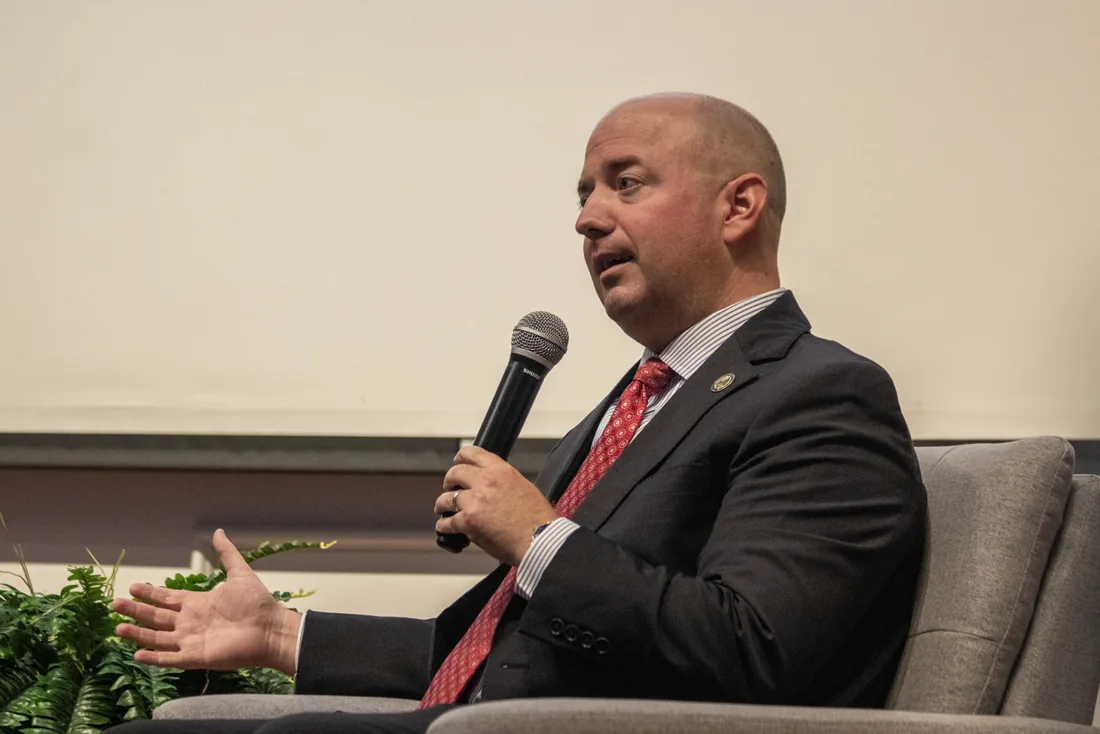
State Representative Brian Stewart discusses rural medical access and the hope to address the lack of inpatient hospitals in some of Ohio's Appalachian counties during the Center for Appalachian Innovation at Marietta College's Rural Development Summit Thursday. (Photo by Gwen Sour)
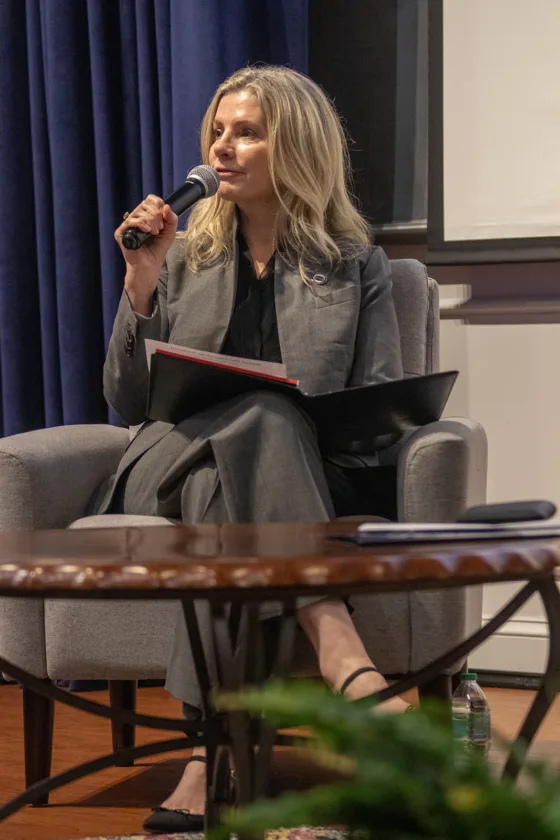
Marietta College President Kathleen Dougherty moderates a panel during the Center for Appalachian Innovation at Marietta College's Rural Development Summit Thursday. (Photo by Gwen Sour)
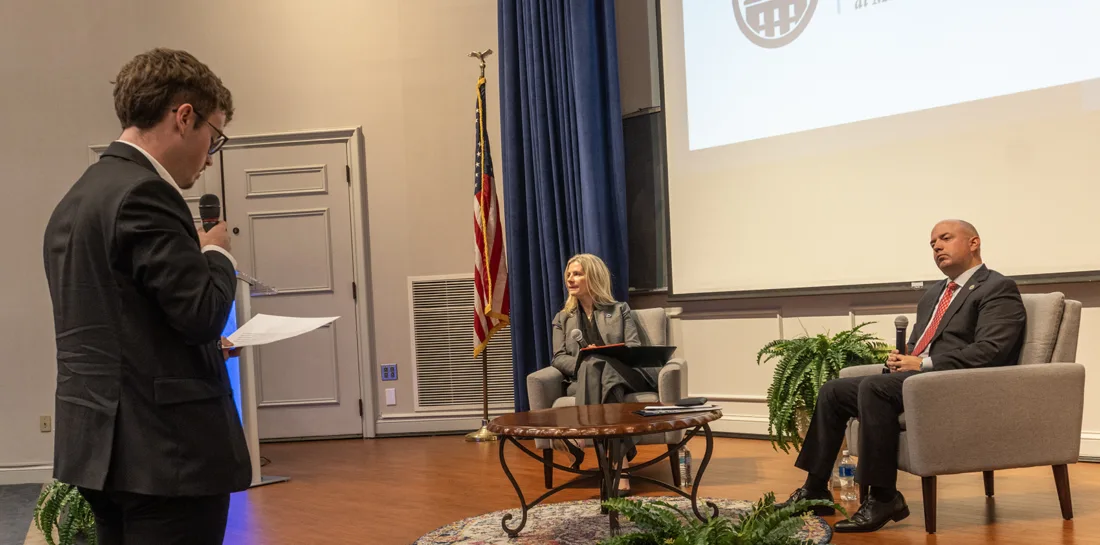
Marietta College Senior Storm Stimmel, left, asks a question regarding infrastructure development to State Representative Brian Stewart, right, during a panel moderated by Marietta College President Kathleen Dougherty Thursday afternoon. (Photo by Gwen Sour)
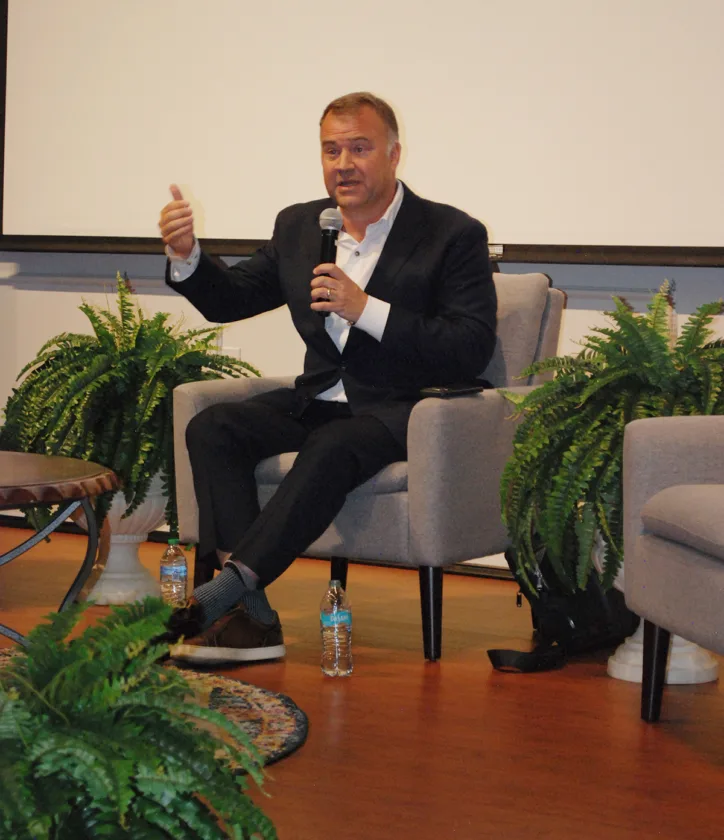
Democratic candidate for lieutenant governor David Pepper discusses his hope for the success and development of the Appalachian region during a Rural Development Summit at Marietta College's Appalachian Center for Innovation Thursday morning. (Photo by Sophie Wheeler)
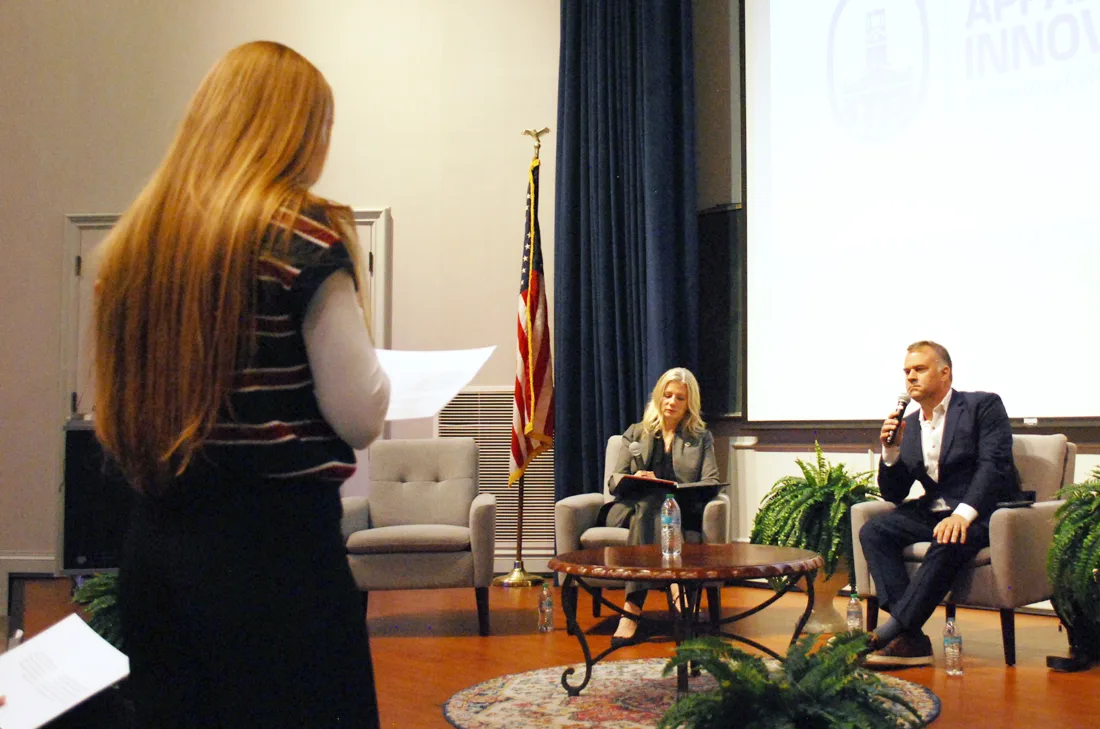
From left, Marietta College Junior Kianna O'Brien asks a question regarding data centers and artificial intelligence during a panel moderated by Kathleen Dougherty, college president, while Democratic Governor candidate David Pepper prepares to answer. (Photo by Sophie Wheeler)
State Representative Brian Stewart discusses rural medical access and the hope to address the lack of inpatient hospitals in some of Ohio's Appalachian counties during the Center for Appalachian Innovation at Marietta College's Rural Development Summit Thursday. (Photo by Gwen Sour)
Marietta College President Kathleen Dougherty moderates a panel during the Center for Appalachian Innovation at Marietta College's Rural Development Summit Thursday. (Photo by Gwen Sour)
Marietta College Senior Storm Stimmel, left, asks a question regarding infrastructure development to State Representative Brian Stewart, right, during a panel moderated by Marietta College President Kathleen Dougherty Thursday afternoon. (Photo by Gwen Sour)
Democratic candidate for lieutenant governor David Pepper discusses his hope for the success and development of the Appalachian region during a Rural Development Summit at Marietta College's Appalachian Center for Innovation Thursday morning. (Photo by Sophie Wheeler)
From left, Marietta College Junior Kianna O'Brien asks a question regarding data centers and artificial intelligence during a panel moderated by Kathleen Dougherty, college president, while Democratic Governor candidate David Pepper prepares to answer. (Photo by Sophie Wheeler)
Trending
MARIETTA - Democratic lieutenant governor candidate David Pepper and state Rep. Brian Stewart, speaking on behalf of Republican candidate Rob McColley, discussed Appalachian Ohio's future in separate appearances Thursday at Marietta College's Rural Development Summit.
Pepper and Stewart answered questions from Marietta College students during the Center for Appalachian Innovation's summit, "The Start of it All" during separate panels moderated by Marietta College President Kathleen Dougherty.
Seth Anderson, a senior petroleum engineering major, asked about southeastern Ohio's energy future and the potential impact of what he called "reliable and affordable energy" on the region's economy.
Pepper said "We are a state where energy is so critical, and we are a state with no energy strategy whatsoever," and the limitations of the Public Utilities Commission of Ohio operating as an energy regulator and the lack of strategic energy planning within the state. Pepper also spoke on the development of energy strategy "being dictated by large interests," and the natural resources available should be an incentive to grow energy business within the state and "the downstream benefits of having energy in the region that’s cheaper and closer than they would find in other states."
Stewart said rising demand requires additional electricity generation and pointed to House Bill 15, which he said makes it easier for large users to produce their own power, which he encouraged.
"Ohio needs more energy. America needs more energy," he said. "I certainly want to have a steady electrical grid."
Kianna O'Brien, a junior economics major, asked about artificial intelligence and data centers and what Pepper and Stewart saw as the role of artificial intelligence in Appalachian Ohio's economy, noting that it creates new economic opportunities but also raises questions about infrastructure, energy, and water use.
Pepper said one of the driving issues surrounding data centers is NDAs and a lack of transparency surrounding conversations on their development. "We want things that benefit Ohio and have the risk and cost borne by those bringing (data centers) here and not by the community," he said.
Stewart said local officials should evaluate projects and negotiate community benefits while addressing water use and other environmental concerns.
"Local officials are in a better position to decide what makes sense for your community," he said.
Liz white, a senior actuarial science and economics major discussed rural hospital access sharing her concern that seven counties in Appalachian Ohio lacked access to an inpatient hospital, asking what residents could do to ensure reasonable access.
Pepper spoke on the cuts made to Medicaid through the "quote-unquote big beautiful bill" taking effect in Jan and the risk posed to rural healthcare. He said there needs to be action to prevent the "hallowing out of healthcare" and the "elimination of specialty services."
Stewart said state funding should better reflect the financial challenges facing rural hospitals, including their larger shares of Medicare and Medicaid patients. He said those programs reimburse hospitals at lower rates than commercial insurance. He also emphasized preserving maternity services.
Storm Stimmel, a senior political science student, asked about infrastructure priorities regarding internet, utilities, transportation and housing and what investments would be prioritized by the candidates.
Pepper spoke on the potential the Appalachian region has for development, and the challenges communities face due to a lack of infrastructure. He said the community has to identify its assets and make strategic investments that are continual, additionally "the government has to be faster," he said, "so when you make commitments, the citizens of the ground actually see that it's happening."
Stewart identified roads and broadband, saying state support can help providers reach rural households where construction costs otherwise make projects impractical, describing the Ohio Residential Broadband Expansion Program as a way to help cover the financial gap in serving sparsely populated areas.
Dougherty asked about the state’s responsibility for ensuring educational opportunities are not primarily determined by the property wealth of the community.
Pepper said there is constitutional responsibility to adequately support community schools and the state is in an "education funding crisis, it is systematic defunding," with the removal of the Cupp-Patterson Fair School Funding Plan. He said "(equal educational opportunities) is not a 'we wish we could'. It is required by the Ohio Constitution."
On school funding, Stewart said the state's formula accounts for differences in local wealth and defended lawmakers' ability to change it. He said targeted assistance could help financially distressed districts and disadvantaged students.
Stewart said state government should help ensure residents have access to employment, education and lifestyle opportunities regardless of where they live.
"I think making sure that where you live doesn't limit your opportunity, I think that's where the state really has a role to play," he said.
Pepper said there should be a further examination on the "health and well-being of communities," and data showing the amount of jobs created should reflect the efficacy for bringing individuals out of poverty and show the growth of the community.
"My hope is that we can start to see that we're lifting in meaningful ways, both in short term and the long term," he said.