
Parkersburg City Council advances recycling changes to comply with court order
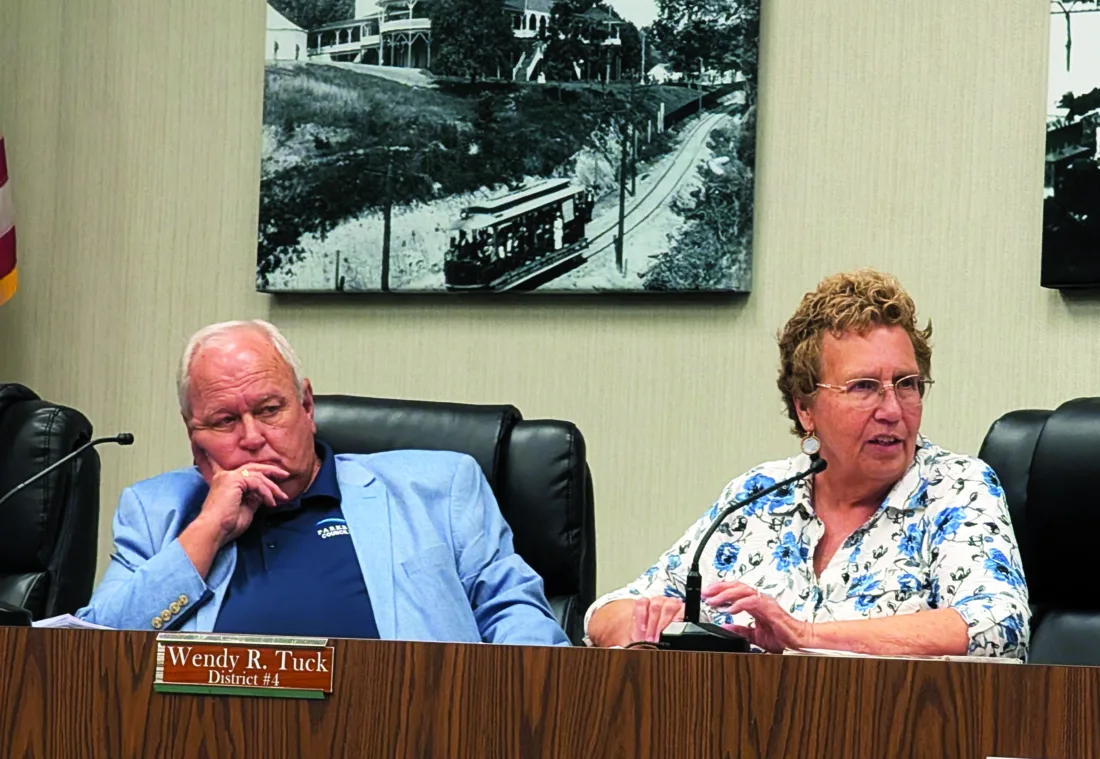
Parkersburg City Councilwoman Wendy Tuck, right, speaks during a discussion of a proposed zoning change ordinance during Tuesday’s council meeting as Councilman Roger Brown listens. (Photo by Evan Bevins)
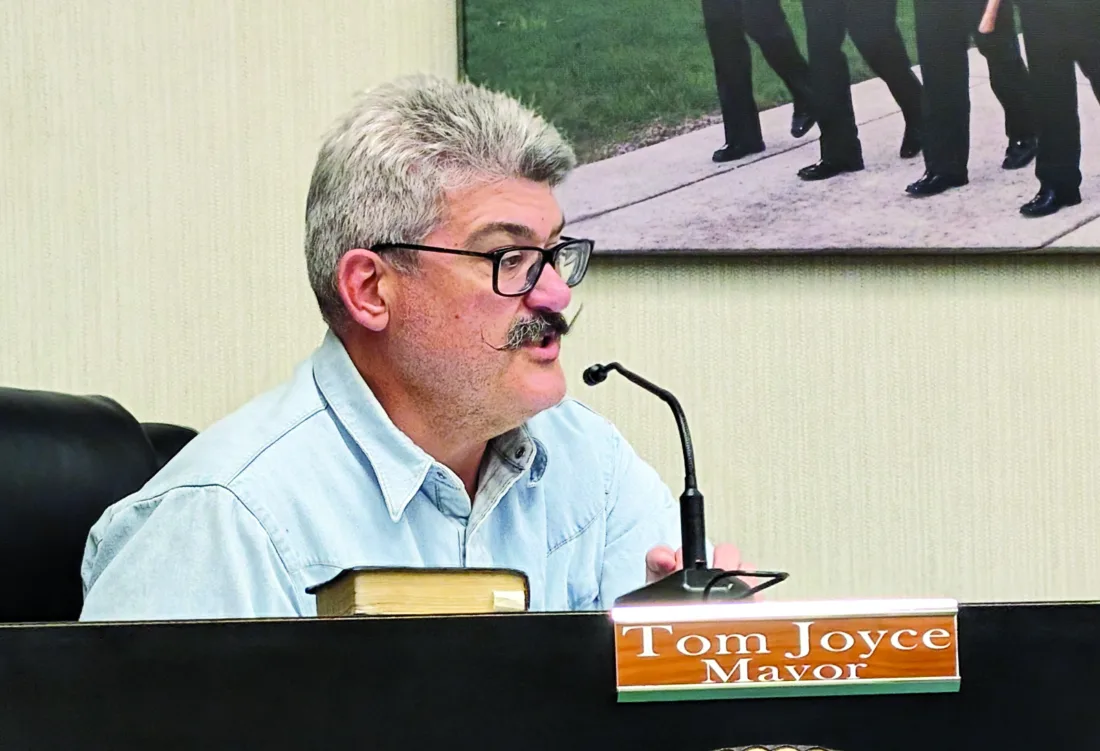
Parkersburg Mayor Tom Joyce weighs in on a discussion about a proposed zoning change ordinance during Tuesday’s City Council meeting at the Municipal Building. (Photo by Evan Bevins)
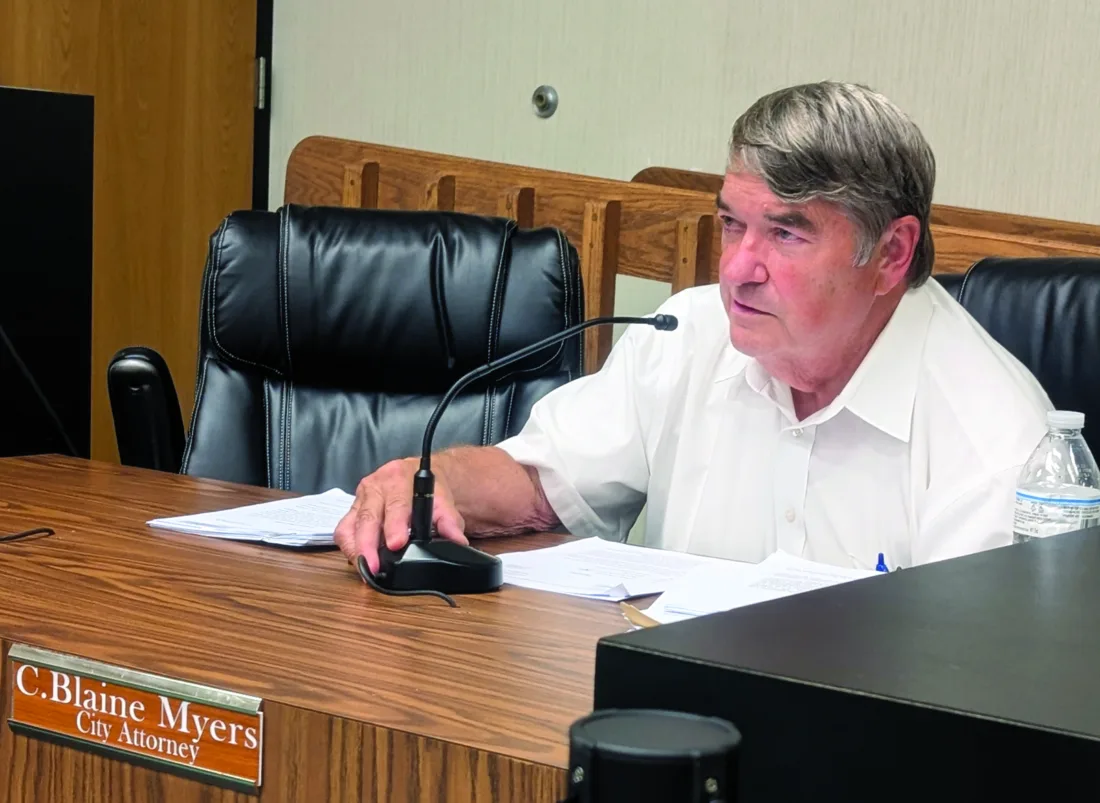
Parkersburg City Attorney Blaine Myers speaks during a discussion of a proposed zoning change ordinance during Tuesday’s City Council meeting at the Municipal Building. (Photo by Evan Bevins)
Parkersburg City Councilwoman Wendy Tuck, right, speaks during a discussion of a proposed zoning change ordinance during Tuesday’s council meeting as Councilman Roger Brown listens. (Photo by Evan Bevins)
Parkersburg Mayor Tom Joyce weighs in on a discussion about a proposed zoning change ordinance during Tuesday’s City Council meeting at the Municipal Building. (Photo by Evan Bevins)
Parkersburg City Attorney Blaine Myers speaks during a discussion of a proposed zoning change ordinance during Tuesday’s City Council meeting at the Municipal Building. (Photo by Evan Bevins)
Trending
PARKERSBURG - Members of Parkersburg City Council approved the first reading of an ordinance crafted to comply with a judge's order about the municipal recycling program, after amending it to reflect suggestions from the plaintiff in a lawsuit that prompted the ruling.
The ordinance regarding recycling was proposed after Wood County Circuit Court Judge J.D. Beane ruled earlier this month that the subscription-based recycling program implemented by the city in May did not comply with state code requiring cities with populations of 10,000 or more to implement a curbside recycling program.
While the ruling was a declaratory judgment that did not mandate any action, city officials said they would comply with it.
A key point in the ruling was that the city's new program charges an additional $3 to residents who opt to recycle, on top of a $1.50 surcharge that is part of the $21-a-month sanitation fee for everyone. To address that, the new ordinance charges everyone $3 a month for recycling, whether they have a recycling cart from Rumpke Waste and Recycling or not.
"Bottom line is we have to charge everybody the same," Mayor Tom Joyce said.
Rumpke charges the city $15.25 a month per recycling container it picks up. There are approximately 1,400 people signed up for the subscription service. City officials said that if 1,000 more people sign up under the new structure, a $3-a-month fee charged to all roughly 12,000 customers will cover the expense.
But Councilman Rob Moore estimated the number will be higher and noted that if more people participate, the cost will increase. Residents in his district "do not want to pay more money if they don't recycle," he said.
Councilwoman Wendy Tuck made a motion to send the ordinance to the Committee of the Whole, consisting of all nine council members, for further consideration, citing in part proposed amendments emailed to council members earlier in the day.
"What is it going to cost us, and then let's base that $3 fee ... on something real," she said. "This doesn't give me anything to tell my constituents (about) what's this going to cost?"
City Attorney Blaine Myers called the cost a "moving target" based on a "reasonable estimate" of how many people beyond the 1,400 participating now would request carts from Rumpke because they are paying for the service anyway.
"We could have a lot of meetings, and we'd never get any more certainty," he said.
The amendments were suggested after a meeting between Ryan Simonton, the special counsel representing the city in a lawsuit filed over the city's suspension of its curbside recycling program last year, and Parkersburg resident and attorney Walt Auvil, the plaintiff in the suit who asked Beane to rule on whether the new program complied with state law.
The amendment removed language saying non-residential entities had to make arrangements to recycle through their own service provider and language establishing a penalty of $50 a month for those who violate the code. Myers said by not requiring non-residential entities to handle recycling with a provider it would allow more flexibility. For example, he said, his law office doesn't have many recyclable materials beyond water bottles, which he can simply take home.
Tuck said removing the $50 penalty provision leaves the amended ordinance subject to the existing penalty of up to $500 in that section of the code.
"How many people are you going to have to fine $500 to make sure that everybody complies?" she said.
Myers and Joyce said the penalty provision in state code has not been enforced in West Virginia and the administration does not plan to do so.
"My intention is not to go out and write people $500 tickets for not recycling," Joyce said.
Tuck said they should be encouraging people to recycle.
"We do a lot to encourage recycling," Joyce said, noting Rumpke accepts more material than the city did under its sanitation program. "Quite frankly, the more people recycle, the more it's going to go up. ... If you're worried about the ... roughly 75, 80% who don't recycle, we need to stop encouraging people to recycle."
Several people in the chamber began speaking after that, causing council President Andrew Borkowski to call for order. Tuck called for the vote and the motion to refer the ordinance to committee failed 6-3, with only Tuck, Councilman Zak Huffman and Councilman Chris Rexroad in favor.
The amendment passed by the same margin, with Tuck, Huffman and Rexroad opposed, as did the first reading of the ordinance.
In other business, council approved the final reading of an ordinance rezoning property at 709 Rayon Drive from a residential to a business zone on a 6-3 vote, with Huffman, Moore and Councilman Roger Brown opposed.
The vote came after a lengthy debate, with Brown saying he opposed changing the zoning from business to commercial. When the ordinance failed in a 4-4 tie at the July 28 meeting, with one member absent, Brown said the city needs more residential property, not commercial. A representative of the Bosley companies that own the property had said their intention is to build townhouses, which is allowed under the proposed B-2 designation but not the current R-2 zone.
"A year from now, they can sell that property and put a business in there," Brown said.
Tuck suggested adding a stipulation that the property be used for townhouses, similar to requirements the Urban Renewal Authority makes when it sells properties. Myers said he wasn;t confident that would be upheld since the city's zoning code allows other uses under a B-2 designation.
"I think it's a bit problematic because you're essentially changing the rules of the zone," he said.
Councilwoman Sharon Kuhl said they would have to take Bosley representative Larry Headlee at his word and if the property was not used for townhouses, council would remember.
"I certainly don't think we should go by word," Huffman said. "Everything should be in writing."
Headlee said he could not make any guarantees about how the property would be used but said the company intends to build townhouses. He expressed frustration that the process was started nearly six months ago and still has not been resolved.
"If this is changed back to the other zoning or there's (a) stipulation put in, we're done," he said.
"I think it's sad what we're putting them through, and I apologize," Kuhl said.
The zoning change passed 6-3, with Brown, Huffman and Moore opposed.
Evan Bevins can be reached at ebevins@newsandsentinel.com.