
One Month Left: W.Va. fiscal year-to-date tax collections continue strong
Pack calls for using available surplus to pause gas tax
Trending
CHARLESTON - With one month left in fiscal year 2026, tax collections in West Virginia remain healthy. But some - including State Treasurer Larry Pack - want to see the state's gas tax paused and use leftover surplus tax dollars to backfill lost gas tax revenues.
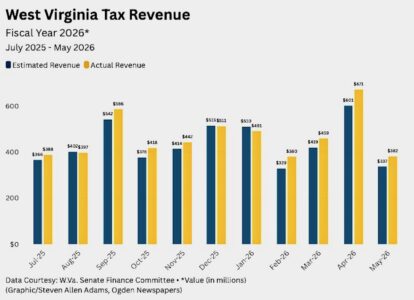
According to the monthly report released by the Senate Finance Committee, April tax collections came in at $381.5 million, 13.2% more than the $337 million estimate set by the state Department of Revenue, providing a $44.5 million surplus for the month. April tax collections also exceeded April 2025 tax collections by more than 9%.
Fiscal year-to-date tax collections covering the last 11 months came to $5.124 billion, or 6.5% more than the $4.811 billion estimate, bringing the total end-of-year surplus to nearly $314 million.
“These revenue numbers are another encouraging sign that West Virginia’s economy is moving in the right direction," said Gov. Patrick Morrisey in a Monday afternoon statement. "Strong collections in areas like personal income tax, consumer sales tax, and severance tax reflect growing economic activity across the state. Some of these trends may moderate in the months ahead, but we will remain focused on responsible budgeting, growing our economy, and creating the conditions for long-term prosperity.”
The $314 million surplus more than covers the $245 million in appropriations placed in the surplus section of the fiscal year 2027 general revenue budget beginning Wednesday, July 1, leaving $68.6 million in unappropriated surplus with less than 30 days left in the current fiscal year. Some want to see any remaining surplus tax collections used to offset a proposed pause in the state's motor fuel taxes.
Last month, Pack asked Morrisey to call a special session of the West Virginia Legislature to suspend the gas tax and reimburse any loss in tax collections from the general revenue budget. He re-upped that request on a social media post Friday.
"You can see from the gasoline prices, they're still way over $4," Pack said in a video standing in front of a gas station in Morgantown. "West Virginians need help. They can't afford it. It's hurting our working West Virginians. That's why I've been asking for the governor and the Legislature to temporarily suspend the gas tax.
"We've got the money to do it," said Pack, the former Department of Revenue secretary. "We can make up the different in our road fund from the general revenue fund. So, let's help our West Virginians and let's reduce this gas tax for a period of time and help our families."
Gas prices began climbing following the United States’ and Israel’s strikes on Iran beginning Feb. 28. Iran has since limited access to the Strait of Hormuz, a vital waterway for oil tankers, Negotiations to end the war and re-open the strait have remained up in the air, with CNBC reporting Monday that Iran has walked away from negotiations.
According to AAA, West Virginia's average gas price for regular fuel as of Monday was $4.328 per gallon, slightly above the national average of $4.322 per gallon. President Donald Trump has also backed a suspension of the federal gas tax, but any suspension would require congressional approval.
The House Democratic Caucus first called for a special session to pause the gas tax in April, proposing legislation that would automatically suspend the gas tax if gas prices reach certain levels based on a formula tied to February 2026 gas prices, with the proposed bill sunsetting on Jan. 1, 2027. Members of the West Virginia Freedom Caucus, consisting of a small group of Republican lawmakers, have also asked Morrisey to suspend the gas tax for 90 days.
“The governor believes every reasonable option should be evaluated,” said Lars Dalseide, communications director for Morrisey, in a statement Monday afternoon. “Though no decision has been made regarding a special session, he will continue discussions with legislative leaders to determine the best path forward for taxpayers.”
The State Road Fund is a special revenue fund consisting of several collections, including motor fuel taxes, license and registration fees, privilege taxes, highway litter control fees, and federal reimbursements, all of which help fund day-to-day road and bridge maintenance projects.
According to the Senate Finance Committee's report, the state brought in $38.4 million in motor fuel taxes in May, contributing to $147 million in State Road Fund collections for the month. The average monthly motor fuel tax collections over the last 11 months is $35.2 million.