Morrisey finishes work on legislation with 12 vetoes, 10 bills not signed
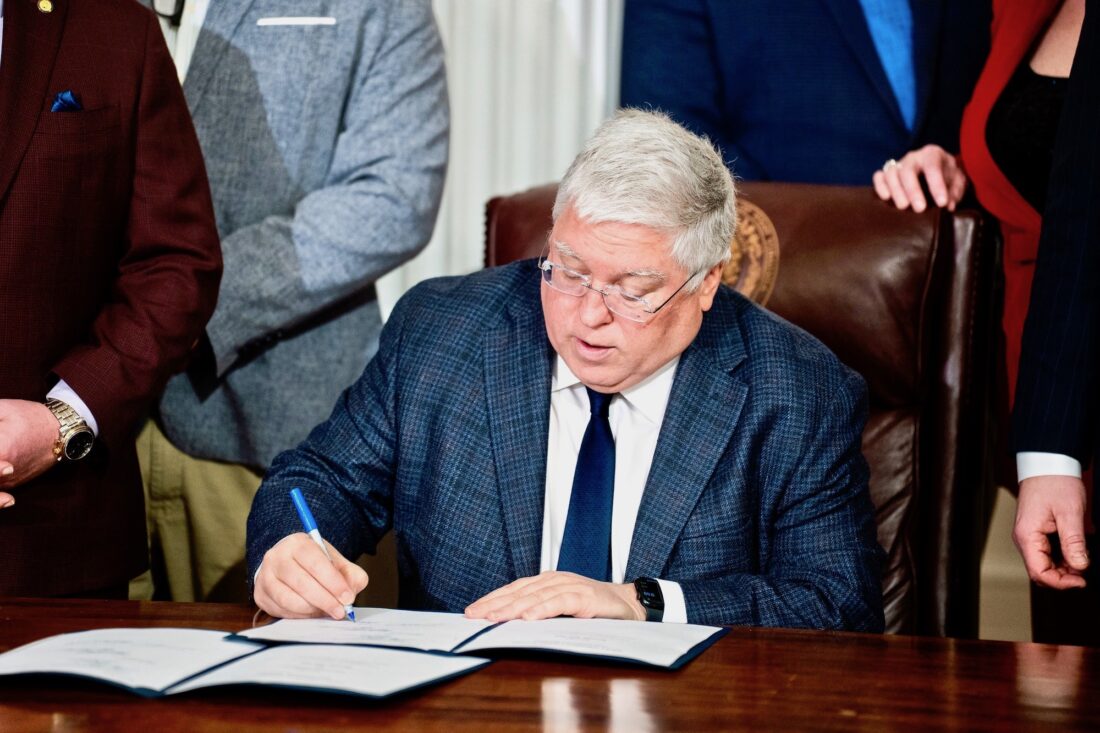
Gov. Patrick Morrisey holds his first ceremonial bill signing March 2 for Senate bills 393 and 400, updating West Virginia's tax code for tax year 2026. (File photo provided by WV Governor's Office)
CHARLESTON — With just 20 minutes to spare before a midnight deadline Wednesday, Gov. Patrick Morrisey finished signing the remaining bills from the 2026 legislative session, vetoing a dozen bills and letting several bills go into law without his signature. In a statement released Thursday morning, Morrisey announced he had completed work on reviewing the 306 bills passed by the West Virginia Legislature over a 60-day period between Jan. 14 and March 14 during its regular session. The state Constitution gives the governor a five-day time frame — not counting Sundays — to act on bills once they arrive to his desk during the legislative session. But once the Legislature gavels out, the governor has 15 days to sign or veto bills. This year’s 15-day deadline was midnight Wednesday. According to the Senate Clerk’s Office, the last batch of bill messages was sent to the clerk’s office at 11:40 p.m. Wednesday night. Morrisey signed 118 of the remaining 306 bills. In his statement, Morrisey said many of the bills he signed dealt specifically with expanding the state’s workforce, improving public safety, and making state government more efficient. “These are commonsense measures focused on opportunity, safety, and making government work better for the people of West Virginia,” Morrisey said. “We’re taking steps to grow our workforce, protect our communities, and ensure our state is prepared for the future.” Bills signed by Morrisey include Senate Bill 402, which creates the West Virginia Micro-Credential Program, establishing a standardized system for recognizing specific professional skills and vocational training. The bill also incentivizes private sector engagement by expanding tax credits for apprenticeship programs, and introduces voluntary portable benefits plans tailored for independent contractors. Morrisey signed two bills that were part of the House of Delegates Republican caucus’ Jobs First — Opportunity Everywhere economic development agenda. House Bill 4009, the Voluntary Portable Benefits Plan Act, will provide independent contractors with access to employee benefits like health insurance and retirement savings without the risk of the workers being legally reclassified as employees. House Bill 4005, the Workforce Development Act of 2026, expands vocational opportunities for high school students in West Virginia. Other bills signed Wednesday and highlighted by Morrisey include: House Bill 4610, which will expand access to experimental medical treatments for certain eligible individuals; Senate Bill 1026, which increases penalties for individuals who disrupt religious services while protecting First Amendment protest rights; and House Bill 5638, clarifying the authority and responsibilities of the state chief information security officer and outline the process for cybersecurity program reviews. “These bills reflect our commitment to preparing West Virginia for the challenges ahead while staying focused on the needs of our people today,” Morrisey said. “Each of these bills moves West Virginia forward.” Of the 306 bills passed by the Legislature, Morrisey vetoed 12 bills, citing either technical flaws with the legislation, constitutional conflicts, fiscal concerns, or other issues. Morrisey vetoed one of the House GOP’s Jobs First bills — House Bill 4002 — which would have created the West Virginia Collaboratory, a research initiative based at Marshall University that would facilitate scientific research and data sharing across topics like economic development, workforce training and natural resource management. According to Morrisey’s veto letter, he said HB 4002 would have violated the state constitutional separation of powers by allowing the house speaker and senate president to make appointments of non-legislative members to the board that would have overseen the West Virginia Collaboratory. “The problem is the members of the Legislature who are charged with passing laws also can’t be responsible for enforcing them,” Morrisey said. “The Constitution requires ‘separate and distinct’ legislative, executive, and judicial branches, and prohibits each branch from ‘exercise[ing] the powers belonging to’ the others … And the Speaker and Senate President cannot appoint public officers.” Several of the bills Morrisey vetoed dealt with child welfare and foster care. Senate Bill 744 would have moved the Critical Incident Review Team — charged with investigating fatalities and near fatalities of children in the child welfare system — from the Department of Human Services (DoHS) to the Office of Inspector General, with the Foster Care Ombudsman serving as the group’s chairperson. House Bill 2880 created the Critical Incident Review Team last year. “Those changes are unwise,” Morrisey said. “Restructuring a program like this so soon after its initial implementation should always be done with caution because there will necessarily be so few data points on the current structure’s effectiveness, performance, and outcomes. And here, the changes will hinder some of the program’s best features.” House Bill 4393 would have required DoHS to develop a statewide prevention plan to provide prevention services to children under the age of 18 and their families, including foster and kinship parents. Services listed in the bill include trauma-informed care, services aimed at at-risk children in the child welfare system, pregnant youth, post-adoption children, and children aging out of the foster care system. “…This bill requires DoHS to provide undefined ‘prevention services’ in a vast array of circumstances that do not necessarily implicate safety concerns, such as being an adopted child, regardless of whether the adoption was the result of an abuse and neglect proceeding,” Morrisey said. “This also raises a concern about government intrusion.” House Bill 4730 would have required DoHS to develop and maintain a coordinated continuum of services and supports for all youth who are preparing to exit foster care or who have recently aged out of care. The bill was meant to bring the state in line with a November 2025 executive order issued by President Donald Trump. “This bill is a noble attempt to assist youths who have been in foster care for significant portions of their lives as they age out of that program,” Morrisey said. “The problem is that the bill requires (DoHS) to expand services already being offered through its Independent Living and Transitional Living programs and this expansion will cost at least $5 million in the first year.” In a statement Thursday, the West Virginia Democratic Party criticized Morrisey’s vetoes of the three child welfare bills, including HB 4730. “These are young people who have already faced enormous challenges,” said Del. Mike Pushkin, D-Kanawha, chairman of the West Virginia Democratic Party. “They’re not asking for a handout — they’re asking for a fair shot. And the governor just made that harder … West Virginia’s children deserve more than excuses. They deserve leadership. And right now, they’re not getting it from this governor.” Other bills vetoed by Morrisey include: Senate Bill 588, relating to school bus safety violations; Senate Bill 649, requiring coverage of home blood pressure monitoring devices by certain Medicaid recipients; Senate Bill 672, dealing with disputes over real estate licenses; Senate Bill 697, creating standards in determining a change of use of existing entrances onto state roadways; Senate Bill 744, creating the offense of theft by conversion; House Bill 4893, modifying penalties for contempt of magistrate court; and House Bill 5074, reallocating funds in the Medical Cannabis Program Fund. Morrisey also allowed 10 bills to become law without his signature, including House Bill 4191, which proposes tax credits for businesses that either build on-site facilities or financially back third-party childcare providers for their staff. The bill also mandates a shift toward enrollment-based subsidy payments instead of attendance-based payments, a new reimbursement system for providers and DoHS to implement strategies that prevent families from suddenly losing childcare assistance due to incremental pay raises. Other bills going into effect without Morrisey’s signature include: * Senate Bill 587, adjusting salary scales for elected county officials. * Senate Bill 650, designating psychiatric hospital that treats exclusively civil and forensic patients. * Senate Bill 742, modifying requirements for involuntary hospitalization. * House Bill 4089, preservation of hair during chemotherapy. * House Bill 5063, allowing appointment of county commissioner to a convention and visitors bureau board as a voting member. * House Bill 5182, allowing security personnel with the State Treasurer’s Office to carry concealed weapons. *House Bill 5327, creating the West Virginia Amyotrophic Lateral Sclerosis (ALS) Care Services Act. * House Bill 5480, creating the West Virginia Youth Summer Employment and Career Readiness Program. *House Bill 5527, relating to wellness reimbursement programs. Steven Adams can be reached at sadams@newsandsentinel.com.Local News
Wood County Commission honors PHS athletes, authorizes demo bid
Bondi out as U.S. attorney general
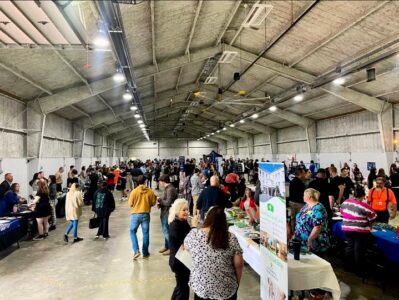
Mid-Ohio Valley Career Connect Job Fair set for April 8
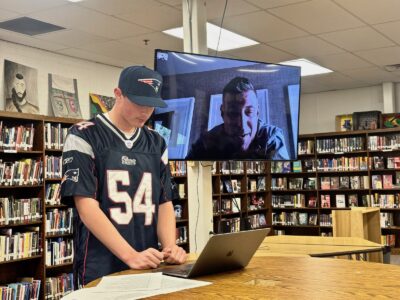
NFL coach Vrabel speaks to PHS class
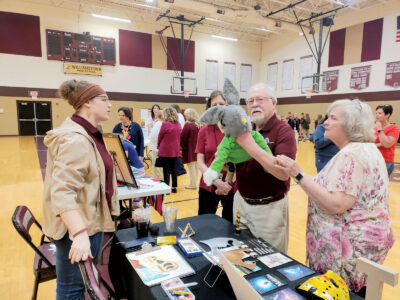
Williamstown High School hosts Local School Improvement Council Showcase