Senate GOP backs privatizing some child welfare services
-
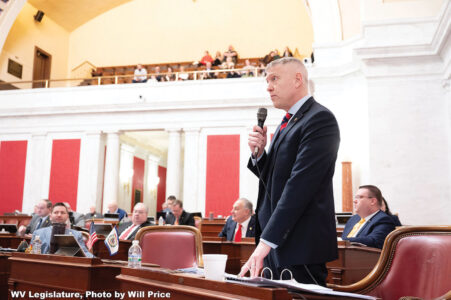
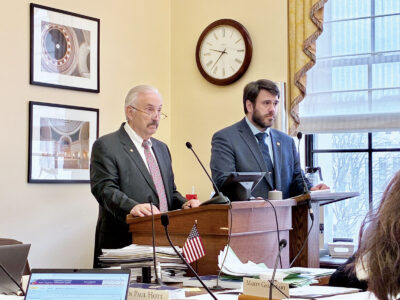
- Senate Judiciary Committee Chairman Tom Willis said Tuesday that Senate Bill 937 would ease the burden on CPS workers by transferring some of their services to either for-profit or non-profit entities. (Photo Courtesy/WV Legislative Photography)
-
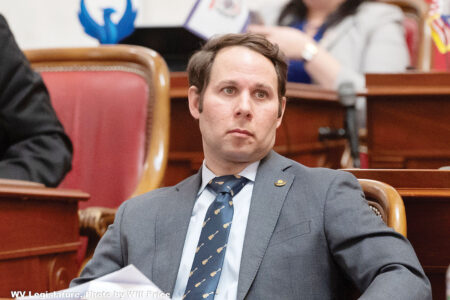
- Senate Assistant Minority Leader Joey Garcia said Tuesday that states that have implemented similar for-profit child welfare programs — such as the one that Senate Bill 937 would create — have seen their costs go up. (Photo Courtesy/WV Legislative Photography)
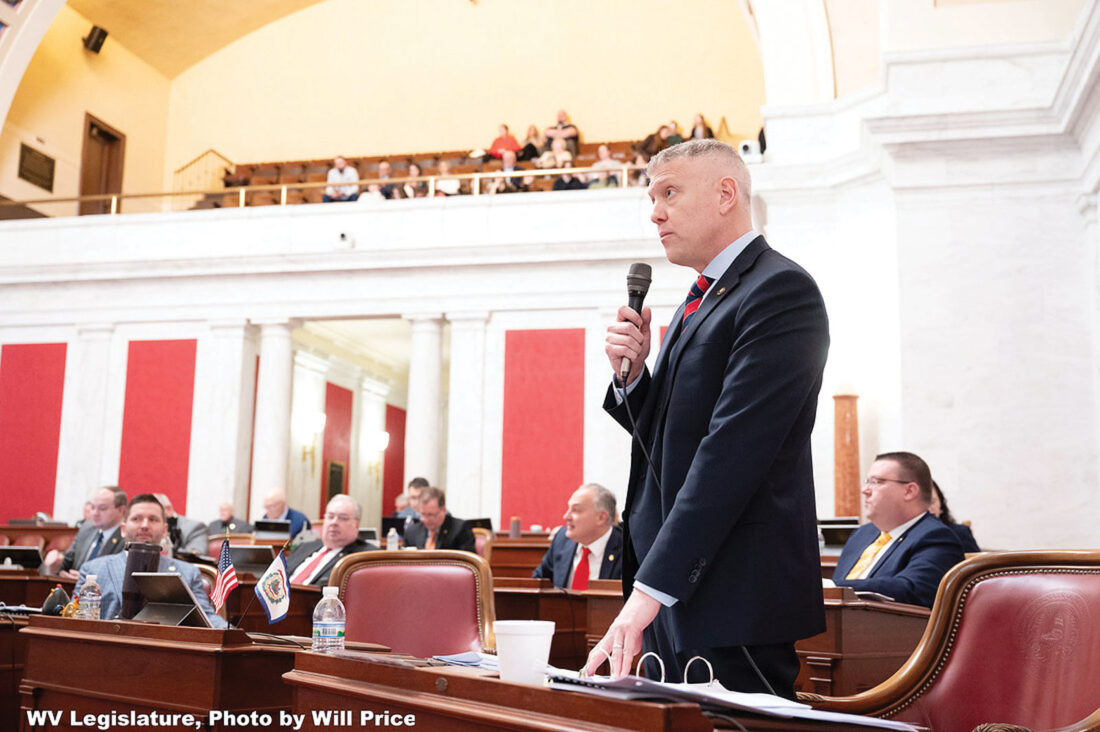
Senate Judiciary Committee Chairman Tom Willis said Tuesday that Senate Bill 937 would ease the burden on CPS workers by transferring some of their services to either for-profit or non-profit entities. (Photo Courtesy/WV Legislative Photography)
CHARLESTON — The West Virginia Senate overwhelming supported a bill aimed at transferring some child welfare services to private entities, though both of the Senate’s Democratic members said the bill would add to the state’s child welfare crisis.
The state Senate passed Senate Bill 937, establishing a community-based child welfare system program, in a 31-2 vote (one absent) Tuesday, with Senate Minority Leader Mike Woelfel and Senate Assistant Minority Leader Joey Garcia being the lone nay votes. The bill now heads to the House of Delegates.
SB 937 would create a pilot community-based child welfare program through a phased rollout starting in 2028. While the Bureau for Social Services with the Department of Human Services would maintain authority over initial investigations and emergency removals, the bill requires the transfer of ongoing case management and court-related functions to private, accredited organizations.
These contracted lead agencies would operate under a negotiated case-rate structure, allowing them to retain financial savings from positive outcomes while assuming the risk for cost overruns.
The bill would establish strict performance standards and oversight requirements to ensure local providers improve child safety and permanency before the model expands statewide.
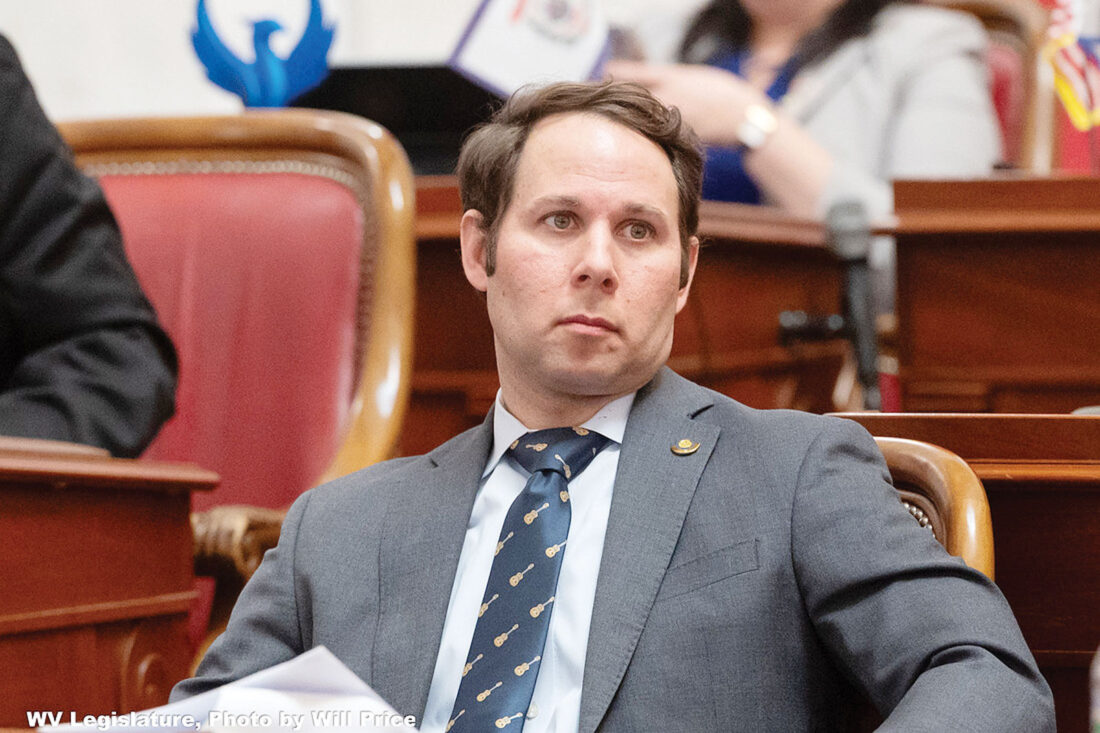
Senate Assistant Minority Leader Joey Garcia said Tuesday that states that have implemented similar for-profit child welfare programs — such as the one that Senate Bill 937 would create — have seen their costs go up. (Photo Courtesy/WV Legislative Photography)
The pilot program would begin in Berkeley and Jefferson counties (Region 1) and Summers, Raleigh, Fayette and Monroe counties (Region 2) on Jan. 1, 2028. The Bureau of Social Services would submit a detailed implementation plan to the Legislative Oversight Commission on Health and Human Resources Accountability by Dec. 1, 2026, and issue requests for proposals for lead agencies by Jan. 1, 2027, with contracts awarded six months later.
Senate Judiciary Committee Chairman Tom Willis, R-Berkeley, is the lead sponsor of SB 937. He said the bill is modeled after similar programs in Florida, Texas, Kansas and Ohio.
“There is data from those states that there were improvements in child safety, permanency outcomes, reduction of time in state custody, and maintenance of children’s connections to both their families and their communities, all key metrics in this area,” Willis said.
The bill was borne out of the many news-making cases with state Child Protective Services, resulting in the abuse and death of children. Willis also cited a U.S. Department of Health and Human Services Office of Inspector General report released last November that found that the state’s Bureau for Social Services failed to comply with intake, screening, assessment and investigation procedures in an estimated 91% of 100 screened-in family reports.
“CPS would retain authority over referrals, investigations, safety assessments, emergency custody decisions, and the decision to remove the child,” Willis said. “Accordingly, CPS would be able to focus on this core function … The day-to-day case management shifts from the shoulders of our overworked CPS employees to a private entity or nonprofit that has more capability, resources, and bandwidth to manage the case.”
It is unclear how much the proposed pilot program would cost to implement, as the bill includes no fiscal note from the Department of Human Services. But Willis said the three-year time frame would give the state time to develop the pilot program.
“Once again, we have over three-and-a-half years to tweak the program as needed,” Willis said. “The time is now to do something about our CPS system that is failing our children. The children of this state are counting on us to do better than the recent 91% fail rate.”
The Senate rejected an amendment to SB 937 offered by Garcia, D-Marion, that would have extended the pilot program in the Region 1 and Region 2 counties for a five-year period ending in 2032. But the amendment would have required legislative approval in order to expand the pilot program into other counties.
“If we’re going to do a pilot program and we’re going to get research and understanding about whether or not it works instead of jumping two feet in, I can understand that,” Garcia said. “I think if that’s the case, let’s get that data and let’s leave it up to a future legislature with an understanding about whether it works to then make a wholesale change in what we do in the State of West Virginia. But before then, we’re putting more kids at risk.”
Garcia, who also serves as the minority chairman of the Senate Judiciary Committee, said that no one from the Department of Human Services or Bureau of Social Services were on hand to offer an opinion about the bill or answer questions of committee members. Garcia said in one state where this model was tried, Nebraska, the state saw a 27% increase in child welfare costs.
“This isn’t the right way to go,” Garcia said. “I think there’s a lot of things we could do to protect children and lot of things we could do to protect against child abuse. I wish we would do them. And I don’t think this is the right one.”
“This is a horrible idea,” said Woelfel, D-Cabell. “Our child welfare system is broken. It’s been broken. If you introduce a for-profit, how in the world can somebody make a profit in this situation and even deliver the same services level that we’re doing it now? It won’t work. I’m a fan of privatizing what we can privatize, but when it comes to these at-risk children, this is a horrible idea.”
Local News
House Finance Committee begins first look at Gov. Morrisey’s tax cut bill
Woodyard issues statement on sleeper cells
The sheriff of Wood County on Tuesday issued a statement about sleeper cells. Sheriff Rick Woodyard said he ...

Picture This: Great view

Sen. Capito discusses U.S. strikes on Iran
Actors Guild slates auditions for ‘Sylvia’
Staff Report PARKERSBURG — Auditions will be held March 22 and 23 for “Sylvia,” a production of the Actors ...