McConnelsville native in charge at largest US Navy Warfare Center
-
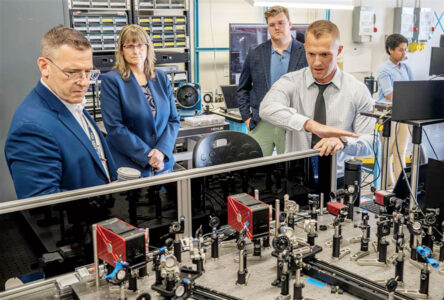
- Naval Surface Warfare Center Dahlgren Division hosted James Day Jr., left, deputy assistant secretary of the Navy for Mission Systems. During his visit, NSWCDD Technical Director Shawna McCreary, second from left, and subject matter experts showcased advancements at the center, like a directed energy roadmap and AI applications for Battle Management Systems. (Photo Provided)
-

- Shawna McCreary poses with her family in front of her father’s aircraft. (Photo Provided)
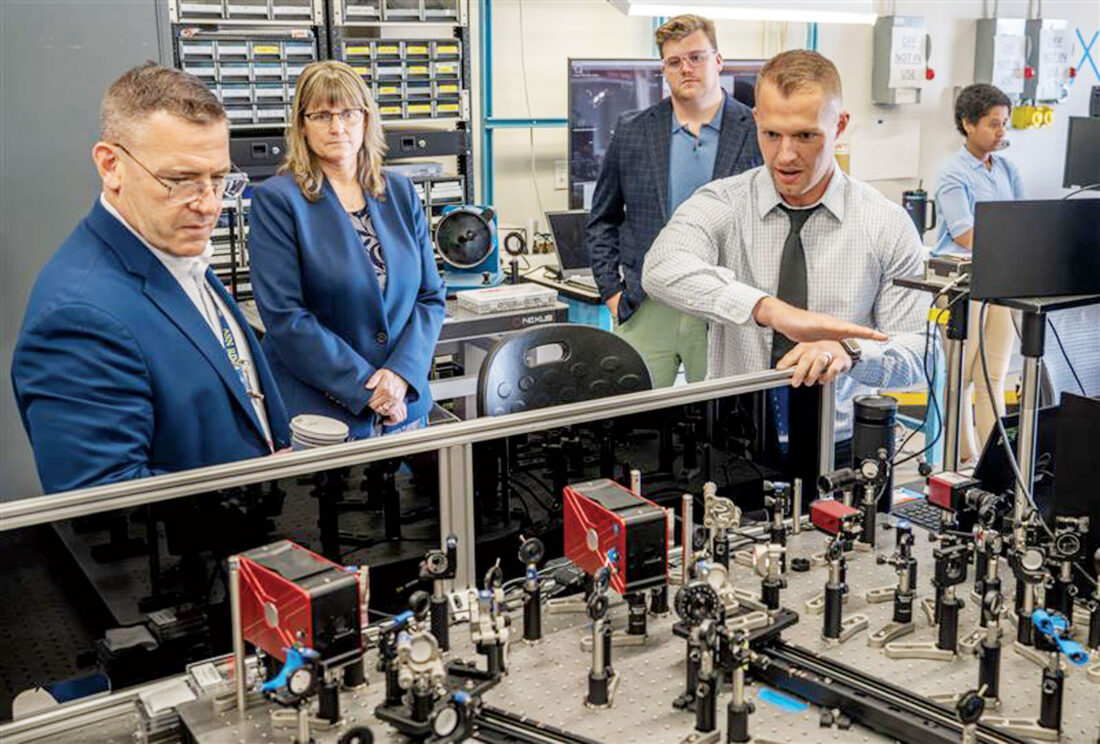
Naval Surface Warfare Center Dahlgren Division hosted James Day Jr., left, deputy assistant secretary of the Navy for Mission Systems. During his visit, NSWCDD Technical Director Shawna McCreary, second from left, and subject matter experts showcased advancements at the center, like a directed energy roadmap and AI applications for Battle Management Systems. (Photo Provided)
DAHLGREN, Va. — Shawna McCreary wanted to be an astronaut as far back as she can remember. Then she found a passion for flying, something she got from her dad, and a Morgan High School teacher named Thomas Heppner “got me really excited about math,” she said.
Those combined passions – space, airplanes and math – set her on a career path that would lead her to the top civilian role at the nation’s largest Navy Warfare Center.
McCreary studied aerospace engineering at the University of Cincinnati and began her career supporting the Navy’s Submarine Launched Ballistic Missile Program in 1991 at Naval Surface Warfare Center Dahlgren Division in Dahlgren, Va. While working at Dahlgren, she also earned a master’s in aerospace engineering from the University of Colorado.
NSWCDD — founded as the U.S. Naval Proving Ground in the waning days of World War I — is the largest of the 10 naval warfare centers. It plays crucial roles in developing, improving, integrating, testing and fielding all major Surface Navy systems, including Tomahawk, Aegis and Surface Navy weapons platforms. It is recognized as a premier team of scientists and engineers.
In the three decades that followed her start at Dahlgren, McCreary made significant contributions in weapon control design, development, maintenance and operations. She has now returned to the place where she got her start as NSWCDD’s newest technical director.

Shawna McCreary poses with her family in front of her father’s aircraft. (Photo Provided)
As Dahlgren’s top-ranking civilian, McCreary oversees its 4,614-member workforce and is responsible for its $2.6 billion portfolio that includes complex naval combat, sensor, weapon and strategic systems engineering, analysis integration and certification -ensuring weapons systems developed and delivered to the Navy are safe and effective. McCreary began the role on Nov. 16.
“Returning to Dahlgren feels like coming full circle. It’s where I started my career, and now, as technical director, I get to lead a team that plays a vital role in shaping the future of naval warfare,” McCreary said. “The work we do here directly impacts the safety and effectiveness of the Navy.”
McCreary, the daughter of Geoffrey and Sharon Hammond, grew up on her great-grandfather’s 40-acre property on the Muskingum River surrounded by nature. Her father worked as a pharmacist like his father before him and was also an entrepreneur. At Morgan High School, she ran cross-country and track, played basketball and played flute in the band.
She credits her dad with never placing limitations on her or her sister.
“He was always super supportive of whatever we wanted to do. He never told me you can’t do something. He would say, ‘You can do math, you can do engineering, you can fly a plane.’ He never limited us. He encouraged us to pursue whatever our dreams were,” McCreary said.
She shared her dad’s passion for flying and began working to earn her private pilot’s license while still in high school. Soon after receiving the license, she took her friends up in a Cessna 172 at 19.
While engineering remains a male-dominated field, it was even moreso in the 1980s. There were only a few females in her aerospace engineering undergraduate program. McCreary recalls arriving at Dahlgren in 1991 and seeing women in positions of leadership across the division.
“Seeing somebody like me being able to do that showed me it didn’t matter your background as long as you could do the work,” she said.
Prior to returning to Dahlgren this fall, McCreary served as the executive director for safety and regulatory compliance for Naval Sea Systems Command, managing the Safety and Regulatory Compliance Directorate, serving as the deputy for weapons safety and the chair of the Department of the Navy’s Weapons System Explosives Safety Review Board, and serving as executive director, Naval Ordnance Safety & Security Activity – helping ensure weapon safety across the enterprise.
In 2019, she served as the assistant for shipboard systems at Strategic Systems Programs, providing senior technical leadership for the design, development, test and evaluation, procurement, operation, support and maintenance of the shipboard elements of the Strategic Weapon System and assigned conventional weapon systems onboard Ohio- and Columbia-class submarines. She also served as the technical liaison regarding shipboard systems for the United Kingdom Vanguard and Dreadnought-class submarines.
Though it’s impossible to pick a favorite experience from more than 30 years of service, McCreary recalls a cool moment of her career – a demonstration and shakedown operation in 2012 that used the software she helped develop. These series of tests validate a submarine launched ballistic missile and ensure the crew is ready to use the system.
McCreary had worked on algorithms to make the fire control system – essentially the brain of a weapons system – talk to the missile, guidance and launcher systems. Now, she was on the USS Tennessee, standing next to a Navy admiral in missile control for the first test flight of an updated missile guidance system. She remembers watching the weapons control panel, willing it to stay green.
It did.
Today, McCreary keeps a USS Tennessee sign on a wall in her office at Dahlgren. It’s a reminder to follow your passion wherever it leads.
Local News
Most of West Virginia House Republican caucus economic agenda crosses finish line

Trump officials announce 10-gigawatt data center, gas plants for former Ohio uranium site
McConnelsville native in charge at largest US Navy Warfare Center

Picture This: All Abuzz for the Marietta Times Regional Spelling Bee

Gas price increases add pressure across the Mid-Ohio Valley economy