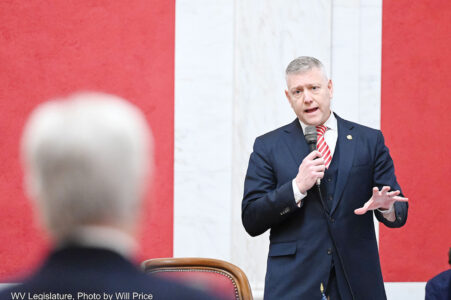
Chewing the Fat: West Virginia House passes Make West Virginia Healthy Act
-
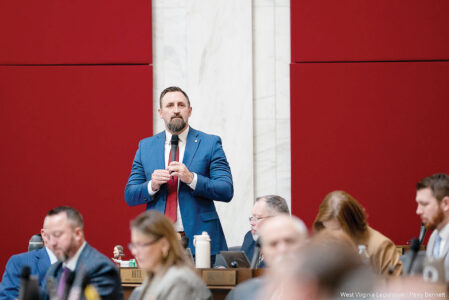
- House Health and Human Resources Committee Chairman Evan Worrell said Monday that HB 4982 would help reverse some of West Virginia’s most troubling health statistics. (Photo Courtesy/WV Legislative Photography)
-
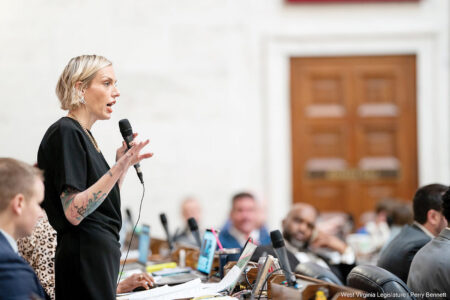
- House Minority Leader Pro Tempore Kayla Young said she would support HB 4982 Monday, but raised concerns about the bill including a renewal of the Presidential Fitness Program. (Photo Courtesy/WV Legislative Photography)
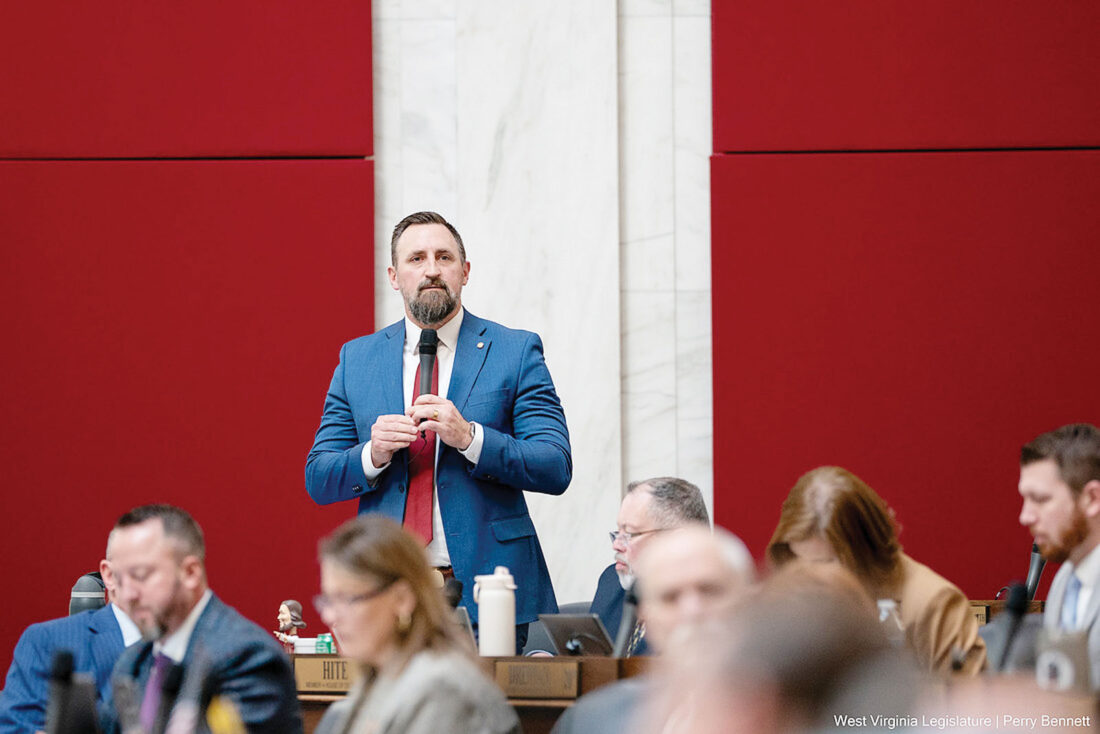
House Health and Human Resources Committee Chairman Evan Worrell said Monday that HB 4982 would help reverse some of West Virginia’s most troubling health statistics. (Photo Courtesy/WV Legislative Photography)
CHARLESTON — A bill meant to encourage healthier lifestyles passed the West Virginia House of Delegates Monday.
Following a 91-4 vote, with four members absent or not voting, House Bill 4982, creating the Make West Virginia Healthy Act of 2026, heads to the state Senate. The bill is aimed at combating and reversing some of West Virginia’s worst health metrics, such as chronic obesity and diabetes.
“We all know the numbers … West Virginia leads the nation in chronic disease, disability, preventable illness,” said House Health and Human Resources Committee Chairman Evan Worrell, R-Cabell, who was the lead sponsor of the bill. “And that’s not a talking point. We’re talking about our neighbors, more specifically our workforce, and definitely our Medicaid budget.
“Whether you sit on this side of the aisle or that one, we’re all paying for the bill for a system that waits until people are very sick before we act,” he continued. “This legislation says something simple but long overdue, and that’s prevention is common sense.”
The bill reestablishes the Office of Healthy Lifestyles within the Department of Health and mandates a coordinated, multi-agency approach to wellness. Key components include the “Food is Medicine” initiative within Medicaid, stringent new physical education requirements for public schools and the creation of a dedicated “Healthy Lifestyles Fund.”
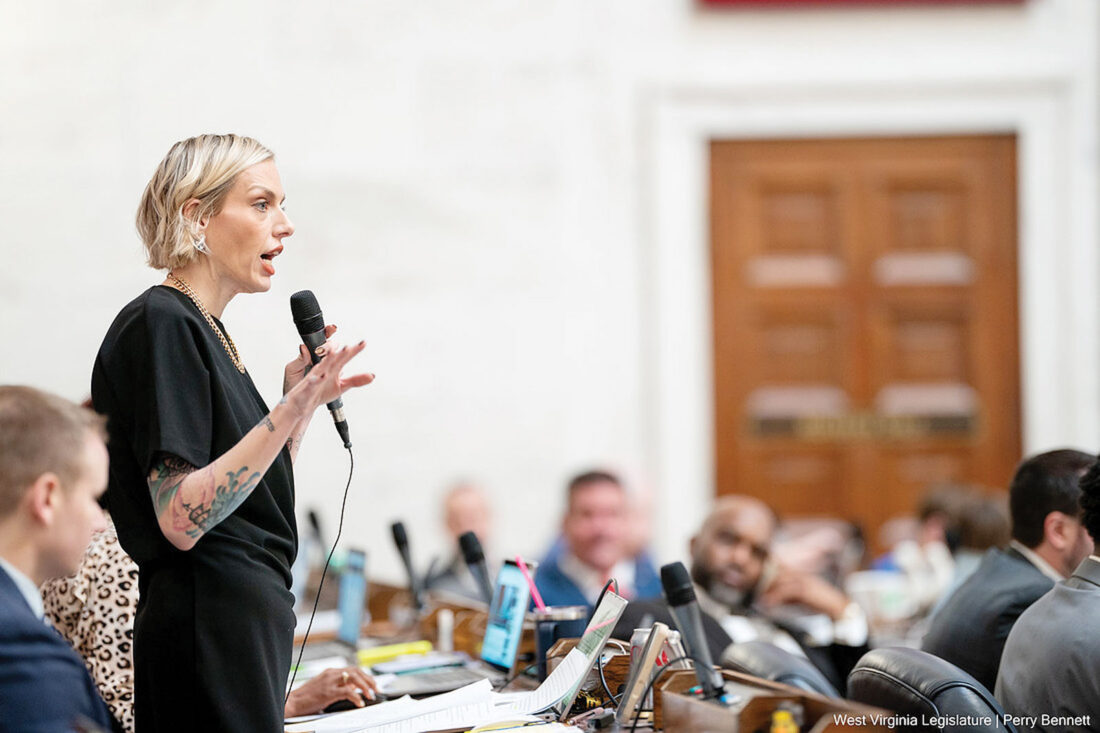
House Minority Leader Pro Tempore Kayla Young said she would support HB 4982 Monday, but raised concerns about the bill including a renewal of the Presidential Fitness Program. (Photo Courtesy/WV Legislative Photography)
The Office of Healthy Lifestyles would include a 13-member Healthy Lifestyle Coalition appointed by the cabinet secretary with members representing state agencies and community organizations. The reestablished office would create public/private partnerships to promote health lifestyles, work with higher education on rural job training opportunities for dietary and exercise physiology students, and manage county grant programs for farm-to-school initiatives.
“This Office of Healthy Lifestyles … already exists, and we’re just reestablishing it with teeth, but also with guardrails. It does annual reporting to the Legislature, and it also focuses on cross-agency coordination, so we stop duplicating programs and we start getting results,” Worrell said.
Through the state’s Medicaid program, the bill requires the use of “Food is Medicine” services, such as providing nutrition-related case management and professional counseling. medically tailored meals and nutrition prescriptions, and grocery provisions for medically appropriate diets. The state Bureau of Medical Services is encouraged to partner with community-based organizations and prioritize food grown by local West Virginia farmers and work on a federal demonstration waiver to showcase the results of this program to federal partners.
“A simple question: Why are we paying more later when we could pay less earlier? The Food is Medicine provision is a perfect example,” Worrell said. “We already pay for dialysis. We already pay for amputations. We pay for ER visits. What this allows is something cheaper – nutrition counseling, medically tailored meals, grocery prescriptions, tools that reduce utilization of expensive care. … We’re simply giving the Bureau of Medical Services the authority to do what works and to measure outcomes.”
HB 4982 sets minimum mandatory physical education requirements in public schools and requires the state to adopt the Presidential Fitness Test. Students must be tested once in elementary, middle and high school. The test includes five components: curl-ups/sit-ups, shuttle run, v-sit reach/sit-and-reach, one-mile run, and pull-ups/push-ups. The Department of Education is required to collect Body Mass Index (BMI) data on a scientifically drawn sample of students in the aggregate to protect student confidentiality.
“We’re going to focus on physical fitness but not punishment,” Worrell said. “Kids don’t lose recess for bad grades. Schools with limited resources get flexibility and students with IEPs (individual education plans) are protected. And the data we’re collecting, it’s anonymous, but it’s aggregated, and it’s used for one purpose only, and that’s to know whether what we’re doing is actually working.”
According to America’s Health Rankings, an annual publication of the United Health Foundation, West Virginia ranked 46th for least healthy states in 2025, with only Alabama, Mississippi, Arkansas and Louisiana performing worse. West Virginia ranked 48th for the percentage of adults who exercise and the percentage of physical inactivity. The state ranked 49th for the percentage of adults with multiple chronic conditions and 49th for obesity.
Gov. Patrick Morrisey has made reversing West Virginia’s poor health statistics a priority, creating Mountaineer Mile trails at state parks, signing a bill last year to ban certain food dyes and additives in food sold in West Virginia by 2028, and getting a waiver approved for the state’s Supplemental Nutrition Assistance Program that prohibits soft drinks from being purchased with SNAP funds. West Virginia recently was awarded $199 million for year one of the five-year federal Rural Health Transformation program, which includes healthy lifestyles initiatives.
Del. Mike Pushkin, D-Kanawha, is the minority vice chairman of the House Health Committee. He voted for the bill but raised concerns that President Donald Trump’s One Big Beautiful Bill Act which created the Rural Health Transformation program also included substantial cuts to Medicaid and SNAP. Pushkin also raised concerns about West Virginians who lost their COVID-era Affordable Care Act insurance subsidies that expired at the end of 2025.
“While we all want to encourage West Virginians to make healthy choices, one choice that is beyond their control is when they see their insurance premiums go from around $400 a month to over $2,000 a month,” Pushkin said. “That does relate to (HB 4982) because the money that we’re using in this bill comes from the Rural Health Transformation Initiative. … I’m sure we’re all for healthy lifestyles, I don’t know how this is going to offset the billions of dollars we’re going to lose in coming years in Medicaid cuts that are going to cause rural hospitals to close.”
Del. Henry Dillon, R-Wayne, said he liked many of the things in the bill, but he voted against it because he felt that it gave too much power to state government.
“We heard that this bill does not grow government. I’m having trouble with that one,” Dillon said. “I want to see West Virginia have a thriving agricultural industry made up of small farms, family farms. I want to see our kids be able to eat that food, if they will. We need a lot of education for our students to train them in nutrition, and that should start early. We need to help them form those habits, but we need to do it without a massive expansion of government.”
House Minority Leader Pro Tempore Kayla Young, D-Kanawha, also supported the bill but said she was disappointed that it included restarting the Presidential Fitness Test, which she said places too much focus on strength instead of fitness and shames students.
“It was removed from national guidelines in 2013. And it was removed in 2013 because it has a 70-year track record of failure. It has never, ever worked,” Young said. “I just wish that we would actually invest in social determinants of health so we can create healthy children and help them rather than to shame them into having to do a mile run in under six minutes or whatever it is.”
Steven Allen Adams can be reached at sadams@newsandsentinel.com
Local News

Entertainment and more in the Mid-Ohio Valley

Picture This: Cold Feet
Wood County library levy on May ballot
Chewing the Fat: West Virginia House passes Make West Virginia Healthy Act
Democrats and White House trade offers as shutdown of Homeland Security looms