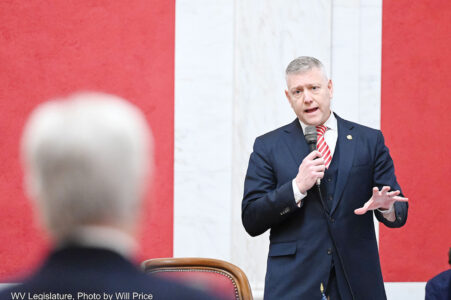
Bill limiting use of media monitoring organizations by West Virginia government advances
-
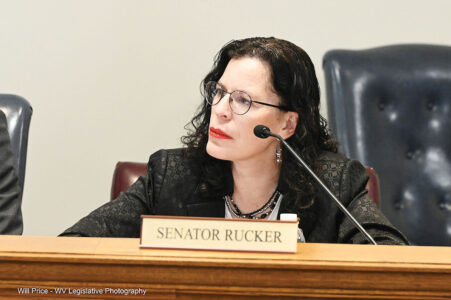
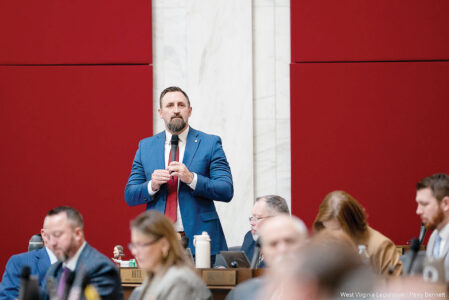
- Senate Assistant Majority Leader Patricia Rucker said Monday that SB 531 would make sure news outlets receiving state advertising dollars do not favor a particular political viewpoint. (Photo courtesy/WV Legislative Photography)
-
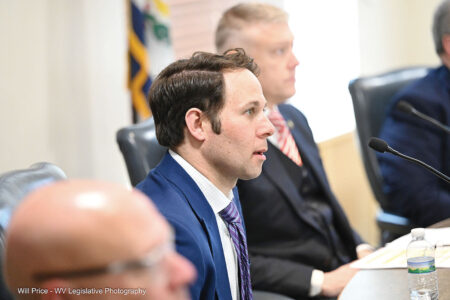
- Senate Assistant Minority Leader Joey Garcia questioned Monday why SB 531 was needed. (Photo courtesy/WV Legislative Photography)
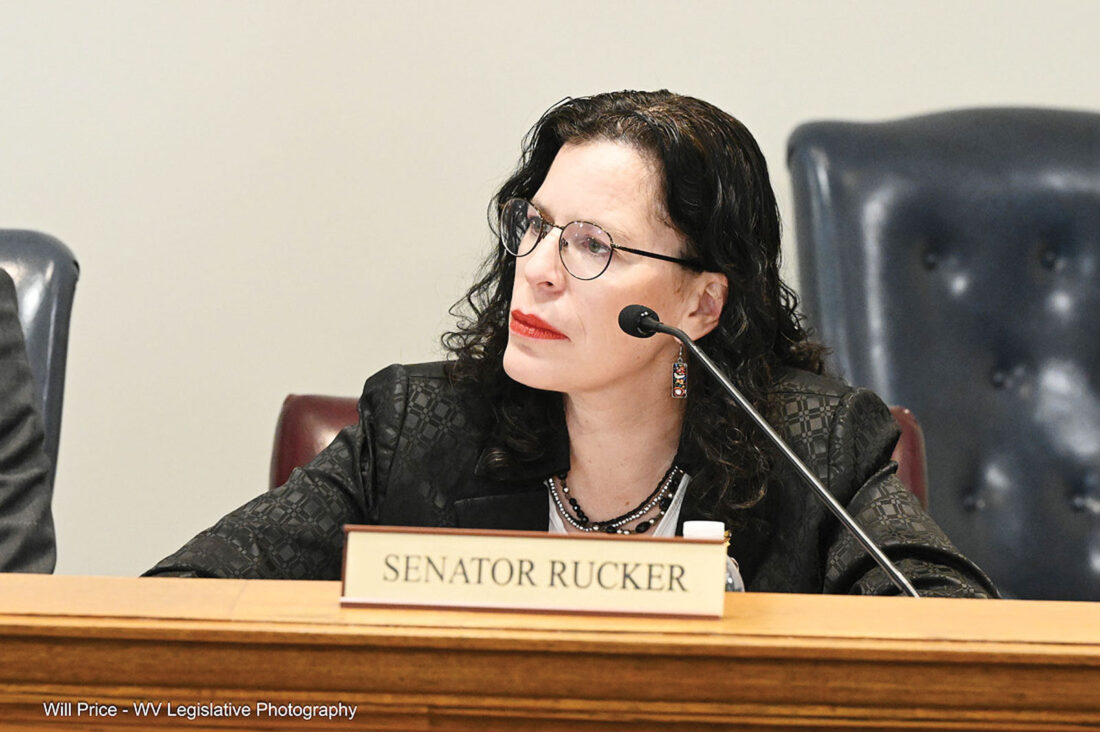
Senate Assistant Majority Leader Patricia Rucker said Monday that SB 531 would make sure news outlets receiving state advertising dollars do not favor a particular political viewpoint. (Photo courtesy/WV Legislative Photography)
CHARLESTON — A bill claiming to defend the First Amendment of the U.S. Constitution by banning state contracts with companies that use certain media monitoring services could wind up having its own First Amendment issues.
The Senate Judiciary Committee recommended for passage to the full Senate Monday afternoon a committee substitute for Senate Bill 531, creating the First Amendment Preservation Act. The bill’s lead sponsor is state Sen. Mike Azinger, R-Wood.
SB 531 would prohibit state agencies — including departments, boards, commissions, institutions or other political subdivisions of the state — from contracting with media reliability and bias monitors or marketing agencies that use such monitors for the purpose of directing state advertising dollars.
Media reliability and bias monitors, sometimes called media monitoring organizations, are defined as any company that claims to rate news and information sources based on accuracy, bias, ethics, journalistic standards or misinformation.
The bill prohibits the state from either directly contracting with such organizations or contracting with advertising companies who utilize media monitoring services as defined in the bill beginning July 1. State departments and agencies would be required to have advertising and marketing agencies submitting bids or proposals to provide written certification that they are in compliance with the law.
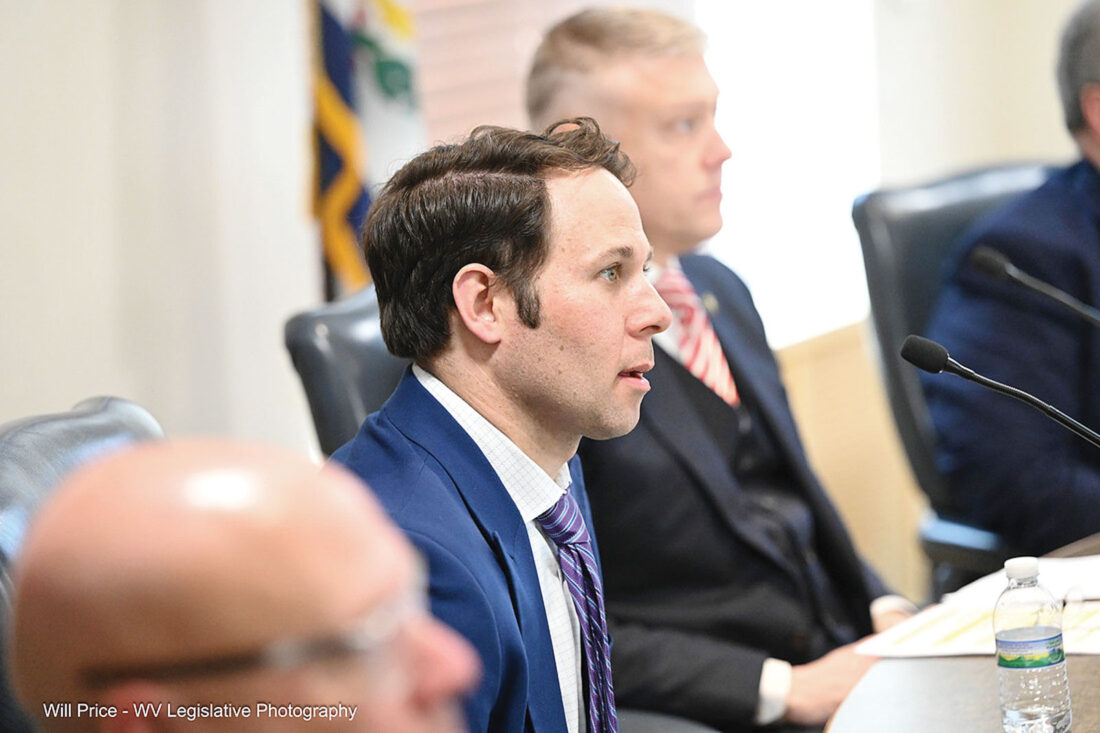
Senate Assistant Minority Leader Joey Garcia questioned Monday why SB 531 was needed. (Photo courtesy/WV Legislative Photography)
Similar bills were introduced in the Senate and House of Delegates last year. Neither bill made it to a committee agenda. The bills are similar to a “Statement of Principles on News Censorship” released at the end of 2024 by the American Legislative Exchange Council (ALEC).
“Whether in print, over the airwaves or online, government agencies should harness the full potential of today’s media offerings to communicate official notices on the platforms where their constituents actually frequent – not put their thumbs on the scale exclusively in favor of ‘mainstream’ outlets,” according to the document. “A troubling trend has emerged in which ‘media monitoring organizations’ analyze news outlets for the accuracy of their reporting and then blacklist or otherwise exclude certain publications from advertising.
“When state agencies develop constituent outreach campaigns (such as a public service announcement raising awareness), or work with professional marketers or advertisers, they should base ad placement decisions on an outlet’s objective, quantitative metrics, such as audience size, viewership and demographic information,” according to the document’s second principle. “They should not discriminate against outlets based on subjective, content-based criteria, adherence to perceived journalistic standards or determinations of misinformation, disinformation or malinformation.”
According to The Washington Post, one such media monitoring organization – NewsGuard – filed a lawsuit recently against the Federal Trade Commission after the federal agency launched an investigation of NewsGuard last May. The FTC also, as part of a condition for an advertising agency merger, prohibited the new company from contracting with NewsGuard and similar media monitoring services. In its filing, NewsGuard accused the FTC of violating its First and Fourth Amendment rights.
NewsGuard, started in 2018 by Court TV founder and veteran journalist Steven Brill and former Wall Street Journal publisher Gordon Crovitz, is a nonpartisan organization with a team of experienced journalists providing ratings of news organizations based on a “trust score.”
“NewsGuard’s detailed Source Reliability Rating, produced by a team of expert analysts using apolitical journalistic criteria and a transparent process, (enables) enterprises and consumers to identify reliable sources of information at scale, with coverage of more than 35,000 online sources accounting for 95%+ of engagement,” according to NewsGuard’s website.
Michael Martin, director of government affairs for conservative news outlet Newsmax, testified before Senate Judiciary Committee members virtually Monday. He said NewsGuard’s ratings adversely harm Newsmax because it receives a red rating for low reliability.
“Our support for the bill is because NewsGuard and other companies like it have used credibility ratings that disproportionately disparage conservative media outlets and choke them out from receiving ad revenue,” Martin said. “They sell paid credibility ratings to advertisers, schools, big tech and government agencies. These ratings directly dictate which outlets receive ad revenue and overwhelmingly punish conservative media.”
NewsGuard is being represented in its FTC lawsuit by the Foundation for Individual Rights and Expression, a free speech advocacy and legal defense. In a statement Monday, FIRE Legislative and Policy Director Carolyn Iodice said states have the freedom to decide where to place their own advertising or decide not to place advertising with companies that engage in media monitoring, but SB 531 likely violates the First Amendment instead of preserving it.
“What the state cannot do is steer government contracts only to companies that agree to censor themselves outside the scope of those contracts,” Iodice said. “For example, the government could not say it’ll only hire plumbers who agree not to fly a ‘Don’t Tread on Me’ flag at home or to attend an anti-war rally. Contracting with the government doesn’t mean handing over your right to speak your mind.
“Unfortunately, parts of SB 531 cross this line,” Iodice continued. “The bill as written could be read so broadly as to prohibit any company contracting with the state of West Virginia for any goods or services from offering opinions that rate or rank the relative accuracy of news sites. The First Amendment does not permit this kind of restriction on speech.”
Senate Assistant Majority Leader Patricia Rucker, R-Jefferson, said she supported the bill over concerns that state agencies might be limiting their advertising dollars to certain news outlets.
“I do feel that it is very important that we make certain that we’re not favoring one political side over another,” Rucker said. “I’m not looking to favor the conservative viewpoint more than the liberal viewpoint. I just don’t want to see us favoring any side. It should be based on whether or not it is a good deal for the state, if it’s an appropriate place to advertise, where we can seek out the customers for whatever it is we’re advertising.”
Senate Assistant Minority Leader Joey Garcia, D-Marion, said he was unsure what problem the bill was fixing and whether the bill could do the opposite of the intentions of its supporters by directing advertising toward politically friendly news outlets.
“I think this sounds like we’re jumping the cart before the horse a little bit because we have a news organization that doesn’t like how they’ve been rated,” Garcia said. “Maybe one of the things they can do if they don’t like how they’re perceived when it comes to their journalistic standards is improve their journalistic standards. … This just seems to be sort of a dog whistle of some type.”
Steven Adams can be reached at sadams@newsandsentinel.com.
Local News

Entertainment and more in the Mid-Ohio Valley

Picture This: Cold Feet
Wood County library levy on May ballot
Chewing the Fat: West Virginia House passes Make West Virginia Healthy Act
Democrats and White House trade offers as shutdown of Homeland Security looms