
Bill criminalizing unauthorized distribution of abortifacients in West Virginia heads to full Senate
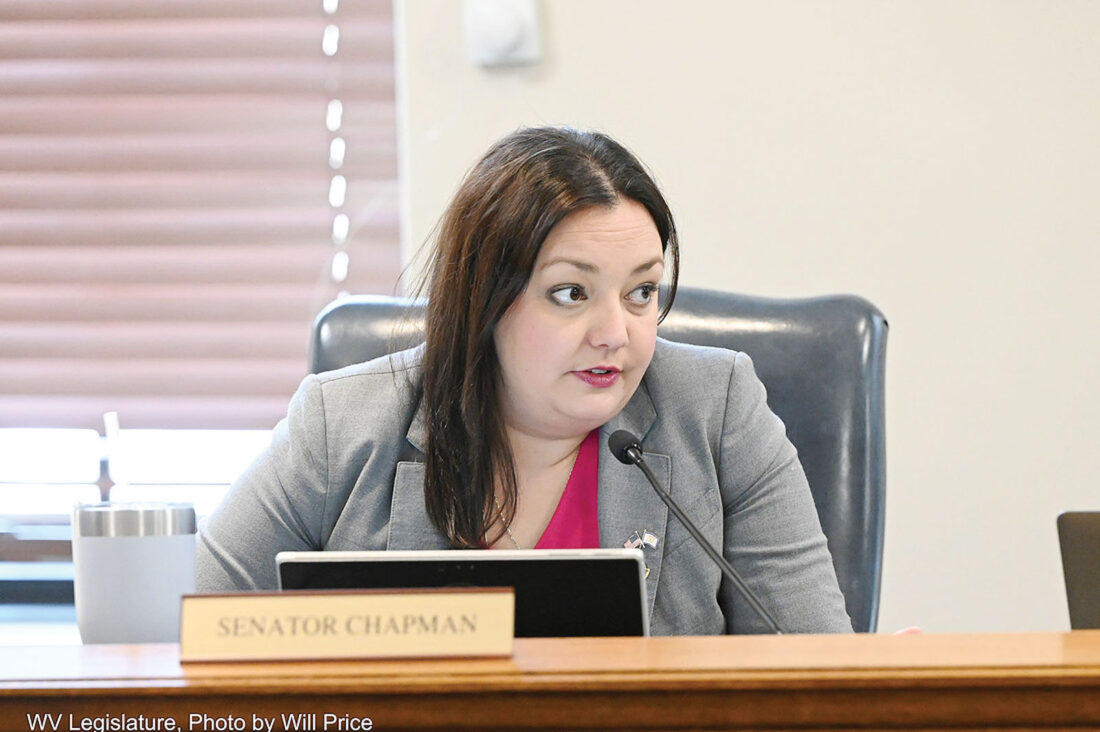
State Sen. Laura Wakim Chapman opposed an amendment to Senate Bill 173 Thursday on the grounds that it was redundant and would make it harder for the House of Delegates to accept. (Photo Courtesy/WV Legislative Photography)
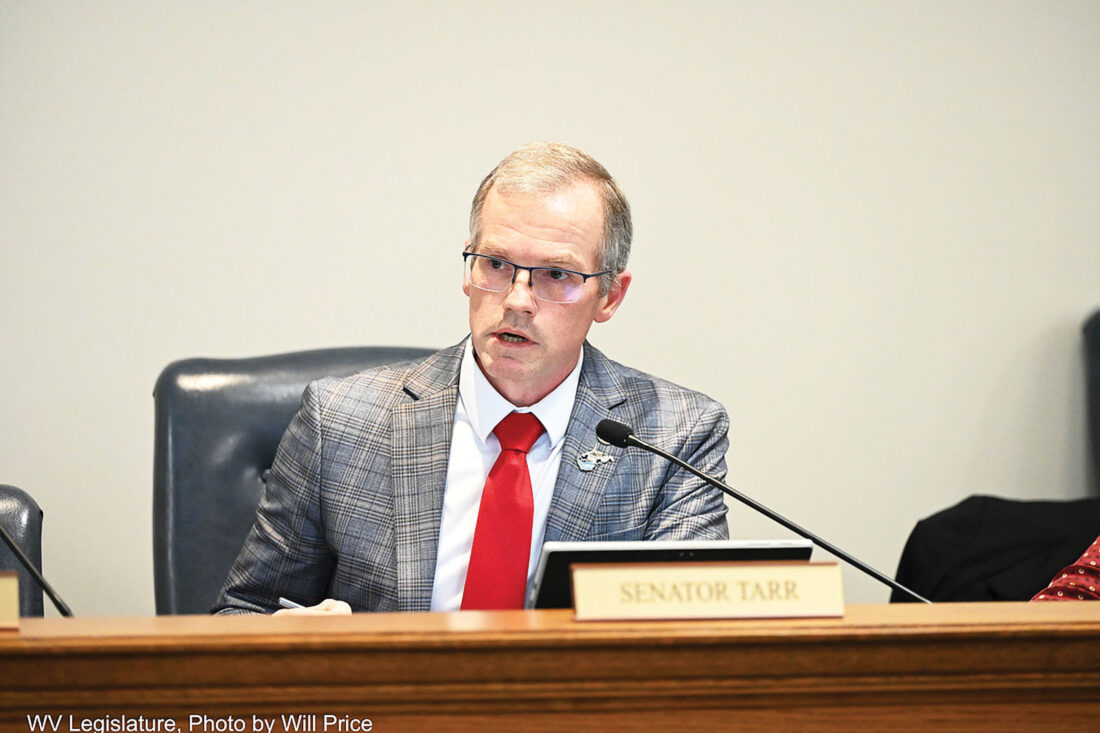
West Virginia Sen. Eric Tarr raised concerns Thursday that a bill prohibiting abortifacients would be used as a way for people to bring frivolous lawsuits. (Photo Courtesy/WV Legislative Photography)
State Sen. Laura Wakim Chapman opposed an amendment to Senate Bill 173 Thursday on the grounds that it was redundant and would make it harder for the House of Delegates to accept. (Photo Courtesy/WV Legislative Photography)
West Virginia Sen. Eric Tarr raised concerns Thursday that a bill prohibiting abortifacients would be used as a way for people to bring frivolous lawsuits. (Photo Courtesy/WV Legislative Photography)
Trending
CHARLESTON -- A bill prohibiting the distribution and prescription of abortifacients to West Virginia residents now heads to the floor of the state Senate.
The Senate Judiciary Committee recommended an amended committee substitute for Senate Bill 173, prohibiting abortifacients, for passage to the full Senate Thursday evening after nearly three hours of questions of counsel, testimony by pro-life advocates and debate over proposed civil penalties in the bill.
SB 173 targets the out-of-state distribution of abortifacients - defined as any chemical or drug prescribed or dispensed with the intent of causing an abortion - to West Virginia residents.
The Legislature passed HB 302 in a 2022 special session, banning all abortions in the state unless a licensed medical professional's reasonable judgment calls for the procedure, such as cases of a non-medically viable fetus, ectopic pregnancies or medical emergencies.
Abortion is defined in state code as "the use of any instrument, medicine, drug, or any other substance or device" used with intent to terminate a pregnancy. The law came following a June 2022 decision by the U.S. Supreme Court that reversed two previous high court decisions that gave women the right to abortion access, returning the issue back to the states -- Roe v. Wade and Planned Parenthood of Southeastern Pa. v. Casey.
SB 173 prohibits the sending of an abortifacient via mail or courier to a person within West Virginia; placing an abortifacient into the stream of commerce with the knowledge it will be used in or sent to West Virginia; prescribing an abortifacient to a person in West Virginia, even if the prescriber is out-of-state or unaware of the recipient's exact location; and distributing an abortifacient within the state without a valid prescription.
Exemptions included in SB 173 include pharmacies filling valid prescriptions issued by West Virginia-licensed medical professionals or physicians providing legitimate medical services that result in unintentional injury or death to a fetus. The bill also explicitly prohibits charging or convicting a pregnant woman with a criminal offense related to the death of the unborn child.
An amendment adopted by the committee Thursday provides protections to motor carriers, freight forwarders, air carriers or third-party logistics providers such as FedEx or UPS acting as transporters.
Non-medically licensed individuals charged under the provisions of SB 173 could be convicted of a felony and sentenced to between three and 10 years in prison. Licensed medical professionals could have their medical licenses revoked. The bill also includes a civil liability clause, allowing for at least $10,000 in damages to be collected per abortion or attempted abortion, plus injunctive relief.
Much of the debate on the bill Thursday evening revolved around the civil liability penalties. Sen. Eric Tarr, R-Putnam, raised concerns that the minimum $10,000 civil penalty could provide incentives for frivolous lawsuits to be brought.
"I love the intent of this. I do not want abortifacients coming to West Virginia and killing West Virginians," he said. "But ... how does this not incentivize a woman who may be unscrupulous to have a child just to abort it ... so she can bring civil action? Does this not incentivize, by having this civil cause of action, for me to get paid $10,000 for doing that?"
The committee adopted an amendment proposed by Tarr adding a requirement for the claimant to notify the state Attorney General's Office when a suit is filed. Tarr's amendment would also give the attorney general the ability to pursue a civil claim against a person or entity who has violated the provisions of the bill and to recover damages on behalf of the state.
"This may be the only cause of action you'll ever see me vote for with this in here if this amendment happens," Tarr said. "What I'm after here is that there's very, very, very few cases we have to see. ... It just doesn't happen anymore. And that's the weight that we are giving this legislation is (for the attorney general) to go in and use a sledgehammer against the people that are doing this to us."
"I think it's a very good amendment," said Senate Health and Human Resources Committee Chairman Brian Helton, R-Fayette, whose committee recommended SB 173 for passage earlier this week. "I think it puts the hammer down and is a very, very strong deterrent."
"The Attorney General's Office is a force multiplier," said state Sen. Vince Deeds, R-Greenbrier. "They have over 201 employees there with over a $5 million budget, and they can really reinforce and support our citizens here, and so I'm in favor of the amendment."
But state Sen. Laura Wakim Chapman, R-Ohio, spoke against the amendment, raising concerns that the House of Delegates could refer the bill to the House Finance Committee if Tarr's amendments create an additional cost. She also called the amendment redundant.
"The (attorney general) already has the ability to enforce our laws," Chapman said. "I vehemently object to this amendment. Again, I think by adding the attorney general ... it is completely irrelevant. The attorney general already can sue and has sued in the past over laws that we don't explicitly give permission. And again, I don't want anything to harm this legislation."
SB 173 was recommended for passage by the Senate Judiciary Committee by voice vote with one nay from Senate Assistant Minority Leader Joey Garcia, D-Marion.
"I think this is not a good bill. I think this overreaches in other states. I think ... it's going to be unconstitutional, and that's part of what we look at here," Garcia said. "I know the Legislature has voted against me about every single time here over the last couple years. But these types of decisions should be made between a family and a doctor, point blank."
Steven Allen Adams can be reached at sadams@newsandsentinel.com