West Virginia bill meddling with city elections stalls following pushback
-
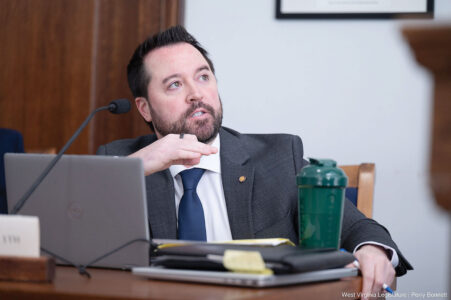
- During a House Judiciary Committee meeting earlier this week, House Minority Whip Shawn Fluharty said House Bill 4080 was an attempt by some Republican lawmakers to control municipalities from Charleston using the levers of big government. (Photo Courtesy/WV Legislative Photography)
-
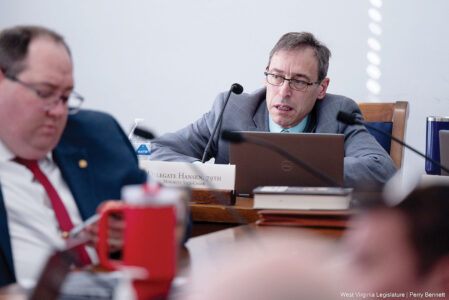
- Del. Evan Hansen questioned Del. Jimmy Willis about why he was trying to tell municipalities outside of his district how to conduct their elections. (Photo Courtesy/WV Legislative Photography)
-
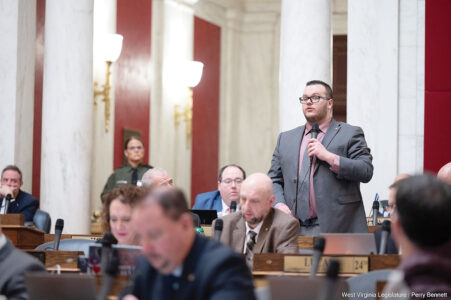
- Del. Jimmy Willis is the lead sponsor of a bill that would require partisan elections in all of West Virginia’s cities and towns, and for mayors to be elected instead of appointed by city and town councils. (Photo Courtesy/WV Legislative Photography)
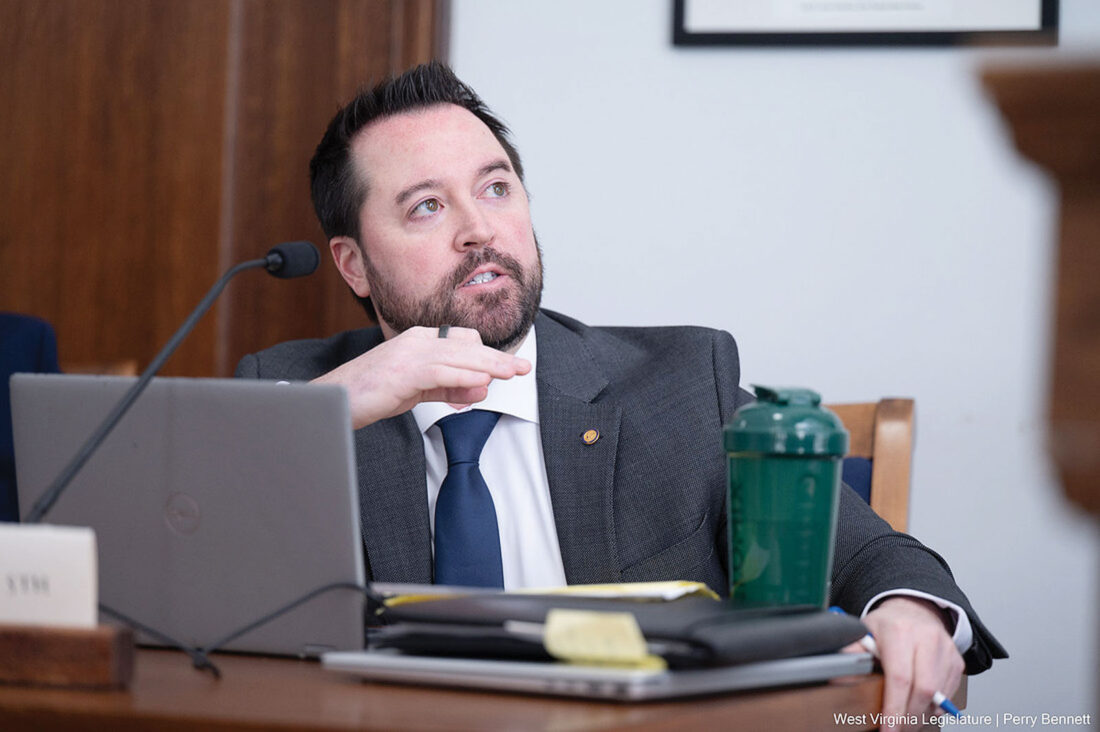
During a House Judiciary Committee meeting earlier this week, House Minority Whip Shawn Fluharty said House Bill 4080 was an attempt by some Republican lawmakers to control municipalities from Charleston using the levers of big government. (Photo Courtesy/WV Legislative Photography)
CHARLESTON — A bill that would require cities and towns in West Virginia to switch from nonpartisan municipal elections and require candidates be identified by political party affiliation appears to be stalled, with concerns raised about big government interference in local control.
House Bill 4080, on markup and discussion phase, was pulled from Wednesday’s House Judiciary Committee agenda. The bill was recommended for passage last week by the House Legal Services Subcommittee.
HB 4080 would require cities and towns to eliminate their nonpartisan races for mayor and city council by 2032, requiring candidates to be identified on the ballot by party affiliation, such as Republican, Democrat, Mountain Party, Libertarian, etc.
HB 4080 aligns with the requirements of Senate Bill 50 passed by the Legislature last year, which requires municipalities to move their elections to coincide with statewide primary or general election days by 2032. HB 4080 also prohibits the practice of a city council appointing a mayor from among its members, mandating a direct, popular vote for the office of mayor in all municipalities.
The lead sponsor, Del. Jimmy Willis, explained his rationale for the bill during a hearing on the bill held Tuesday by the House Judiciary Committee.
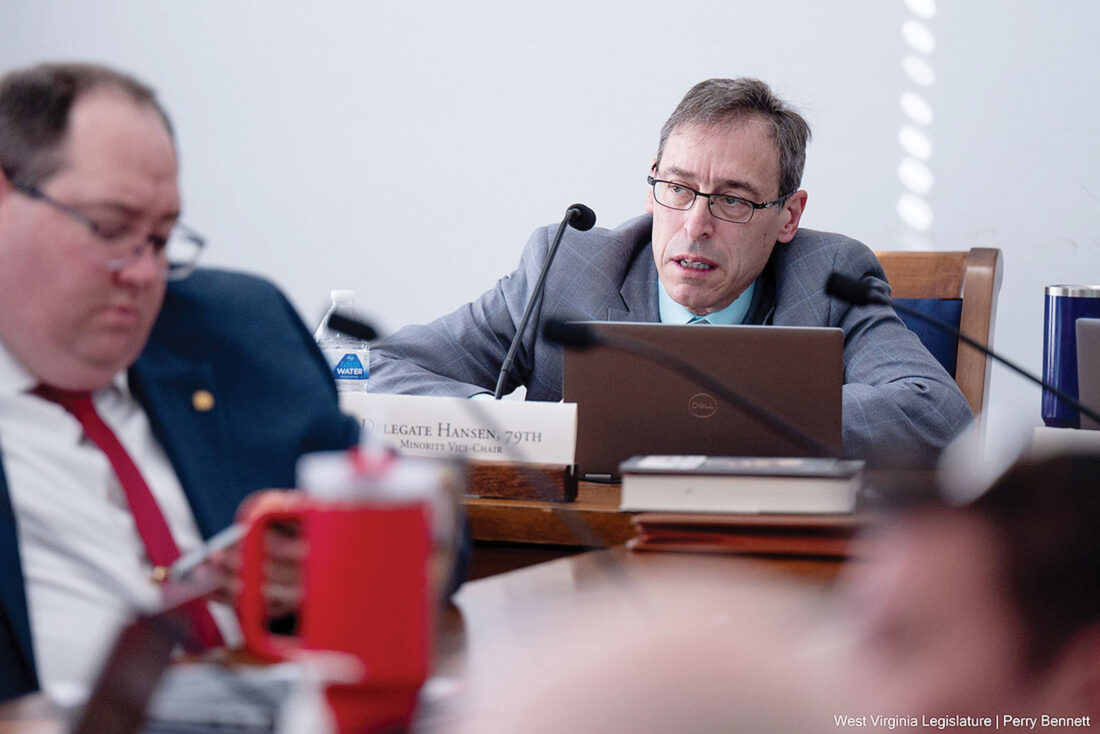
Del. Evan Hansen questioned Del. Jimmy Willis about why he was trying to tell municipalities outside of his district how to conduct their elections. (Photo Courtesy/WV Legislative Photography)
“I guess you would say my intent for the bill, just the same as our names would be now with it beside the name — whether it’s Republican, Democrat, Mountain Party, Libertarian Party, and I can’t remember any other parties — that would be listed … that would suffice for what the bill is trying to do,” Willis said. “It wouldn’t change what their system of government would be, whether it be strong mayor or weak mayor, but it would change the mayor from being elected by the city council to elected by the people.”
According to the West Virginia Municipal League, while some major cities — such as Charleston — have partisan elections, most of the state’s 230 cities and towns have nonpartisan elections. And many municipalities do not have political party primaries, with general elections often being held in May or June, though last year’s SB 50 requires those cities and towns to sync up their elections with county and state primary and general election dates by 2032. In many cases, municipal charters govern the election processes in cities and towns.
“Municipal government in West Virginia works best when it is focused on people — not politics or parties,” said Charleston Mayor Amy Schuler Goodwin, the president of the West Virginia Municipal League. “Cities fix potholes, address dilapidated housing, improve sidewalks and roads, and create and maintain parks for our children. That work has never been partisan. At the local level, we simply take care of people and our communities.”
During the House Judiciary Committee’s questioning of Willis, House Minority Whip Shawn Fluharty, D-Ohio, accused Willis and the Republican legislative supermajority of reneging on earlier support by Republican lawmakers for more local control by cities and towns.
In 2019, the Legislature passed Senate Bill 4, making the Municipal Home Rule Pilot Program permanent. The bill also opened up greater participation in the Home Rule program to a limited number of cities and towns with fewer than 2,000 residents. Home Rule gives approved cities more autonomy to implement new laws and ordinances. It began in 2007 as a pilot program for Bridgeport, Charleston, Huntington, and Wheeling.
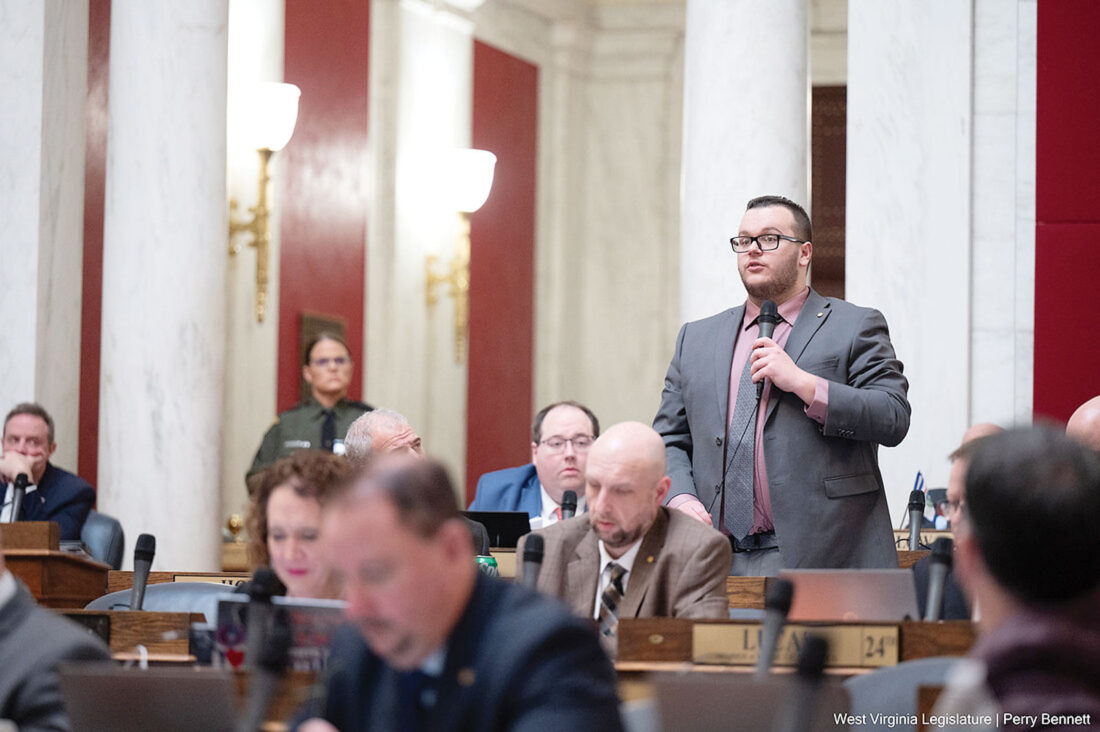
Del. Jimmy Willis is the lead sponsor of a bill that would require partisan elections in all of West Virginia’s cities and towns, and for mayors to be elected instead of appointed by city and town councils. (Photo Courtesy/WV Legislative Photography)
“When the new supermajority took over, one of the first actions they took was to bring local control back to the cities and municipalities in the state and away from Charleston, because at that time, you all believed in smaller government. Not anymore,” Fluharty said.
Several Republican members of the House Judiciary Committee asked Willis questions about his bill. Del. Andy Shamblin, R-Kanawha, quizzed Willis about what problem he was trying to address by requiring elections for mayor in towns and cities instead of allowing those councils that appoint their mayors to continue to do so.
“Is there a specific problem we’re trying to address with that,” Shamblin asked.
“Personally, I just think the people should decide who their mayor (is), not the city council,” Willis said.
Del. Evan Hansen, D-Monongalia, asked Willis about the municipalities in his House district, which includes Windsor Heights, Follansbee, Wellsburg, Bethany, Beech Bottom, West Liberty, and Clearview.
“Do you have some municipalities in your district…Are they in support of this bill,” Hansen asked.
“I have not talked to them about it,” Willis said.
Hansen raised issues with the bill, specifically when it comes to municipal charters that require a vote of the public to approve changes to certain ordinances, like those that set municipal election requirements or how mayors are selected.
“The scenario that I’m most familiar with is in the town where I’m from where the city could attempt to change a charter by ordinance, but if one voter, if one resident of the city objects to that, then they can no longer do it by ordinance and it needs to go to a vote of the people,” Hansen said. “And so not only is there a delay to get it on the ballot so that the people vote to change the charter, but there’s no guarantee that the people will actually vote to change the charter. It’s out of the hands of council then. It’s in the hands of the people.
“Why do you think it’s your business to tell a municipality outside of your district how they should elect their mayor,” Hansen asked Willis.
“I wouldn’t call it my business, but as a member of the House who can introduce legislation, it’s my right,” Willis answered.
“Why do you think it’s the Legislature’s business … Why can’t municipalities handle their own affairs,” Hansen continued.
“I don’t know what you want me to say to that,” Willis said. “They handle their affairs. They would still have elections. We’re just saying they would be partisan.”
Steven Allen Adams can be reached at sadams@newsandsentinel.com
Local News
Senate passes Trump-backed government funding deal, sending to House

Healthgrades gives WVU Medicine CCMC good marks for fourth consecutive year

Picture This: Snowblind

Vienna, Williamstown mayors react to elections legislative proposal

Parkersburg City Council members outline priorities for upcoming fiscal year