Priority Checklist: West Virginia House begins work on Jobs First agenda
Senate’s first bills focus on use of ivermectin, addiction recovery system
-
- House Finance Committee Vice Chairman Clay Riley, left, explains House Bill 4007, relating to the state industrial access road program, during a Thursday morning committee meeting. (Photo by Steven Allen Adams)
-
- State Senate Assistant Majority Leader Patricia Rucker answers questions during a Senate Health and Human Resources Committee meeting Thursday afternoon about Senate Bill 42, which would allow for over-the-counter ivermectin sales. (Photo courtesy of WV Legislative Photography)
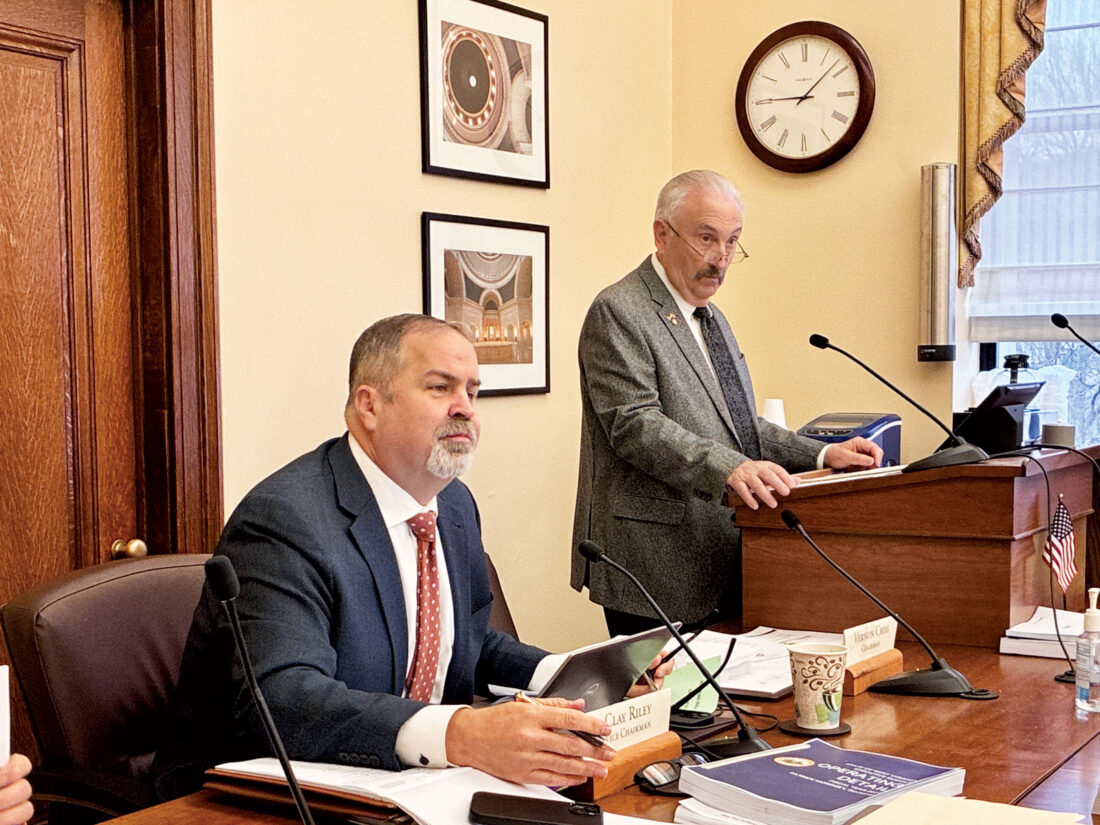
House Finance Committee Vice Chairman Clay Riley, left, explains House Bill 4007, relating to the state industrial access road program, during a Thursday morning committee meeting. (Photo by Steven Allen Adams)
CHARLESTON — Making good on a pledge last month to focus on improving economic development in West Virginia, several House of Delegates committees began taking up bills as part of the House’s “Jobs First – Opportunity Everywhere” agenda.
In December, the Republican House caucus released its “Jobs First – Opportunity Everywhere” agenda, a legislative roadmap designed to stimulate statewide growth by focusing on modernizing education to prepare a skilled workforce, fostering a competitive business climate through deregulation, and ensuring responsible, long-term infrastructure development.
The House Finance Committee held its first committee hearing on House Bill 4007, relating to the state industrial access road program. The bill, introduced by Del. David McCormick, R-Monongalia, proposes updates to the Industrial Access Road Fund to better align with modern construction costs and economic development goals.
HB 4007 would double the annual funding for the Industrial Access Road Fund from $3 million to $6 million while increasing the maximum grant for a single county project from $400,000 to $800,000. The Industrial Access Road Fund, managed by the state Department of Transportation, was first created in 1999.
The bill also incorporates the West Virginia Business Ready Sites Program into the fund’s eligibility and introduces a 90-day deadline for the Division of Highways to respond to project requests.
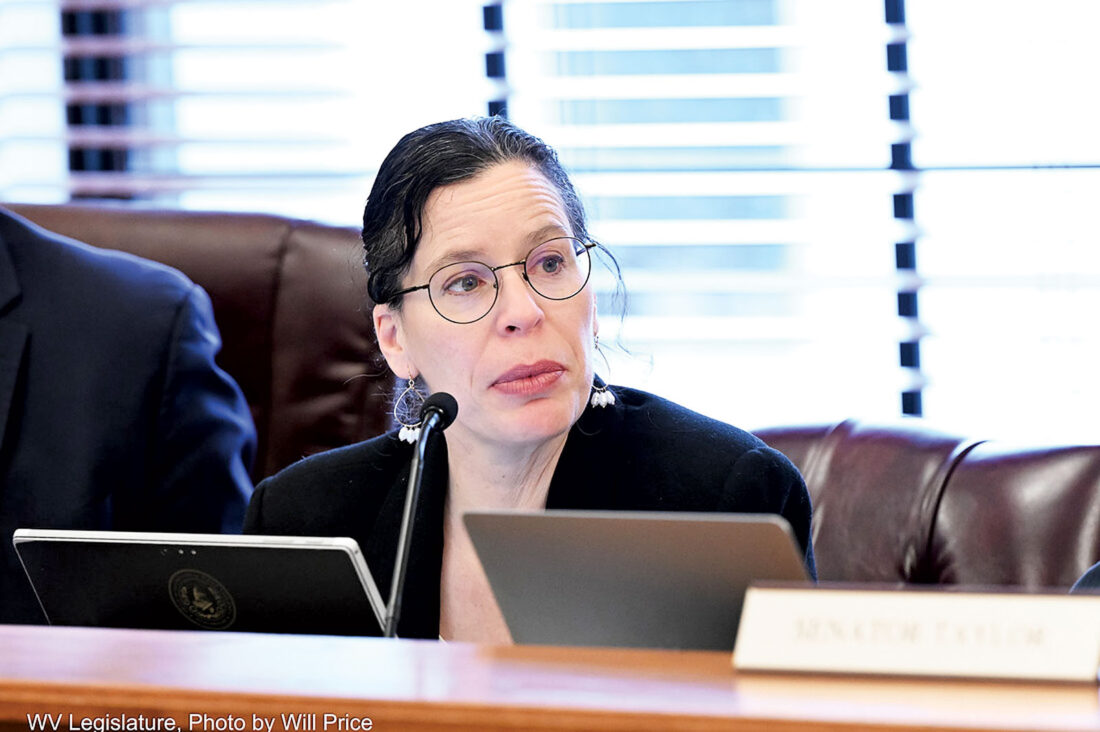
State Senate Assistant Majority Leader Patricia Rucker answers questions during a Senate Health and Human Resources Committee meeting Thursday afternoon about Senate Bill 42, which would allow for over-the-counter ivermectin sales. (Photo courtesy of WV Legislative Photography)
House Finance Committee Vice Chairman Clay Riley, R-Harrison, said that these adjustments account for 26 years of inflation and will eliminate the need for multi-year funding cycles that previously delayed construction.
“This fits into our Jobs First – Opportunity Everywhere agenda,” said Riley, a co-sponsor of HB 4007. “Over the past five years, they have expended on an average of about $4 million per year … Because of the limits that were in the previous code, they’ve had to allocate multiple years of commitment to projects in order to build them.
“We looked at the construction inflation cost between 1999 and 2025 and essentially equated the increase from $400,000 to $800,000, which is in direct correlation to the construction increase over the past 26 years,” Riley continued. “And we took the $3 million total to $6 million, which is a direct correlation. And because there was an additional program that has come into play years ago with the certified sites, we added that as also a component.”
The Industrial Access Road Fund receives three-fourths of 1% of state tax collections that are otherwise dedicated to the State Road Fund, up to its statutory cap. HB 4007 doubles the fund’s cap, which would result in an additional $3 million being shifted annually from the State Road Fund to the Industrial Access Road Fund.
HB 4007 was one of several bills on committee agendas in the House on Thursday. Others include House Bill 4005, clarifying the categories of employment which are prohibited or authorized for persons in West Virginia who are under the age of 18 and to clarify youth apprenticeships prohibited or authorized in such categories of employment; House Bill 4006, aimed at fostering the growth of the state’s aerospace industry in West Virginia; and House Bill 4008, aimed at expanding the state’s inventory of industrial sites.
Under the House’s committee process put into place last year, bills are explained in a committee hearing on day one. On a separate day, the bill goes through markup, discussion, and vote.
On the other side of the State Capitol Building, a Senate committee moved its first bills. The Senate Health and Human Resources recommended Senate Bill 42, authorizing the over-the-counter sale of ivermectin, a prescription drug used to treat people for parasites, lice, and certain skin conditions. The bill now heads to the Senate Judiciary Committee.
Prescribed for both humans and animals, the drug became popular during the COVID-19 pandemic, though the U.S. Food and Drug Administration has not approved ivermectin for COVID treatments. Claims that the drug can also treat certain kinds of cancer are also unfounded.
SB 42 would permit pharmacists in West Virginia to sell ivermectin for human consumption without a prescription. Pharmacists would be required to give customers FDA-approved information sheets, though no professional medical consultation would be mandatory.
The bill would provide legal protections to pharmacists and medical providers to shield them from civil liability or professional disciplinary actions when acting in good faith. The West Virginia Board of Pharmacy would be required to draft specific rules to oversee the implementation of these new protocols.
State Senate Assistant Majority Leader Patricia Rucker, R-Jefferson, is the lead sponsor of SB 42. She said five states have also passed bills allowing for over-the-counter ivermectin sales.
“Just like many other drugs are made over the counter when they have very few side effects and are generally safe, ivermectin is one of those drugs,” Rucker said. “The risk of side effects and abuse is small and minor, but it’s possible with every drug. You can abuse Tylenol. You can overtake Tylenol. There are people who have destroyed their stomach by taking too many over-the-counter medications.
“It is absolutely the responsibility of the individuals and the pharmacists, and I do believe that pharmacists have a very good knowledge of what it is that they are not only dispensing,” Rucker continued. “They’re there to educate the consumer when the consumer requests any drugs, whether it is with a prescription or without a prescription.”
While the bill was recommended on voice vote, there was some questioning of the need for the bill and concerns raised.
“If someone doesn’t know what dose of ivermectin or how much to take, yes, there is … significant toxicities,” said state Sen. Tom Takubo, R-Kanawha, a doctor in Charleston. “It would be nice if there would be some safeguard or some limit that we’re going to say at least, hey, you can’t take more than the max dose for some other illness or something, just so that somebody that thinks they’re treating something doesn’t hurt themselves.”
“I do think there are some risks to a bill like this,” said Senate Assistant Minority Leader Joey Garcia, D-Marion. “I’d hate to see somebody hurt when, if they did want to take a drug like this, all they would have to do is take another step and consult with a doctor about it. The fact that five or six other states have done this … doesn’t mean it’s the right thing to do.”
State Sen. T. Kevan Bartlett, R-Kanawha, was in the hospital with COVID-19 during the early days of the pandemic before the vaccines were available, including spending five weeks on life support. He said he never felt comfortable taking the first COVID vaccines at the end of 2020, but he did take ivermectin.
“My wife and I both have had COVID since our initial experience there in the fall of 2020. And both times I took ivermectin in the early days of my diagnosis,” Bartlett said. “Now, I acknowledge it may have been the equivalent of turning my hat left, but I know that my symptoms and my wife’s symptoms diminished significantly within 24 to 48 hours of taking it.”
The Senate Health Committee also recommended to the full Senate a committee substitute for Senate Bill 231, relating to value-based payment requirements, for passage. SB 231 would transition the state’s addiction recovery system from traditional fee-for-service model to a value-based payment structure, rewarding healthcare providers who achieve specific, measurable patient outcomes rather than those who provide a high volume of services.
Steven Allen Adams can be reached at sadams@newsandsentinel.com
Local News

Movie Review: In ‘The Rip,’ cops both good and dirty find millions in cash

Movie Review: ’28 Years Later: The Bone Temple’ is a bonkers and triumphant zombie movie

Trump threatens to use the Insurrection Act to end protests in Minneapolis

Morrisey provides more context on State of the State agenda
Parkersburg City Council to have recycling meeting Tuesday