Balancing Act: Morrisey, Revenue officials say budget able to handle more tax cuts
Lawmakers question governor’s budget assumptions
-
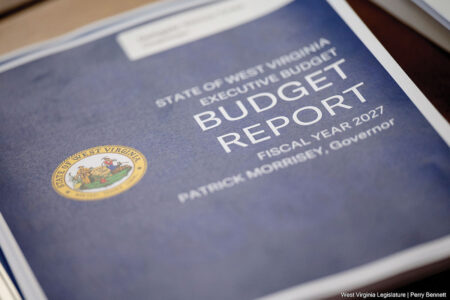
- Gov. Patrick Morrisey hands his fiscal year 2027 general revenue budget bill to House Speaker Roger Hanshaw and state Senate President Randy Smith during his State of the State address Wednesday evening. (Photo Courtesy/WV Legislative Photography)
-
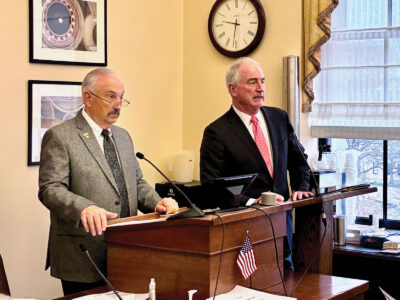
- Department of Revenue Secretary Eric Nelson, right, provides an introduction of the department’s budget and revenue reports Thursday before the House Finance Committee Meeting as Chairman Vernon Criss, R-Wood, chairs the meeting. (Photo by Steven Allen Adams)
-

- Graphic Courtesy/CHATGPT
-
- State Budget Office Director Mike McKown tells members of the state Senate Finance Committee Thursday that replacing lost federal dollars due to changes from the One Big Beautiful Bill Act will be a near impossible task. (Photo Courtesy/WV Legislative Photography)
-
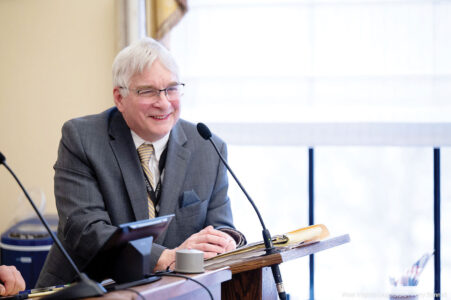
- Deputy Revenue Secretary Mark Muchow told House Finance Committee members Friday that the state is not likely to hit future personal income tax cut triggers. (Photo Courtesy/WV Legislative Photography)
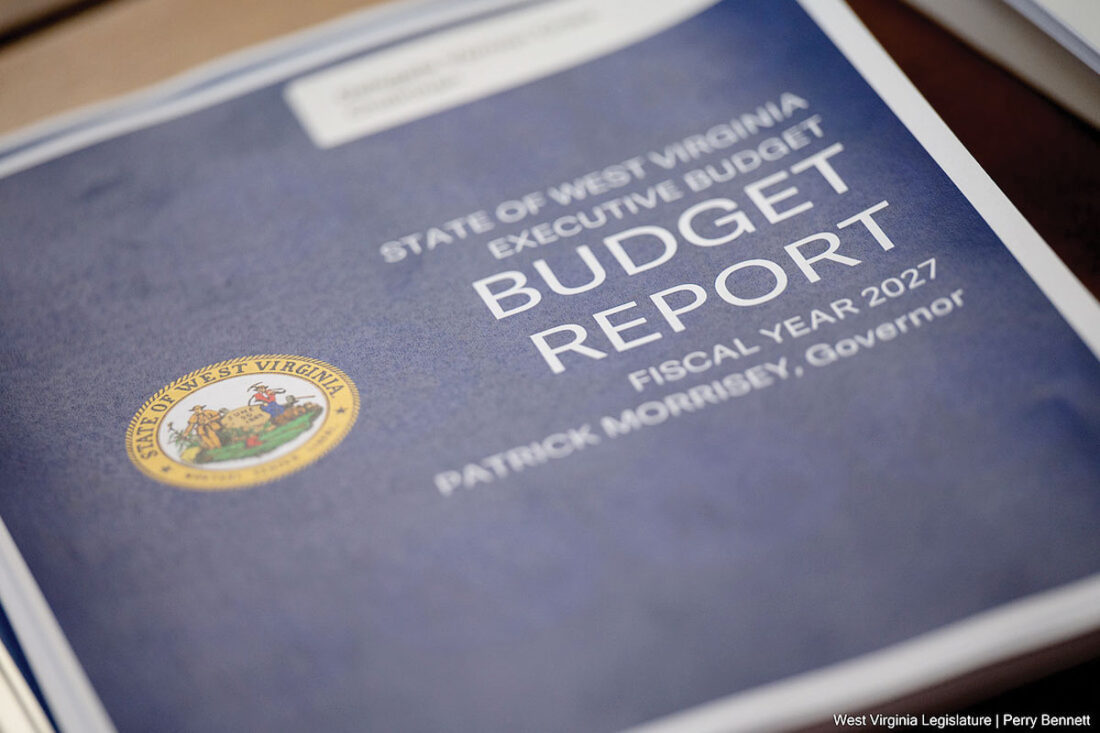
Gov. Patrick Morrisey hands his fiscal year 2027 general revenue budget bill to House Speaker Roger Hanshaw and state Senate President Randy Smith during his State of the State address Wednesday evening. (Photo Courtesy/WV Legislative Photography)
CHARLESTON — More than a year ago, Gov. Patrick Morrisey said the state was heading for a structural deficit, but he presented lawmakers a balanced general revenue budget.
He is now presenting a balanced budget for the next fiscal year with a new tax cut, but lawmakers are asking what changed since last year.
During his annual State of the State address Wednesday night, Morrisey presented House Speaker Roger Hanshaw, R-Clay, and state Senate President Randy Smith, R-Preston, his general revenue budget bill for fiscal year 2027 beginning in July.
Morrisey’s general revenue budget proposal is $5.493 billion, which is roughly 3.2% more than the budget Morrisey proposed last year which the Legislature passed for the current fiscal year. State officials explained the governor’s budget to members of the House and Senate Finance committees Thursday and Friday.
Driving that 3.2% increase in spending includes the Hope Scholarship educational voucher program. The Hope Scholarship provides eligible children with the equivalent of their per-pupil expenditure in the state school aid formula (up to $5,267 per student for the most recent school year).
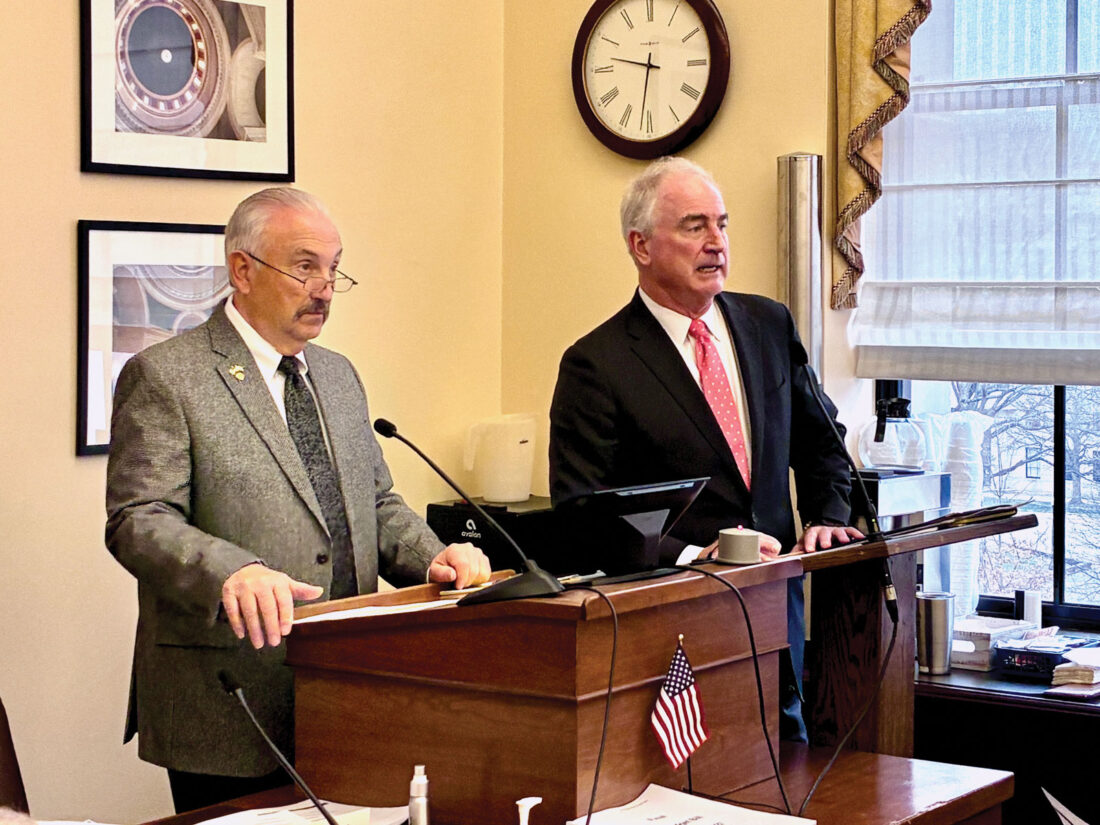
Department of Revenue Secretary Eric Nelson, right, provides an introduction of the department’s budget and revenue reports Thursday before the House Finance Committee Meeting as Chairman Vernon Criss, R-Wood, chairs the meeting. (Photo by Steven Allen Adams)
Right now, only certain public school students wanting to move to private or home school are eligible for the Hope Scholarship. But beginning in fiscal year 2027 for the next school year, all children in the state will be eligible.
The budget proposal fully funds the Hope Scholarship at the $230.1 million estimate set by the State Treasurer’s Office, which is up from $110 million from the current fiscal year but down from previous estimates of $300 million. That includes $124.3 million for the next fiscal year, while the remainder of funds ($108 million) will be available through a supplemental appropriation to fund Hope through the last half of the current fiscal year.
The State Treasurer’s Office estimates there could be as many as 40,223 students participating in the Hope Scholarship program for the 2027-28 school year, with an estimated 27,239 home school participants and 12,980 private school participants.
Morrisey’s budget includes an average 3% pay raise for teachers, school service personnel, West Virginia State Police employees, and executive branch employees paid through the general revenue fund – a $78.4 million expense. The state’s share of the expenses for health benefits through the Public Employees Insurance Agency is another $35.1 million expense above the current fiscal year.
State Budget Director Mike McKown said the Hope Scholarship, state employee pay raises, and PEIA premiums make up more than 94% of total base increases for the governor’s fiscal year 2027 general revenue budget proposal.

Graphic Courtesy/CHATGPT
“The base budget, you’ll see, has grown $253 million,” McKown said. “But 94% of all growth in the FY27 budget comes from those three areas.”
Other expenses include $9 million in increased base funding for the Intellectual and Developmental Disability (IDD) waiver program, which McKown said would help cut the wait list nearly in half. There are approximately 1,100 people on the IDD waiver waitlist currently.
Another $21.9 million is set aside to fully fund additional needs for contracts and diversions within the remaining three state-owned health care facilities at William R. Sharpe Jr. Hospital in Weston, Welch Community Hospital, and Mildred Mitchell-Bateman Hospital in Huntington.
Morrisey included an additional $11 million for foster care, $13.5 million for administrative costs for the state’s Supplemental Nutrition Assistance Program, $10 million for the higher education funding formula, and $100 million for road and bridge maintenance. Like last year, that $100 million will be placed in the back of the budget and paid from available surplus tax dollars at the end of the current fiscal year after June.
Despite these expenses, the general revenue budget for next fiscal year includes no use of the $1.4 billion state Rainy Day Fund, also called the revenue shortfall fund. The state also has $500 million in a personal income tax reserve fund. Another $237 million is available in unappropriated general fund monies. The current fiscal year, now halfway over, has approximately $128 million in surplus over and above revenue estimates.
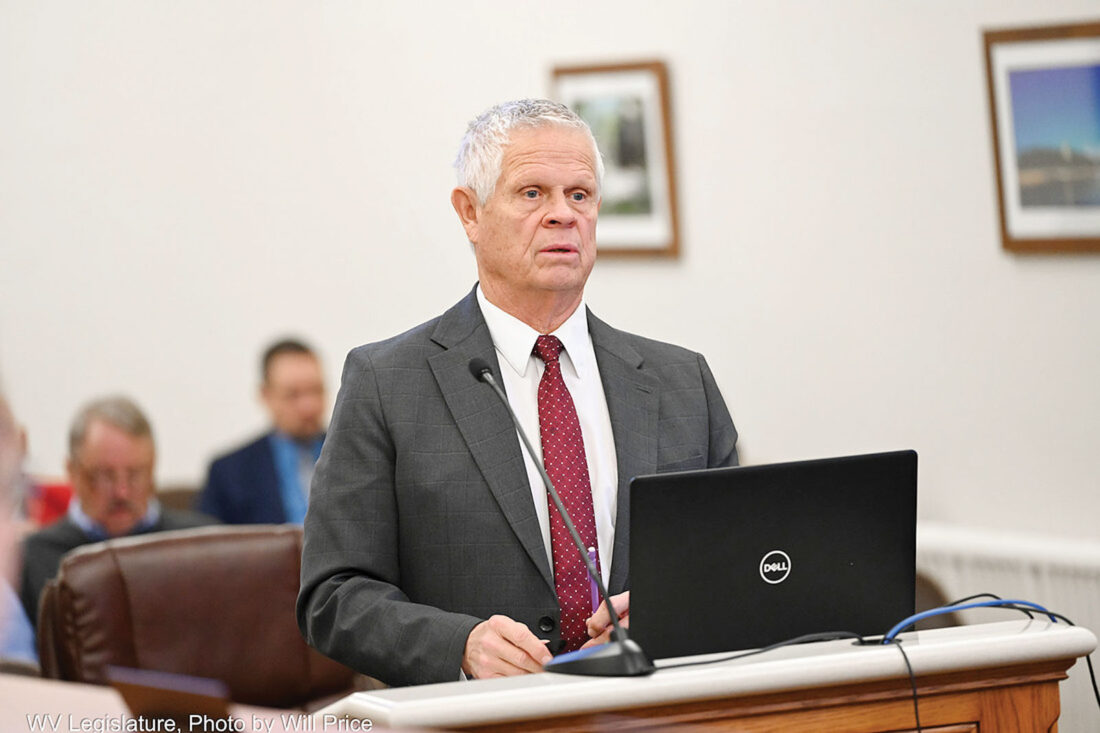
State Budget Office Director Mike McKown tells members of the state Senate Finance Committee Thursday that replacing lost federal dollars due to changes from the One Big Beautiful Bill Act will be a near impossible task. (Photo Courtesy/WV Legislative Photography)
Morrisey’s FY27 budget proposal fully funds the state school aid formula, Medicaid ($706 million between the general revenue fund and lottery funds), social services, and correctional programs, as well as fully funding required retirement contributions. But the budget is also balanced due to state departments and agencies finding efficiencies.
In August, the Department of Revenue asked departments to cut their budget requests for FY27 by 2%. Nelson told lawmakers Friday that the 2% department budget cut is roughly around $120 million.
“They were asked to look across their whole spectrum. This was not a request of looking at an across the board cut, and so strategically, they looked at various areas and cuts were obtained,” Nelson said.
The state is preparing for significant changes stemming from the One Big Beautiful Bill Act passed last summer and signed by President Donald Trump. Most changes are not expected to take effect until October 2027 or January 2027 for certain Medicaid provisions.
Some of those changes caused by the One Big Beautiful Bill Act include the state paying for a larger share of SNAP administrative costs. West Virginia’s SNAP program could face a potential loss of tens of millions of dollars, depending on the state’s error rate according to revenue officials, who said the full impact is unknown, particularly concerning new work requirements.
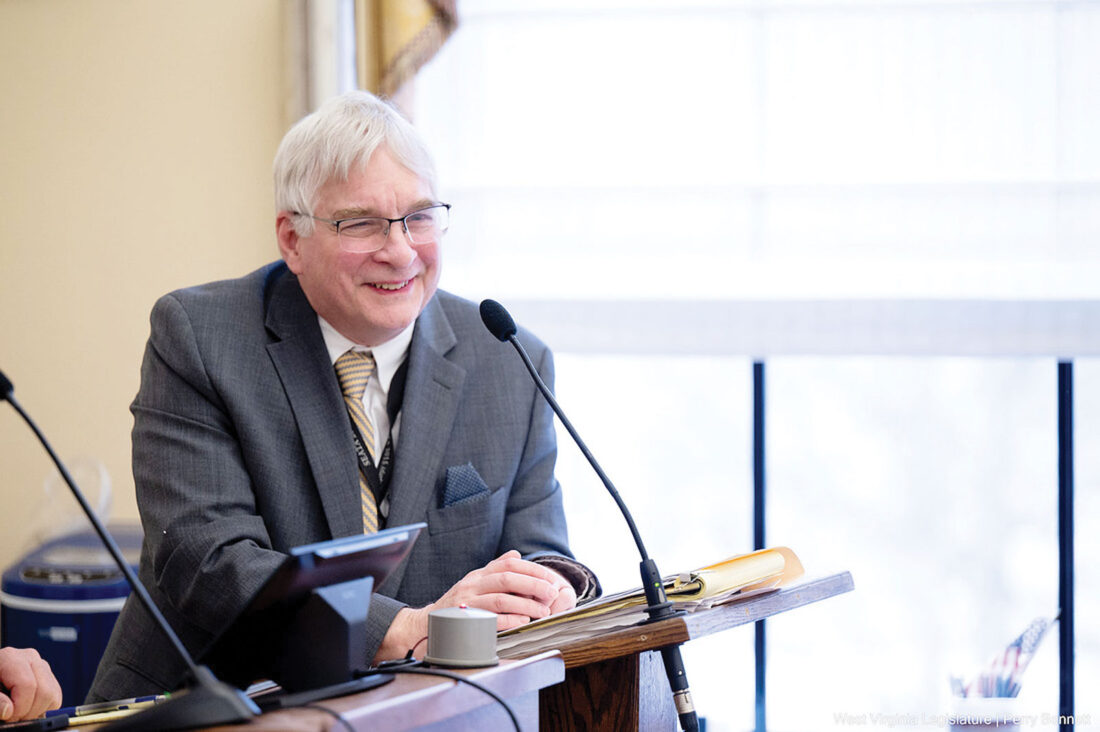
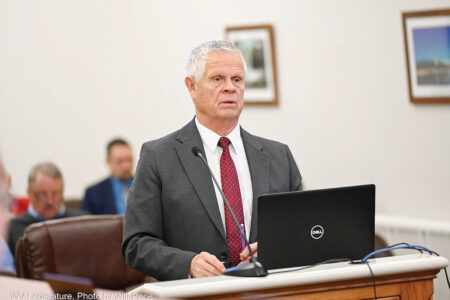
Deputy Revenue Secretary Mark Muchow told House Finance Committee members Friday that the state is not likely to hit future personal income tax cut triggers. (Photo Courtesy/WV Legislative Photography)
“Most of those things don’t go into effect until, I think, January of 2027, the work requirements and things like that,” McKown said when asked by state Sen. Bill Hamilton, R-Upshur. “So, we’re a good year away from even figuring out how much dropped.”
The state general revenue budget already incorporates an approximate $100 million impact from conforming to federal tax laws, primarily related to corporate depreciation rules included in the One Big Beautiful Bill Act. State departments and agencies were also asked in August not to seek additional state funding to backstop losses in federal funding.
“We’re kidding ourselves if you think we can make up federal losses, if there are federal losses, that it dwarfs the federal funds that West Virginia receives, dwarfs the general revenue funds. So those are big numbers,” he said.
The FY27 general revenue budget proposal also contemplates a 5% cut in personal income tax rates retroactive to Jan. 1 if the Legislature approves, which could return approximately $125 million to taxpayers when fully implemented.
Last week, Morrisey unveiled a proposal to work with the Legislature towards a personal income tax cut of between 5% and 10%. During his State of the State address Wednesday night, Morrisey said he wanted a 10% personal income tax cut. Speaking before the House Finance Committee Thursday, Nelson said the additional 5% was “aspirational.”
“The Governor spoke about 10%. The extra 5% the Governor is committed to work with you all to look for offsets and, in essence, pay-fors to get and reach that 5% or more,” Nelson said. “But in our budget that’s being presented, it shows the top line revenue, at least the personal income tax, being reduced by 5%.”
Speaking by phone Thursday, Morrisey said he believes that between the expected surplus at the end of this fiscal year, the available unappropriated monies currently in the general revenue budget, and the 2% department and agency budget cuts, that the state can afford up to a 10% personal income tax cut.
“I’m starting the process of engaging with legislators and legislative leadership to make this occur,” Morrisey said. “We’re getting a lot of positive feedback and once we can sit down and defend our budget, I think people know that we can certainly afford it. I know that we can. I’ve sat down and made the tough decisions related to the budget over the last few months. So, I am absolutely convinced West Virginia can afford it, and that we need to do it to remain competitive.”
However, some lawmakers are questioning Morrisey’s assumptions behind his call for a 10% tax cut this year given that last year, he accused the previous administration and Legislature of not paying for the 2% and 4% personal income tax cuts that went into effect at the beginning of 2025.
Shortly after taking office in January 2025, Morrisey’s revenue team projected the state would face a $397 million structural hole in the current fiscal year 2026 budget caused in part by the two personal income tax cuts not being paid for, the ending of COVID-19 federal dollars, and overreliance on one-time monies.
“So last year about this time, we were hearing of a $400 million structural deficit. And now in fiscal year 27, we’re growing by approximately $170 million,” said Del. Michael Hite, R-Berkeley. “And we’re proposing cuts to (the personal income tax) at 10%. The math doesn’t make sense. What happened between last year and this year that we have overcome a $400 million structural deficit in the out-years and we can afford a 10% personal income tax?”
“Policy changes basically have been put in place. Certain things that sometimes the legislature would fund on an annual basis were not funded, that type of thing,’ said Deputy Revenue Secretary Mark Muchow. “That brings the numbers down in the planning process going forward. And the Governor strongly believes that further progress in terms of finding efficiencies will get us to the goal that we want to have.”
“What was the thought process in going with 10% on Wednesday night and then coming back here 12 hours later and saying 5%,” asked House Finance Committee Minority Chair John Williams, D-Monongalia. “Why not just… say 5% on Wednesday night?”
“He wants at least 5% and would like to get to 10%, but he wants to involve the Legislature to make sure that everyone is comfortable with the way to get to 10%,” Muchow said.
During Thursday’s Senate Finance Committee meeting, Senate Majority Whip Ben Queen, R-Harrison, asked about the effects of personal income tax on the six-year budget forecast, which projects the deficit for fiscal year 2028 growing by an estimate of $204 million and increasing by an average of more than $100 million per year after that.
“What happens if we don’t cut that at all,” Queen asked.
“Those gaps get better,” McKown said.
Del. Bob Fehrenbacher, R-Wood, asked Muchow about the need to cut personal income taxes now when the state did not trigger a personal income tax cut for next year. A tax reform package, passed in 2023 and amended in 2024, included a trigger mechanism for future personal income tax cuts.
To determine whether there will be a trigger for additional personal income tax rate cuts, the Department of Revenue compares general revenue collections in a previous fiscal year minus severance tax collections compared to the base year of fiscal year 2019 and tied to the non-seasonally adjusted consumer price index.
If the department determines that the trigger is met, a personal income tax cut goes into effect one year after the next calendar year, limited to up to a 10% personal income tax cut, though originally the tax cut would go into effect the very next calendar year. The state met the trigger in 2024 with a 4% personal income tax cut going into effect in 2025. But the state did not meet the trigger in August that would have put an income tax cut into effect in calendar year 2027.
Muchow told Fehrenbacher that it was unlikely, based on current economic factors and inflation, that the trigger provisions would trigger a new personal income tax cut in the near future.
“If you want to depend upon the trigger solely – and typically legislators like to take credit for tax cuts as opposed to administrators – if we rely solely on the trigger thing, that will not kick in in the immediate future as is,” Muchow said.
“But if that 5% tax reduction was not implemented today by further action, wouldn’t the year-over-year numbers in fiscal year 27 be higher than are reflected in the projections,” Fehrenbacher asked.
“It would be higher, but probably not enough for a trigger,” Muchow said.
Steven Allen Adams can be reached at sadams@newsandsentinel.com
Local News

Rolling Paperwork: Ohio AG rejects summary language for marijuana law repeal petition

Public meeting to focus on recycling in Wood County
A holiday note to News and Sentinel readers…

Teen of the Week: Parkersburg Catholic’s Sophie Lott embraces teamwork on and off the court

Jackson County educator loses job following arrest