Peak Demand: A look back at top West Virginia state government stories of 2025
-
- Graphic Courtesy of ChatGPT
-
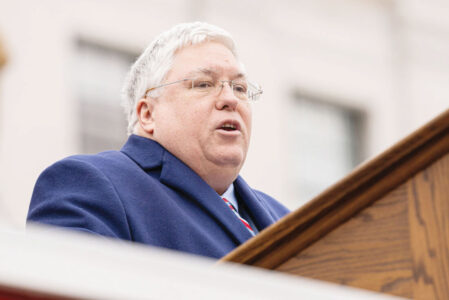
- Gov. Patrick Morrisey gives his first speech as West Virginia’s chief executive during inauguration ceremonies at the State Capitol Building on Jan. 13. (File Photo)
-
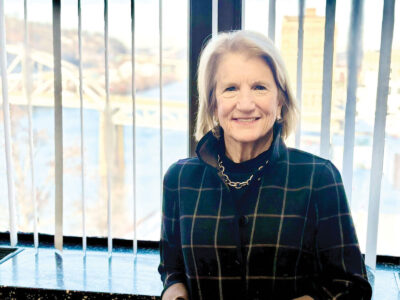
- U.S. Sen. Shelley Moore Capito stands in her 2026 re-election offices overlooking the Kanawha River in downtown Charleston earlier this month. (File Photo)
-
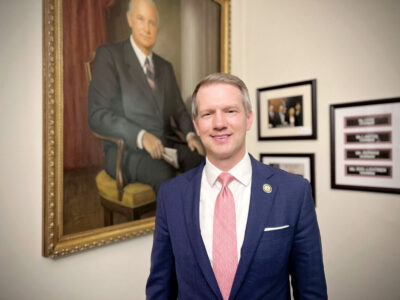
- U.S. Rep. Riley Moore in his offices at the U.S. Capitol Building in Washington, D.C. (File Photo)
-
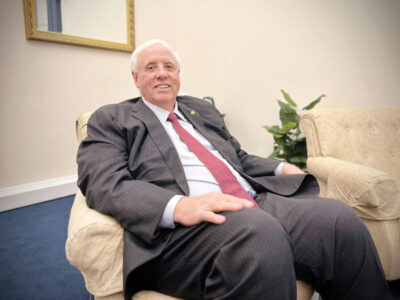
- U.S. Sen. Jim Justice in his hideaway office inside the U.S. Capitol Building in Washington, D.C. (File Photo)
-
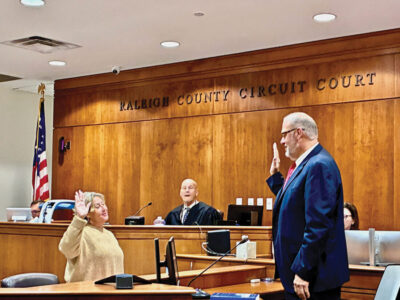
- West Virginia Board of Education President Paul Hardesty, right, is sworn in prior to giving testimony in October in a religious vaccine exemption lawsuit before Judge Michael Froble in Beckley. (File Photo)
Graphic Courtesy of ChatGPT
CHARLESTON — As West Virginia wraps up the first quarter of the 21st century, state government and its congressional delegation saw some changes while several issues dominated the headlines in 2025
New boss/old boss
The year began with a new senior senator, a new junior senator, a new member of the House of Representatives and a new governor. But none were new to government service.
U.S. Sen. Shelley Moore Capito, R-W.Va., rose to the position of senior senator for West Virginia following the retirement of Sen. Joe Manchin, the former Democratic lawmaker and governor who switched to independent in 2024.
Capito began the year as the 18th chairperson of the Republican Policy Committee and fourth ranking member in the Senate Republican majority. She also chairs the Senate Environment and Public Works Committee and the Senate’s Labor, Health and Human Services, Education and Related Agencies Appropriations Subcommittee.
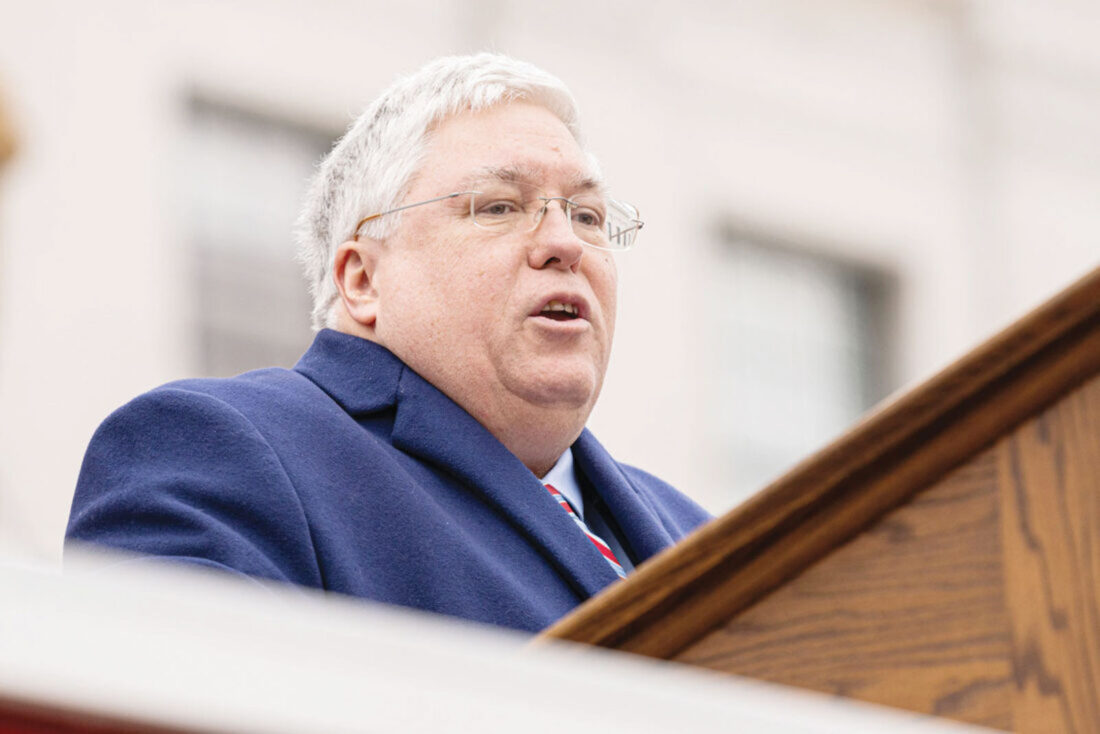
Gov. Patrick Morrisey gives his first speech as West Virginia’s chief executive during inauguration ceremonies at the State Capitol Building on Jan. 13. (File Photo)
Wrapping up her second six-year term since taking office in 2014, Capito, 72, announced her campaign for reelection in December.
“I feel like I’ve not only hit my stride, but really exceeded my ability to really be influential for West Virginia,” Capito said. “I’m in positions of leadership. I’m committee chair and other things, but I also have the relationships now, I think, between Washington and West Virginia, where I could really max out my ability to help people. And that’s really why I’m here. I want to continue that.”
Capito was joined this year in the Senate by former Gov. Jim Justice after he finished his second and final four-year term as West Virginia’s chief executive. Justice – elected as governor in 2016 as a Democrat before switching to Republican one year later – was the first governor to complete a full two terms since Democrat Gaston Caperton. Justice was elected to the U.S. Senate in 2024 to succeed Manchin.
“You know I love West Virginia beyond good sense. I’ll never change that,” Justice said in a May interview. “But at the same time, in this role you’re really doing stuff that impacts the whole world. … With that, it’s humbling.”
Former state treasurer and House of Delegates member Riley Moore was the newest addition to the U.S. House of Representatives, succeeding Alex Mooney who lost to Justice in the 2024 GOP Senate primary.
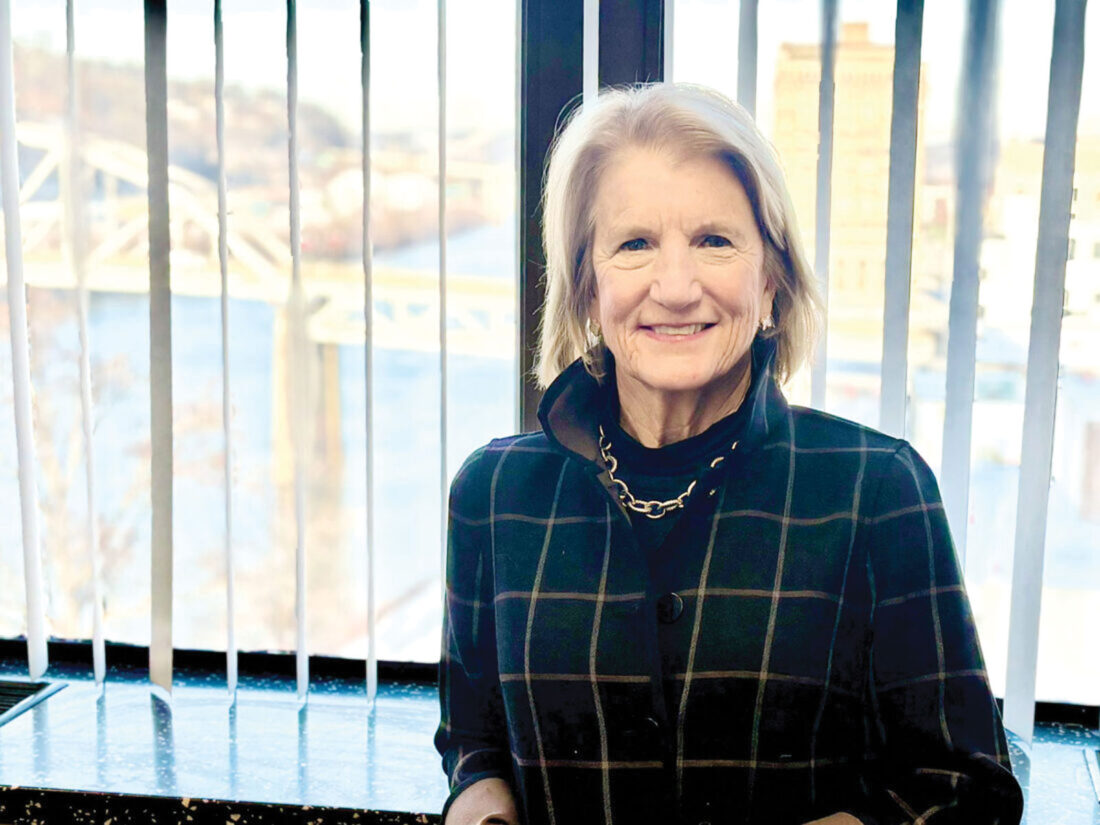
U.S. Sen. Shelley Moore Capito stands in her 2026 re-election offices overlooking the Kanawha River in downtown Charleston earlier this month. (File Photo)
Moore, R-W.Va., has risen in the ranks, being chosen as a freshman representative to the House’s Elected Leadership Committee and serving as the only freshman member of the House Appropriations Committee.
“I’m blessed to be in the position that I am to be able to advocate for the constituents or the 2nd Congressional District,” Moore said.
Justice was succeeded by former three-term Republican Attorney General Patrick Morrisey, who took office in January as West Virginia’s 37th governor and the first first-term elected Republican since the late Cecil Underwood in 1997.
In a press conference Monday, Morrisey looked back on his first year in office, which included several economic development projects and legislation to help cut red tape for businesses and spur future economic growth and improve water and broadband infrastructure. Morrisey also made good on promises to dismantle diversity, equity and inclusion programs, as well as get legislation passed defining the terms “sex,” “male” and “female” in state code, limiting spaces to biological males and females and prohibiting transgender individuals from using facilities based on the gender they identify as.
“I think that we’ve been fortunate. We have been able to accomplish a lot,” Morrisey said. “Now, are we making progress? Yes, but we need to make more progress. … Until we start rising up in the economic rankings, we should not do a victory dance.”
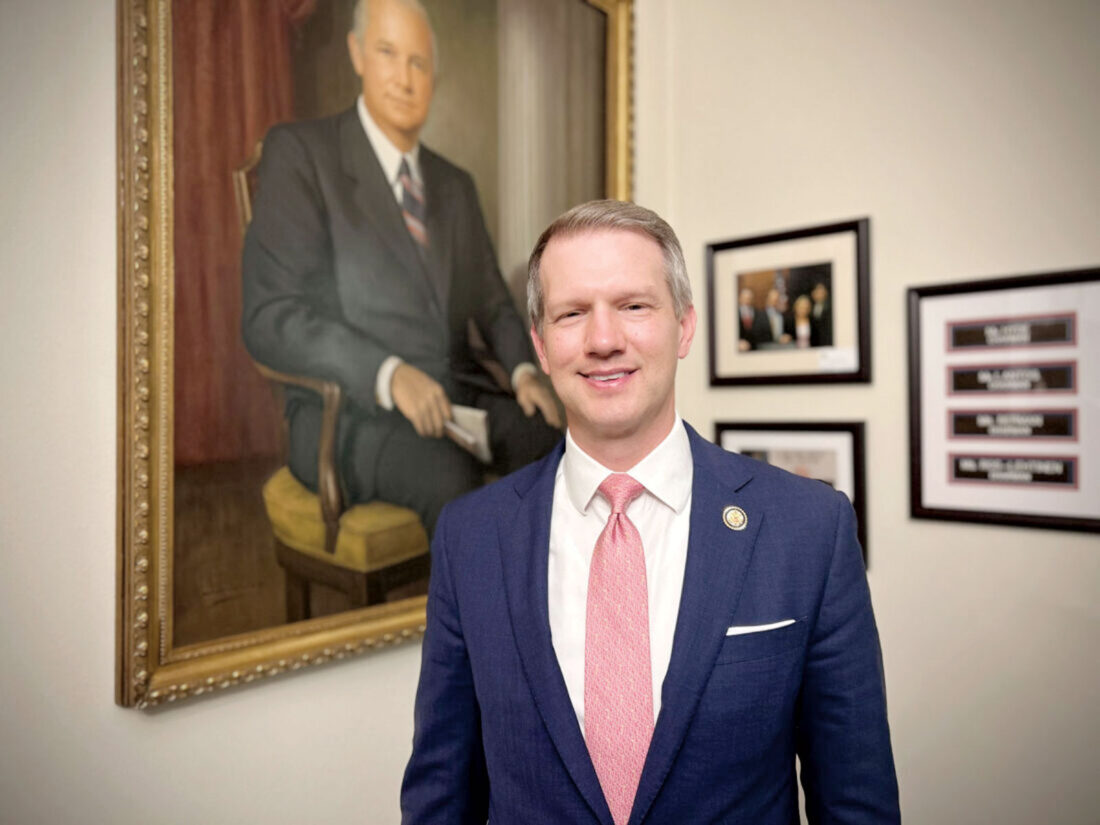
U.S. Rep. Riley Moore in his offices at the U.S. Capitol Building in Washington, D.C. (File Photo)
A shot in the arm
One of Morrisey’s first executive orders allowing for religious exemptions to the state’s compulsory vaccine law led to drama in the Legislature, competing directives and a lawsuit that is now before the West Virginia Supreme Court of Appeals.
Morrisey signed Executive Order 7-25 on Jan. 14, citing the 2023 Equal Protection for Religion Act to allow for religious and conscientious objections to the state’s school vaccination mandates. The executive order required the commissioner for the Bureau of Public Health/state health officer to establish a process for parents and guardians to seek religious or philosophical exemptions to school-age vaccines, only requiring a request in writing.
State Code requires children attending school to show proof of immunization for diphtheria, pertussis, tetanus, polio, measles, mumps, rubella, varicella and hepatitis B unless proof of a medical exemption can be shown.
A bill introduced on behalf of Morrisey to place a religious exemption in state code passed the Senate, but a heavily amended version ultimately died on the House floor.
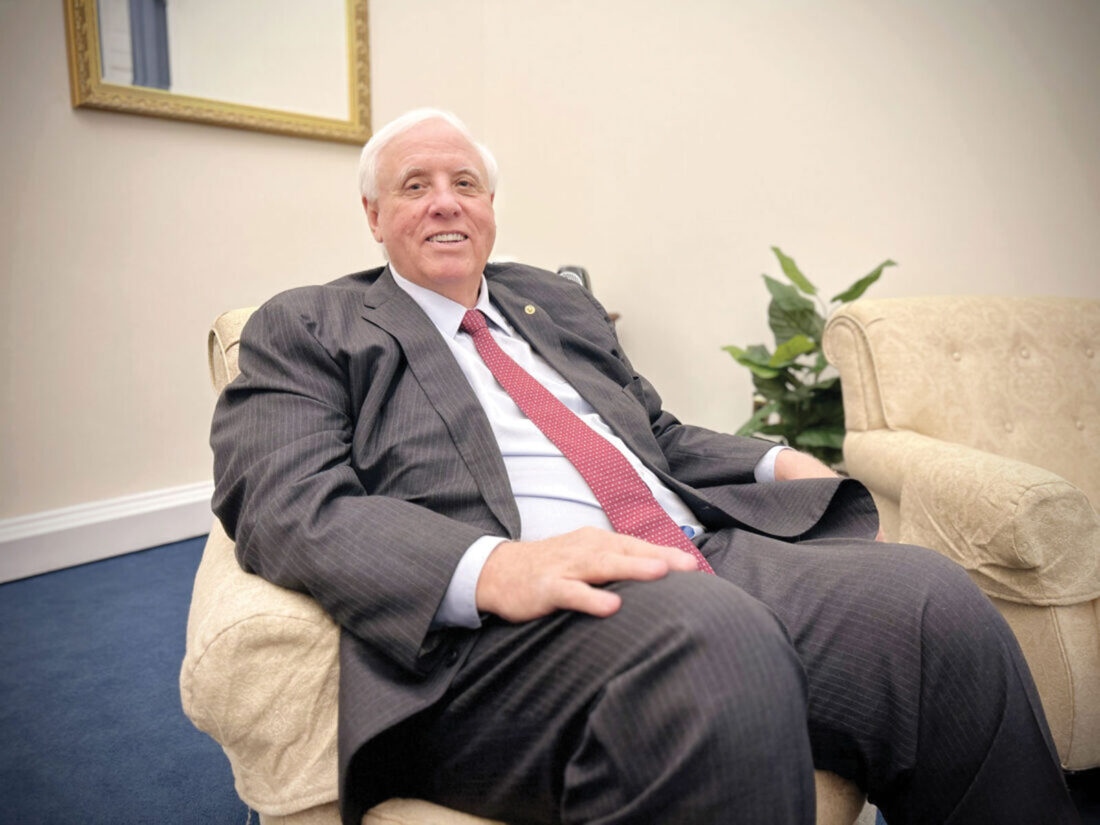
U.S. Sen. Jim Justice in his hideaway office inside the U.S. Capitol Building in Washington, D.C. (File Photo)
Morrisey issued additional guidance to the Department of Health and county school systems later in the spring for parents seeking religious exemptions. But the state Board of Education instructed county school systems to follow existing code in a unanimous June vote.
Raleigh County parent Miranda Guzman then filed a lawsuit along with other parents against state and local education officials seeking to force her county school system to accept a state-granted religious vaccine exemption for her children. Morrisey attended a press conference with Guzman and her attorneys in support of her lawsuit.
“You have an unaccountable set of bureaucrats in the school board that’s trying to take matters into their own hands. That’s unacceptable to me,” Morrisey said. “I fully support Miranda’s ability to seek a religious exemption, and I support her lawsuit against school board bureaucrats. Remember, this is the politically unaccountable board who are trampling on her religious freedoms.”
Fourteenth Judicial Circuit Judge Michael Froble granted a preliminary injunction last summer blocking local and state education officials from rejecting religious vaccine exemptions. A permanent injunction was granted in November, as well as class action status for the more than 570 religious exemptions granted by the state.
In a December order, the state Supreme Court issued a stay of Froble’s permanent injunction, with a full appeal of his decisions likely to be heard by justices some time in 2026.
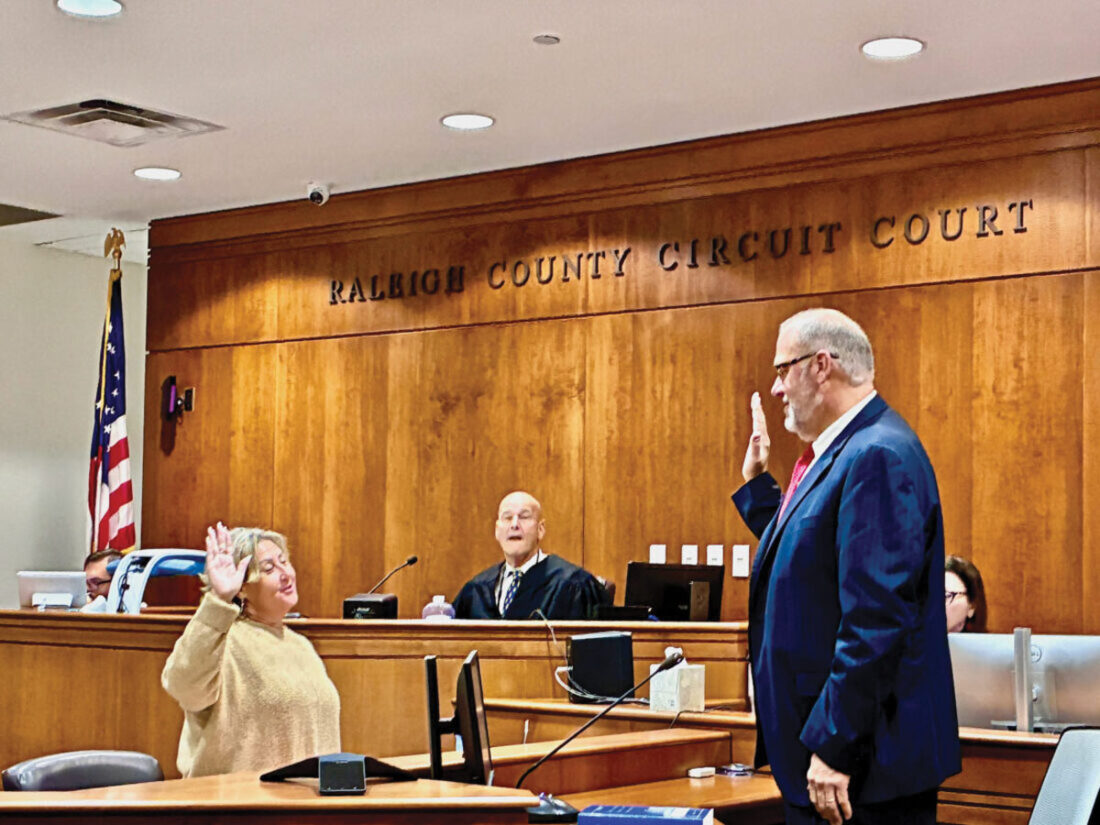
West Virginia Board of Education President Paul Hardesty, right, is sworn in prior to giving testimony in October in a religious vaccine exemption lawsuit before Judge Michael Froble in Beckley. (File Photo)
It’s elementary
West Virginia’s public education system saw some improvement in math and reading scores, but continued declining enrollment led to more school closures and consolidations. And another state Supreme Court case could determine whether the Legislature gets final approval of policies developed by the Department of Education.
The Balanced Scorecard for the 2024-25 school year, released by the Department of Education in September, showed that 57.3% of West Virginia students partially met standards for English Language Arts, up from 56.1% during the 2023-24 school year; 55% in 2022-23; and 51.6% during 2021-22 year after the COVID-19 school shutdowns during the 2020-21 school year. It was also higher than the 2018-19 pre-COVID number of 56.9%.
Math performance during the 2024-25 school year was 52.9% and given a yellow classification for partially meeting standards, up from 50.9% in 2023-24 and 50.6% in 2022-23. Math performance in 2021-22 post-COVID was 44%, while pre-COVID performance in the 2018-19 school year was 53.5%.
But the annual West Virginia Education Snapshot released by the department in November showed that total fall enrollment in public schools – used to determine how much in state school aid formula funding West Virginia’s 55 county school systems receive in the next fiscal year – was down 2.52% compared to the previous school year, from 241,024 students to 234,957 as of October.
Earlier this month, the state Board of Education voted to approve plans by six counties to close 15 public elementary, middle and high schools, consolidating them with existing schools in the counties. The number of public schools in the state dropped from 637 last year to 618 as of October for a 2.98% decrease. The closure of the 15 schools approved by the state board this month represents a 2.4% decrease.
While enrollment in West Virginia’s public schools has been a longstanding issue, new programs – such as the public charter school system and the Hope Scholarship educational voucher – have created additional incentives for parents to pull their children from public schools, adding to the financial uncertainty for county school system budgets.
In a speech in October, state Board of Education President Paul Hardesty called on the Legislature to reform the school aid formula and help cut the red tape that is preventing county school systems from competing with other educational options, such as private and home schooling.
“We have the best option. Ours is free,” Hardesty said. “We try every day to make it more competitive. But you’ve got to level the playing field. This assault on public education has got to stop.”
The state board is challenging a law passed by the Legislature earlier in 2025 – House Bill 2755 – to require all rules and policies developed by state education officials to be approved by lawmakers. The case is likely to be heard by the state Supreme Court next year.
The bill, which went into effect in July, requires that all legislative rules enacted by the state board must first be authorized by the Legislative Oversight Commission on Education Accountability. The proposed rules would then be submitted to the full Legislature for review, which could result in approval, amendment or rejection.
In a 1988 decision over a similar law, justices determined that legislative approval of state board rules was unconstitutional. In both 1989 and 2022, the Legislature adopted joint resolutions to place on general election ballots constitutional amendments to give education rulemaking approval to the Legislature, but voters rejected both. The 2022 proposed constitutional amendment failed in a 58% to 42% vote.
Steven Allen Adams can be reached at sadams@newsandsentinel.com
Local News
Peak Demand: A look back at top West Virginia state government stories of 2025
How Christian artists are winning over listeners and entering pop’s mainstream
Washington County Veterans Service Commission member under fire amid complaints

Teen of the Week: Parkersburg South’s Ava Branham stays focused as she pursues her goals
Sound Mechanics: Sheppard’s Auto Service still firing on all cylinders 50 years in