Morrisey: Still working towards Ohio, Marion County federal disaster declaration
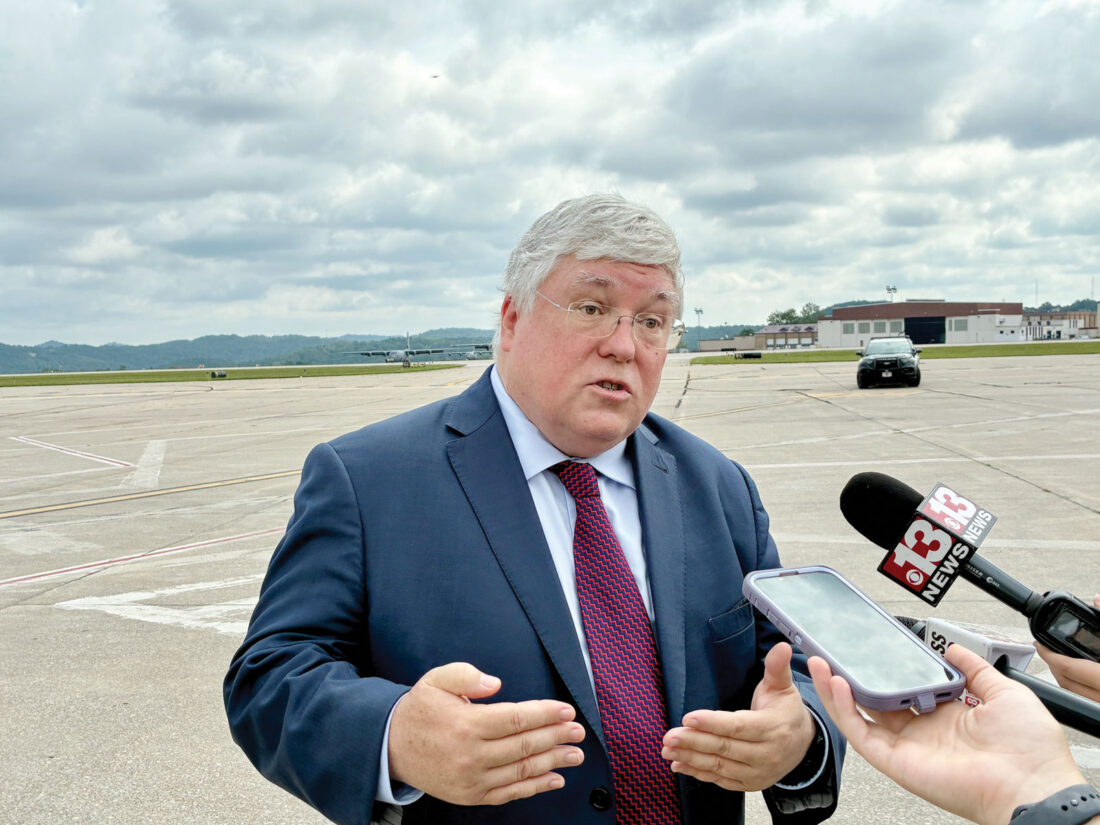
Gov. Patrick Morrisey takes questions from the press Tuesday morning following a press conference at West Virginia International Yeager Airport in Charleston. (Photo by Steven Allen Adams)
CHARLESTON — While President Donald Trump issued a federal disaster declaration for Texas within days after substantial flash flooding, Gov. Patrick Morrisey is still working on receiving a disaster declaration more than three weeks after flash flooding in Ohio and Marion counties in West Virginia. Speaking to press Tuesday morning following an announcement at West Virginia International Yeager Airport, Morrisey said he was following up with White House officials and the Federal Emergency Management Agency (FEMA) to speed up the federal disaster approval process. “We’ve been following up with them, and we’re going to continue to do so,” Morrisey said. “I’m going to get back to the office and launch another call in there, because we’re going to push.” Trump signed a federal disaster declaration for Kerr County, Texas, on July 6 following a major flash flooding event that occurred between July 2 and July 4. According to media accounts, approximately 108 people were killed in Central Texas, with 87 deaths in Kerr County alone, with an unknown number of people still missing. Many of those deaths were children and adult staff at a summer camp According to the National Weather Service, parts of Central Texas saw up to 20 inches of rain due to remnants of Tropical Storm Barry, causing waterways to quickly overflow their banks. According to CBS News, the Guadalupe River rose more than 26 feet in less than an hour in the early morning hours of Independence Day. Nine lives were lost in the Valley Grove and Triadelphia areas of Ohio County on June 14. According to the National Weather Service, between 2.5 and 4 inches of rain fell in Ohio County in 30 minutes that night. Additional storms hit Marion County throughout June 15, with approximately three inches of rain dropping throughout the day, causing significant damage to homes, businesses, and roads. At the time, Morrisey said that FEMA officials were on the ground providing assistance and conducting damage assessments. Speaking Tuesday, Morrisey said some of the delay in a federal disaster declaration was due to additional information needed by FEMA. “We obviously had a lot of conversations early on with them, and they were going through processing, analyzing the data in terms of some of the financial thresholds that they thought had to be met,” Morrisey said. “When I have more on that, I’ll report back to you.” West Virginia received a federal disaster declaration on Feb. 27 for McDowell, Mercer, Mingo and Wyoming counties following flash flooding that hit a 13-county region in Southern West Virginia between Feb. 14 through Feb. 16. Those floods killed two grandparents and one of their grandchildren. According to a review of federal disaster declarations on FEMA’s website, most federal disaster declarations for states have come more than a month after the reported natural disaster except in the case of last week’s Texas flooding and natural disasters in Kentucky and Tennessee at the beginning of April. Nine major disaster declarations were issued on May 23 for natural disasters – ranging from severe winter storms, wind damage, tornadoes, and flooding – that occurred in March and April. Trump, more than six months into his second non-consecutive term as President, has hinted at dismantling FEMA, though White House Press Secretary Karoline Leavitt told a reporter during Monday’s press briefing that discussions regarding FEMA were ongoing according to Politico. “The president wants to ensure American citizens always have what they need during times of need,” Leavitt said. “Whether that assistance comes from states or the federal government, that is a policy discussion that will continue.”Local News

Entertainment and more in the Mid-Ohio Valley

Supreme Court sounds skeptical of late-arriving ballots, a Trump target

Opening arguments set to begin today for trial in 2025 Wood County killing

Spread the Word: Missoula Children’s Theatre to present ‘Secret Garden’ at the Smoot

Wood County Commission moves forward with demolition bids