
Former West Virginia Justice: JIC admonishments of circuit judges sends ‘chilling message’
Trending
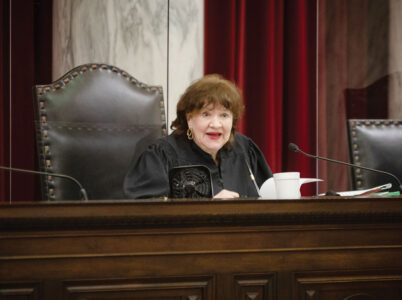
CHARLESTON -- Margaret Workman, a former justice of the West Virginia Supreme Court of Appeals, accused the agency that recently admonished two circuit court judges following their speaking out on child abuse and foster care problems of sending a "chilling message to the entire judiciary."
In a post on social media over the weekend, Workman said the admonishment of 3rd Judicial Circuit Court Judge Tim Sweeney and 8th Judicial Circuit Judge Maryclaire Akers by the state Judicial Investigation Commission earlier in June following certain actions regarding Child Protective Service and foster care issues and media interviews was unfair to both jurists.
"The recent disciplinary actions against Circuit Court Judges Maryclaire Akers and Tim Sweeney for their public criticism of the failures of child abuse and neglect system represent a troubling misunderstanding of judicial responsibility and a dangerous prioritization of institutional comfort over child safety," Workman said. "These sanctions don't protect judicial integrity--they undermine it by silencing the very voices most qualified to identify systemic problems harming and endangering the most vulnerable children."
The commission admonished Sweeney, accusing him of violating four rules of the Code of Judicial Conduct, including violations related to public statements and social media activity concerning an ongoing child abuse and neglect case.
Sweeney's admonishment came following abuse and neglect hearings in October 2024 and Feb. 3, after a CPS worker testified that the agency was overworked and understaffed, causing local workers to not meet court-ordered deadlines. Besides handling cases in Doddridge, Pleasants and Ritchie counties, the CPS workers testified that they were also handling child abuse and neglect cases in Lewis and Upshur counties.
An order was issued on Feb. 3 where Sweeney appointed several state Department of Human Services and Bureau of Social Services officials to report to the Ritchie County Courthouse on Feb. 20 and receive assignments as Child Protective Services workers. Sweeney conducted interviews with The Parkersburg News and Sentinel and WV MetroNews regarding this order. He later canceled the order after meeting with new DoHS Cabinet Secretary Alex Mayer and working out an agreement.
In the case of Akers, the Associated Press reported on Feb. 28 that Akers placed DoHS in a one-year "improvement period" under a court-appointed monitor to report on the state's use of unlicensed facilities - such as 4-H camps and hotels - due to reports of violent incidents involving children in state custody.
In that case, Akers had also ordered Mayer to report to her courtroom for a hearing on Feb 28 that was open to the public and attended by local press. The commission said Akers' comments in that hearing and subsequent media interviews violated the Judicial Code of Conduct.
Despite the alleged violations of the Code of Judicial Conduct, the commission found that formal discipline against Sweeney and Akers was not necessary given their impeccable judicial records and lack of previous punishments, choosing instead to publicly admonish them.
In her social media post, Workman said she more than understood the frustrations expressed by Sweeney and Akers regarding the overburdened foster care system and the overload of abuse and neglect cases. She also pointed out that neither Sweeney nor Akers revealed the names of children or violated the rights of children to confidentiality.
"The judges who were sanctioned deserve support, not chastisement," Workman said. "Their willingness to speak difficult truths about child welfare failures represents exactly the kind of judicial courage that should be encouraged, not suppressed."
Rule 3.1 of the Code of Judicial Conduct regulates extrajudicial activities by judges, prohibiting them from engaging in activities outside the courtroom that would interfere with their performance of official duties, disqualify them undermine their impartiality, engage in coercive activity, or make use or staff or equipment for personal use.
However, comment 2 on Rule 3.1 states that "Off-the-bench judicial leadership is essential to effective resolution of local systemic problems that impede the progress of child abuse and neglect, delinquency, and status offense cases involving at-risk children and their families," with judges "encouraged to regularly convene meetings of local professionals routinely involved in these cases for the purpose of addressing issues in the circuit relating to effective procedures and necessary services."
Workman also argued that the Supreme Court considers any child who comes before the court to be a ward of the court, with child abuse and neglect being of the highest priority.
"Yet every day, judges around the state witness firsthand the consequences of an overburdened, under-resourced child welfare system," Workman said. "They see children returned to (or not removed from) dangerous homes due to inadequate investigations and often re-abused in foster care. They see the results of caseworkers carrying impossible caseloads and watch as bureaucratic delays leave children in limbo for months or even years.
"(Sweeney and Akers) sought to cast the sunshine of public light on these issues," Workman continued. "In so doing, they were not abandoning judicial neutrality -- they were fulfilling their deepest obligation to protect children. Children do not have lobbyists to seek a fair allocation of state assets for their protection, so judicial officers publicly identifying these systemic failures is one of the few ways any pressure can be applied to state authorities who continue to short-change children."
According to the state Supreme Court's own records for 2024, circuit courts handled 5,472 abuse and neglect cases that year -- a 3.5% increase from 2023 and a 36.6% increase in case load since 2014.
Workman was elected as the first woman to serve on the state Supreme Court in 1988, resigning in 1999 before completing a full 12-year term. She was elected to another term on the high court in 2008 and retired from the bench in 2020.
In closing, Workman said the admonishments of Sweeney and Akers would do more to harm the judicial system and erode public trust.
"The disciplinary sanctions in these cases actually undermine judicial independence by making judges afraid to speak out about the crisis the state abuse and neglect/juvenile justice system is in and creates a perverse situation where the institutions most in need of reform are protected from criticism by the very people best positioned to identify needed changes," Workman said.
"By sanctioning judges who spoke publicly about child welfare failures, disciplinary bodies have sent a chilling message to the entire judiciary: keep quiet about systemic problems, even when children are suffering and even dying as a result," Workman continued. "This enforced silence serves no legitimate interest in judicial independence or impartiality. Instead, it protects failing institutions from accountability while leaving the most vulnerable children voiceless and in danger."
Steven Allen Adams can be reached at sadams@newsandsentinel.com.