
Capito: Changes to Big Beautiful Bill Medicaid provisions create tighter timeline for passage
Trending
CHARLESTON -- Potentially putting a damper on a planned vote today but easing the minds of concerned groups, the U.S. Senate parliamentarian put a block on several proposed changes to Medicaid.
But U.S. Sen. Shelley Moore Capito believes lawmakers can quickly pass a bill.
Senate Parliamentarian Elizabeth MacDonough rejected proposed changes Thursday to Medicaid benefits proposed in the Senate's version of the One Big Beautiful Bill Act, prior to a planned vote today to move ahead with consideration of the gigantic budget reconciliation package.
Using the Byrd Rule - sometimes called the Byrd Bath and named for the late West Virginia U.S. Sen. Robert C. Byrd - the parliamentarian rejected several key changes to Medicaid, the joint federal and state program which provides health care benefits to low-income individuals and families.
The bill is being done through the reconciliation process, which avoids the specter of a filibuster by allowing the bill to be passed by a simple 51-vote majority in the 100-member Senate. However, the reconciliation process requires the Senate parliamentarian to review each committee's proposal to remove items unrelated to the federal budget. Those rejected provisions would be subject to the 60-vote threshold to clear a filibuster.
The parliamentarian rejected several proposed Medicaid changes, such as prohibiting federal financial participation for individuals without verified immigration status and limiting federal funding for states offering Medicaid coverage to non-citizens.
Also thrown out were proposals to reduce the federal medical assistance percentage (FMAP) for states choosing to cover undocumented individuals; allowing for spreading price increases in Medicaid managed care contracts; prohibiting federal Medicaid and Children's Health Insurance Program (CHIP) funding for gender-affirming medical care; adjustments to provider taxes that expand the tax base or increase rates; and limitations on premium tax credits for certain individuals and disallowing premium tax credits for periods during which individuals are ineligible due to immigrant status.
The parliamentarian's ruling on these Medicaid provisions will mean they will have to be removed from the One Big Beautiful Bill Act or changed to meet the approval of the parliamentarian and comply with the Byrd Rule. But that could put the self-imposed July 4 congressional deadline to pass the bill in doubt, especially since any changes by the Senate will have to be reconciled with the U.S. House of Representatives, which passed its version of the bill in May.
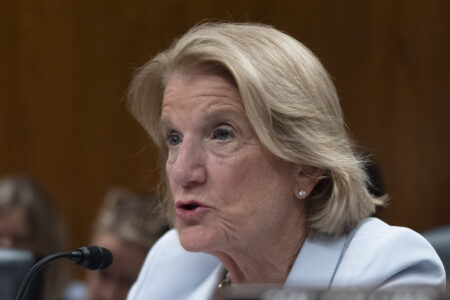
"I do think that there will be some compromise over the next several days," said Capito, R-W.Va., during a phone call Thursday afternoon with in-state reporters. "We were supposed to begin the contemplation of this bill probably noon (today). That may have been pushed back 24 hours. I'm not exactly sure. We are just waiting to hear.
"We have to have a full scoring of the bill which we do not have, and we have to have permanent text...so everybody of course can see all the fine print. So, we're still a ways away," Capito continued. "The House has to have it under consideration for 72 hours. That's pushing pretty close to July 4, but we want to do it right and so I think that's the prevailing thought."
But opposition has been mounting to the Medicaid changes in the One Big Beautiful Bill Act, with six people being arrested at Capito's Charleston office for attempting a sit-in. A letter from a coalition of advocacy groups for low-income families to Capito and U.S. Sen. Jim Justice, R-W.Va., urged both lawmakers to oppose cuts to Medicaid and Supplemental Nutrition Assistance Program.
Families USA, a health care advocacy group, released a white paper Wednesday estimating that the proposed Medicaid cuts in the One Big Beautiful Bill could cause West Virginia to lose $666 million per year in federal funding and could cause as many as 69,000 West Virginians to lose coverage.
"The cuts to Medicaid and the (Affordable Care Act) will have devastating and dramatic impacts on health coverage, care, and costs for American families, and in many ways, especially in West Virginia," said Anthony Wright, executive director of Families USA. "The cuts will not just mean that tens of thousands of West Virginia residents lose coverage, but federal cuts will force state budgets into crisis, forcing states to drastically scale back services, leading to closures of rural hospitals and community clinics."
According to DoHS, there were 503,637 people enrolled in Medicaid in West Virginia as of January, or 29% of the state's population - one in every four adults and 56% of all children in the state.
Speaking Thursday, Capito said it was not her intention to see Medicaid benefits taken away from anyone who qualifies for the program. The goal is for those who should not be eligible for the health care benefit to be removed.
"I said this from the very beginning that I'm not interested in creating a Medicaid package that eliminates benefits for people that deserve it," Capito said. "For those who say that there are all these millions of people that are going to get kicked off; the only people that are going to lose a benefit are the people that don't deserve the benefit to begin with."
The One Big Beautiful Bill Act is the primary vehicle for extending the 2017 tax cuts put in place during the first term of President Donald Trump, which would return $2 trillion to taxpayers over a 10-year period. The bill includes more than $1.3 trillion in cuts to help pay for the extended tax cuts. But a Congressional Budget Office analysis found the bill would grow the national debt by $3.3 trillion.
"This extends tax relief for every single family who pays taxes in West Virginia, and it would have significant impact on a family's bottom line and ability to pay for the groceries, etc. if these taxes were allowed to go up," Capito said. "So, I want to prevent that and that's part of what this bill does."
The bill eliminates taxes on tips or overtime with caps, as well as tax deductions for taxpayers in certain high-tax states. It has increases in child tax credits and creates savings accounts for children aged 8 or younger. The bill provides billions in new defense and border/immigration enforcement spending. It also rolls back many provisions in the 2023 Inflation Reduction Act.
"There's lots in here, I think, that doesn't get talked about...the national security, the border security, the unleashing of our energy resources," Capito said. "I'm excited to see what this will do for West Virginia families. It'll be more money in their pockets and that will reward their good, hard work."
Steven Allen Adams can be reached at sadams@newsandsentinel.com.