
West Virginia Senate Education Committee goes after DEI policies
Trending
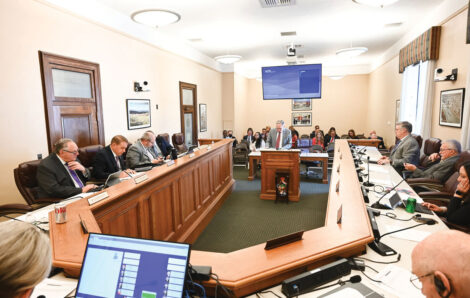
CHARLESTON -- With two days to go to get bills to a key legislative deadline Wednesday, lawmakers in a West Virginia Senate committee decided to move a controversial bill aimed at multiple culture war issues.
The Senate Education Committee recommended Senate Bill 870 for passage Monday. A motion was made later Monday taking up the bill for immediate consideration and having the bill read a first time before allowing the bill to continue on to the Senate Judiciary Committee for further review, ensuring it can pass Wednesday by the deadline when bills must be passed and sent to the opposite chamber.
SB 870, the Restoring Sanity Act, would prohibit the instruction of certain concepts involving race and gender identity in kindergarten-12th grade education and higher education.
The bill prohibits statements that one race, ethnic group, or biological sex is superior to another either physically or intellectually; that they bear responsibility for past actions of the same race, ethnic group, or biological sex. The bill prohibits categorizing academic achievement, meritocracy, or traits -- such as a hard work ethic -- as racist, sexist, or created by a particular race, ethnic group, or biological sex to oppress others.
However, it does not prohibit the discussion of theories involving race, ethnic groups, or biological sex in regards to history as long as the courses include other theories. The bill includes a complaint and reporting procedure for K-12 and higher education for instances of non-compliance with the bill.
Other provisions of the bill protects public school and charter school teachers and staff from being required to use a student's preferred pronouns if the pronoun is not consistent with the student's biological sex, nor are they able to be sued for using a different pronoun for a student. They are also protected from adverse employment actions by supervisors for not using a student's preferred pronouns. County boards of education and charter school boards are afforded the same protections.
For higher education, public colleges and universities would be prohibited from creating and funding offices of Diversity, Equity, and Inclusion (DEI). This would not affect academic programs and studies, student organizations, mental health services, contracts with federal governmental entities, and other exceptions. The bill also prohibits use of DEI statements by students or for employment purposes in education.
Many of SB 870's provisions are similar to an effort in 2022 by Republican lawmakers. House Bill 4011 and Senate Bill 498, both dealt with the teaching and discussion of topics derived from critical race theory. The bill was watered down over time as it made its way through the session but it resulted in hours of lengthy debate only to die in the final second of the final day of the 2022 legislative session as the gavel came down at midnight. Similar bills were offered in 2023 but never completed the process.
But SB 870's provisions aimed at DEI programs and higher education specifically are new in West Virginia, though part of a larger national trend. According to Axios, nine states have passed bills aimed at public college and university DEI offices, while another 12 states -- including West Virginia -- are now considering similar legislation.
Opponents of DEI initiatives see them as ways to force acceptance of systemic racism in American society or acceptance of the LGBTQ community contrary to the beliefs of some conservatives, such as transgenderism, microaggressions against other races and genders, anti-racism, social justice, etc. Supporters see DEI as a way to help minorities and marginalized communities where there is a history of bias and discrimination, while supporting conversations and efforts to move beyond these issues.
Steven Allen Adams can be reached at sadams@newsandsentinel.com